

By Press Release: August 6, 2015
Shell must match the Nigerian government’s new commitment to tackle oil pollution in the Niger Delta by dramatically improving how it cleans up spills, Amnesty International said today.
President Muhammadu Buhari’s announcement on Wednesday of a trust fund to pay for the clean-up of the Ogoniland region in the Niger Delta is welcome, but if Shell’s ineffective clean-up methods are not fully overhauled, its impact will be limited.
“It is scandalous that Shell – which now wants the world to trust it to drill in the Arctic – has failed to properly implement the UN’s expert advice on oil spill response after so long,” said Mark Dummett, Amnesty International’s Researcher on Business and Human Rights, who has just returned from the Niger Delta.
“President Buhari’s initiative will fail, and the Ogoni people will continue to suffer, as long as Shell fails to make significant changes to the way it approaches oil spill clean-up.”
The establishment of the trust fund was a key recommendation of the United Nations Environment Programme (UNEP), which published a study on oil pollution in Ogoniland four years ago. The UNEP study also called for Shell’s clean-up methods to be urgently overhauled, including reviewing its methodology and addressing serious delays in responding to spills.
But researchers from Amnesty International investigating spill sites in the region have this month found oil on the soil and in nearby water bodies, in areas where Shell contractors are reported to have recently carried out remediation.
The fund will be overseen by representatives of the Ogoni people, the United Nations, the oil companies operating in Nigeria and the government itself. According to the government, “stakeholders” will pay an initial $10 million into the fund, but it is not clear who these stakeholders will be.
$10 million is far below the $1 billion that the UNEP said should be paid into the fund to cover the first five years of a clean-up job which could take up to 30 years. The UNEP study recommended that the contributions should be made by both the oil industry and the government.
“Ogoniland has been devastated by years of oil spills and Shell’s clean-up operations have been utterly ineffective,” said Mark Dummett.
“In 2011 UNEP highlighted numerous serious problems with the way Shell cleans up oil sites. But we have visited multiple sites and found oil pollution lying all around. From what we are seeing, little has changed since then.”
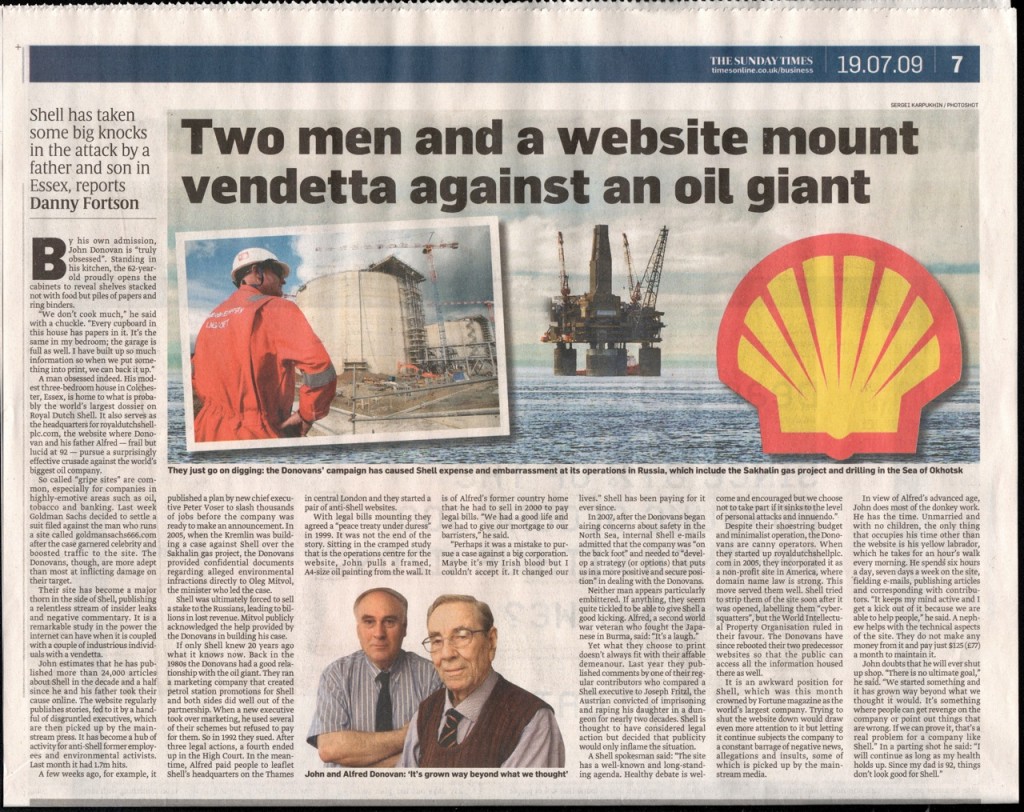
This website and sisters royaldutchshellplc.com, shellnazihistory.com, royaldutchshell.website, johndonovan.website, and shellnews.net, are owned by John Donovan. There is also a Wikipedia segment.


 Royal Dutch Shell conspired directly with Hitler, financed the Nazi Party, was anti-Semitic and sold out its own Dutch Jewish employees to the Nazis. Shell had a close relationship with the Nazis during and after the reign of Sir Henri Deterding, an ardent Nazi, and the founder and decades long leader of the Royal Dutch Shell Group. His burial ceremony, which had all the trappings of a state funeral, was held at his private estate in Mecklenburg, Germany. The spectacle (photographs below) included a funeral procession led by a horse drawn funeral hearse with senior Nazis officials and senior Royal Dutch Shell directors in attendance, Nazi salutes at the graveside, swastika banners on display and wreaths and personal tributes from Adolf Hitler and Reichsmarschall, Hermann Goring. Deterding was an honored associate and supporter of Hitler and a personal friend of Goring.

 Deterding was the guest of Hitler during a four day summit meeting at Berchtesgaden. Sir Henri and Hitler both had ambitions on Russian oil fields. Only an honored personal guest would be rewarded with a private four day meeting at Hitler’s mountain top retreat.


 IN JULY 2007, MR BILL CAMPBELL (ABOVE, A RETIRED GROUP AUDITOR OF SHELL INTERNATIONAL SENT AN EMAIL TO EVERY UK MP AND MEMBER OF THE HOUSE OF LORDS:


 MORE DETAILS:


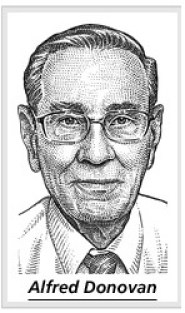 A head-cut image of Alfred Donovan (now deceased) appears courtesy of The Wall Street Journal.