

 Kamal Ahmed: Business editor: 28 Sept 2015
It could have been Hillary Clinton’s tweet that did it.
Just after the US government had given the go-ahead for Shell to restart its exploration in Alaska, the Democratic presidential candidate took to the social media site.
“The Arctic is a unique treasure,” Mrs Clinton said on Twitter. “Given what we know now, it’s not worth the risk of drilling.”
Which seemed to ignore the fact that drilling has been taking place in the Arctic for decades – for example oil was first discovered in one of the main basins, Prudhoe Bay, in 1968.
The area is still producing around 250,000 barrels per day and is one of America’s largest producing fields.
Shell knows that its every move in the Arctic is scrutinised commercially, politically and environmentally.
Quite rightly, of course, when it comes to exploration in one of the most environmentally sensitive areas in the world.
Surprise move
Shell’s original position on the Arctic was that exploration of the vast area – much of it untapped – was important.
The oil major argued that demand for fossil fuels was increasing as the world developed, exploration had to continue despite the low oil price and that the Arctic had long been a source of oil and gas.
Monday’s announcement that Shell was pulling out of the Chukchi Sea therefore comes as a surprise.
Particularly given it will cost Shell £2.6bn to execute the withdrawal.
And that the company has already spent the thick end of £5bn getting to this point.
Earlier this year, I interviewed Shell’s chief executive Ben van Beurden – and he was certainly bullish on Alaska.
“The potential in the Arctic is very, very significant,” he told me, saying that “the Arctic probably holds the largest yet to be discovered resource base”.
Shell’s investors were regular recipients of long and detailed presentations on the potential for the region.
So, what changed?
Certainly, the first findings from the Burger J exploration well 150 miles off the Alaskan coast were not promising.
Second, although President Barack Obama had given the necessary permissions for drilling to start again following the problems of rig fires in 2012, Mrs Clinton’s tweet revealed that political risks were still substantial.
Mr van Beurden also has plenty of other issues weighing on his in-tray.
Not least the £55bn takeover of BG Group.
And the halving on the oil price over the past 18 months which has led to a rapid reduction in capital expenditure for all the oil majors.
Share prices have been under pressure, with Shell’s dropping over 30% in the last 12 months.
Given that background, the Arctic appears to be one major project too far, for Shell’s management as well as investors.
And, frankly, there are easier places to explore for oil and gas, technically and politically.
‘High risk’
That was very much the opinion of Lord Browne, the former chief executive of BP who is now chairman of the oil and gas business, L1 Energy.
“The Arctic is a very high risk place to explore, and even if you find something, a very expensive place to develop in,” he told me.
“The last very big field is Prudhoe Bay, and it’s been a very difficult place to find oil and gas.
“There’ll be better places, more easy places, to go and explore.”
But, with demand for fossil fuels expected to rise over the next decade as emerging market growth continues, Lord Browne says exploration in the area off Alaska could return.
“We should always keep an eye on it, just in case.”
This website and sisters royaldutchshellplc.com, shellnazihistory.com, royaldutchshell.website, johndonovan.website, and shellnews.net, are owned by John Donovan. There is also a Wikipedia segment.


 Royal Dutch Shell conspired directly with Hitler, financed the Nazi Party, was anti-Semitic and sold out its own Dutch Jewish employees to the Nazis. Shell had a close relationship with the Nazis during and after the reign of Sir Henri Deterding, an ardent Nazi, and the founder and decades long leader of the Royal Dutch Shell Group. His burial ceremony, which had all the trappings of a state funeral, was held at his private estate in Mecklenburg, Germany. The spectacle (photographs below) included a funeral procession led by a horse drawn funeral hearse with senior Nazis officials and senior Royal Dutch Shell directors in attendance, Nazi salutes at the graveside, swastika banners on display and wreaths and personal tributes from Adolf Hitler and Reichsmarschall, Hermann Goring. Deterding was an honored associate and supporter of Hitler and a personal friend of Goring.

 Deterding was the guest of Hitler during a four day summit meeting at Berchtesgaden. Sir Henri and Hitler both had ambitions on Russian oil fields. Only an honored personal guest would be rewarded with a private four day meeting at Hitler’s mountain top retreat.


 IN JULY 2007, MR BILL CAMPBELL (ABOVE, A RETIRED GROUP AUDITOR OF SHELL INTERNATIONAL SENT AN EMAIL TO EVERY UK MP AND MEMBER OF THE HOUSE OF LORDS:


 MORE DETAILS:


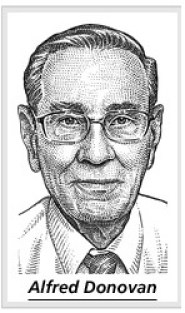 A head-cut image of Alfred Donovan (now deceased) appears courtesy of The Wall Street Journal.