

 In this week’s Oilgram News column, Regulation and Environment, Gary Gentile asks if the risks associated with ultra-deepwater oil production endeavors are properly disclosed to shareholders.
By Gary Gentile | August 31, 2015
Opponents of offshore drilling in frontier environments, such as the Arctic, have opened up a new front in their effort to curtail such efforts — asking US financial regulators to require more robust disclosure of the risks involved.
A group of Democrats in the US Congress have asked the Securities and Exchange Commission to force companies to tell investors the cost of a catastrophic accident resulting from drilling in ultra-deepwaters or in the harsh and remote waters off the coast of Alaska.


 Environmental advocates say decision to permit Shell to set rig off Alaska has tarnished president’s climate legacy




 “We made it clear that Shell has to meet our high standards in how they conduct their operations – and it’s a testament to how rigorous we’ve applied those standards that Shell has delayed and limited its exploration off Alaska while trying to meet them.”


 JESSICA FLOWER:


 ANCHORAGE, Alaska — Aug 28, 2015


 Christopher F. Davis


 News of Tory-appointed official follows on Environment Minister granting Shell up to 21 days to stop underwater oil spills. In contrast the United States requires Shell to have capping equipment on-site in Alaska within 24 hours.





 Among individual oil producers, the biggest on the market is Royal Dutch Shell, and its share price has unsurprisingly performed terribly in the last year.


 In the case of
 U.S. benchmark West Texas Intermediate crude fell to less than $40 a barrel for the first time in more than six years in New York trading on Friday.

 Extracts from an article by Garry White:
 State Department official says administration’s stance on oil drilling program continues to spur criticism as Hillary Clinton joins list of opponents


 Published: Aug 21, 2015 3:22 p.m. ET


 This is not the first time a fire broke out at Pulau Bukom. In September 2011, more than 100 firefighters helped to put out a fire that raged for 32 hours at the Pulau Bukom refinery. Shell was fined $80,000 the following year for lapses in workplace safety that led to the fire.


 Royal Dutch Shell conspired directly with Hitler, financed the Nazi Party, was anti-Semitic and sold out its own Dutch Jewish employees to the Nazis. Shell had a close relationship with the Nazis during and after the reign of Sir Henri Deterding, an ardent Nazi, and the founder and decades long leader of the Royal Dutch Shell Group. His burial ceremony, which had all the trappings of a state funeral, was held at his private estate in Mecklenburg, Germany. The spectacle (photographs below) included a funeral procession led by a horse drawn funeral hearse with senior Nazis officials and senior Royal Dutch Shell directors in attendance, Nazi salutes at the graveside, swastika banners on display and wreaths and personal tributes from Adolf Hitler and Reichsmarschall, Hermann Goring. Deterding was an honored associate and supporter of Hitler and a personal friend of Goring.

 Deterding was the guest of Hitler during a four day summit meeting at Berchtesgaden. Sir Henri and Hitler both had ambitions on Russian oil fields. Only an honored personal guest would be rewarded with a private four day meeting at Hitler’s mountain top retreat.


 IN JULY 2007, MR BILL CAMPBELL (ABOVE, A RETIRED GROUP AUDITOR OF SHELL INTERNATIONAL SENT AN EMAIL TO EVERY UK MP AND MEMBER OF THE HOUSE OF LORDS:


 MORE DETAILS:


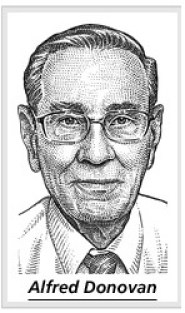 A head-cut image of Alfred Donovan (now deceased) appears courtesy of The Wall Street Journal.