An application to start fracking at a site on the Fylde coast in Lancashire has been rejected by councillors.

Energy firm Cuadrilla wanted to extract shale gas at the Little Plumpton site between Preston and Blackpool.
Lancashire County Council rejected the bid on the grounds of “unacceptable noise impact” and the “adverse urbanising effect on the landscape”.
Cuadrilla said it was “surprised and disappointed” and would consider its “options” regarding an appeal.
A spokesman added: “We remain committed to the responsible exploration of the huge quantity of natural gas locked up in the shale rock deep underneath Lancashire.”
‘Triumph for democracy’
The Little Plumpton bid had been recommended for approval by the county council’s planning officials, subject to working hours, noise control and highway matters.
But councillors rejected the advice and voted 10-4 to refuse the application.
Councillor Marcus Johnstone described the deliberation as “one of the biggest planning decisions ever” for the council.
He said the committee had rejected the application after “listening carefully to many hours of evidence”.
A legal adviser had said any attempt to block fracking at the site on environmental grounds would be “unreasonable” and costly.
A related application for a monitoring array, to monitor seismic activity and water quality, was also rejected.
An application to start a fracking operation at Roseacre Wood was also rejected on Thursday.
Anti-fracking protests were held outside the hearing in Preston, which began on 23 June.
Fracking – or hydraulic fracturing – was suspended in the UK in 2011 following earth tremors in Blackpool where Cuadrilla previously drilled.
It is a technique in which water and chemicals are pumped into shale rock at high pressure to extract gas.
At the scene

BBC News reporter, Helen Carter
For a moment, there was silence as the planning committee voted on a motion to turn down the Little Plumpton planning application.
That was followed by a huge roar of approval and a boo as two councillors had abstained.
People wept openly but they were tears of joy, not disappointment.
A chorus of “Frack free Lancashire” sounded outside County Hall. Then “Frack free world.”
Fylde deputy mayor Karen Speak said she felt like she had won the lottery.
Jamie Peters of Friends of the Earth wept and said it “shows people power has worked.” He said it had been grassroots campaigning. “The councillors have listened to what people want,” he said.
Chris Riley from Kirkham said it was brilliant they had overturned both decisions, adding: “We were hoping they would, but they couldn’t possibly go ahead with the damage it would cause.”
Another protester said: “It is brilliant. But this is just round one.”
The jubilant anti-fracking campaigners marched through Preston for a spontaneous rally outside Lloyds Bank in Fishergate.
They were told: “Keep up the fight,” amid cheers.
Katherine Seary, from Bipsham, with her dog Molly, who was wearing an anti-fracking T-shirt feels “ecstatic.”
She said: “[I] couldn’t believe my ears” initially, “It took me a second listen to take it in.”
“I am sure Cuadrilla will appeal, but it is a good start.”
Although there was a strong police presence, one said: “Well done, ladies,” to a group of protesters.
Greenpeace UK energy and climate campaigner Daisy Sands said the decision was “a Waterloo for the fracking industry” and a “triumph for local democracy”.
She said: “Their decision sends a powerful signal to other councils that the fracking juggernaut can indeed be stopped.”
Furqan Naeem, from Friends of the Earth North West, said campaigners will “breathe a sigh of relief – safe in the knowledge that this dirty industry… has been stopped in its tracks once again”.
“The stakes for local people, for democracy and for the environment could not be higher. The fight against fracking and dirty energy is far from over.”
This website and sisters royaldutchshellplc.com, shellnazihistory.com, royaldutchshell.website, johndonovan.website, and shellnews.net, are owned by John Donovan. There is also a Wikipedia segment.


 Royal Dutch Shell conspired directly with Hitler, financed the Nazi Party, was anti-Semitic and sold out its own Dutch Jewish employees to the Nazis. Shell had a close relationship with the Nazis during and after the reign of Sir Henri Deterding, an ardent Nazi, and the founder and decades long leader of the Royal Dutch Shell Group. His burial ceremony, which had all the trappings of a state funeral, was held at his private estate in Mecklenburg, Germany. The spectacle (photographs below) included a funeral procession led by a horse drawn funeral hearse with senior Nazis officials and senior Royal Dutch Shell directors in attendance, Nazi salutes at the graveside, swastika banners on display and wreaths and personal tributes from Adolf Hitler and Reichsmarschall, Hermann Goring. Deterding was an honored associate and supporter of Hitler and a personal friend of Goring.

 Deterding was the guest of Hitler during a four day summit meeting at Berchtesgaden. Sir Henri and Hitler both had ambitions on Russian oil fields. Only an honored personal guest would be rewarded with a private four day meeting at Hitler’s mountain top retreat.


 IN JULY 2007, MR BILL CAMPBELL (ABOVE, A RETIRED GROUP AUDITOR OF SHELL INTERNATIONAL SENT AN EMAIL TO EVERY UK MP AND MEMBER OF THE HOUSE OF LORDS:


 MORE DETAILS:


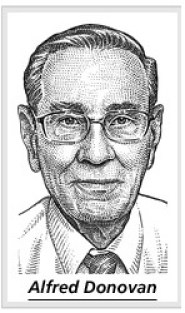 A head-cut image of Alfred Donovan (now deceased) appears courtesy of The Wall Street Journal.