
Robin Pagnamenta: Analysis
For years, the global wind energy industry has been growing at a 25 per cent clip, driven by surging investment, a slew of government subsidies and tax breaks. By 2007, total installed wind capacity had grown from only six gigawatts globally in 1996 to 94 gigawatts.
Now, however, comes an abrupt reversal in fortunes. From Britain to Australia, developers are facing fierce headwinds as the credit crunch bites and plunging oil prices undermine the economic rationale of more costly renewable energy schemes. In May, Shell provoked uproar when it withdrew from the world’s largest offshore windfarm – the London Array in the Thames Estuary – after the costs allegedly had risen from £1 billion in 2003 to £3 billion. Last month, BP followed suit, blaming the spiralling cost of labour and materials on its decision to exit the UK renewables industry. Across the Atlantic, FPL Group, America’s largest wind-power operator, is cutting its spending next year by nearly a quarter to $5.3 billion and new wind-power generation to 1,100 megawatts, from 1,500.
Industry executives complain of tough conditions, with bottlenecks in the supply of key equipment such as wind turbine blades forcing up costs. Project finance is also tougher to find and more expensive than it was a year ago, with bankers less willing to lend because of falling oil prices and the turmoil in debt markets.
Yet this is only a delay in the advance of sustainable energy. Global warming is not an issue that is going away and thus the rationale for wind power, solar energy and others will survive its present squeeze. Indeed, this may be the time in which braver players invest, ready for the time that the financial climate changes again.


 Royal Dutch Shell conspired directly with Hitler, financed the Nazi Party, was anti-Semitic and sold out its own Dutch Jewish employees to the Nazis. Shell had a close relationship with the Nazis during and after the reign of Sir Henri Deterding, an ardent Nazi, and the founder and decades long leader of the Royal Dutch Shell Group. His burial ceremony, which had all the trappings of a state funeral, was held at his private estate in Mecklenburg, Germany. The spectacle (photographs below) included a funeral procession led by a horse drawn funeral hearse with senior Nazis officials and senior Royal Dutch Shell directors in attendance, Nazi salutes at the graveside, swastika banners on display and wreaths and personal tributes from Adolf Hitler and Reichsmarschall, Hermann Goring. Deterding was an honored associate and supporter of Hitler and a personal friend of Goring.

 Deterding was the guest of Hitler during a four day summit meeting at Berchtesgaden. Sir Henri and Hitler both had ambitions on Russian oil fields. Only an honored personal guest would be rewarded with a private four day meeting at Hitler’s mountain top retreat.


 IN JULY 2007, MR BILL CAMPBELL (ABOVE, A RETIRED GROUP AUDITOR OF SHELL INTERNATIONAL SENT AN EMAIL TO EVERY UK MP AND MEMBER OF THE HOUSE OF LORDS:


 MORE DETAILS:


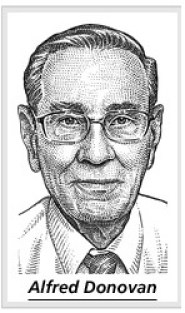 A head-cut image of Alfred Donovan (now deceased) appears courtesy of The Wall Street Journal.