
UPDATE 1-Nigeria threatens to halt energy firms’ LNG schemes
Thu Sep 25, 2008 2:25pm EDT
By Camillus Eboh
ABUJA, Sept 25 (Reuters) – Nigeria warned on Thursday it may consider suspending the liquefied natural gas (LNG) projects of foreign energy firms unless they submit a detailed plan by the end of October to supply gas for domestic power generation.
Nigeria’s power crisis is one of the biggest brakes on growth in Africa’s most populous nation. President Umaru Yar’Adua’s administration has repeatedly warned that it could penalise energy firms if they do not meet domestic requirements.
“Federal government’s policy and regulations on gas supply to the domestic market are not up for discussions or negotiations any more,” Gas Minister Emmanuel Odusina was quoted as saying in a statement by state-run oil firm NNPC.
“The minister warned that if by the end of October 2008 there is no evidence of cooperation, the government will have no choice but to consider further measures it deems necessary, including but not limited to putting a stop or suspension to all LNG projects targeting export of gas,” the statement said.
Yar’Adua’s government has said it wants to boost economic growth by generating much more power with gas, which unless more gas production facilities are built, could lead to a shortfall in gas available for export.
Nigeria’s largest LNG export plant, on Bonny Island in the southern Niger Delta, is controlled by a group of Western companies — Royal Dutch Shell (RDSa.L: Quote, Profile, Research, Stock Buzz), Total (TOTF.PA: Quote, Profile, Research, Stock Buzz) and Eni unit Agip (ENI.MI: Quote, Profile, Research, Stock Buzz). NNPC owns 49 percent.
There are a number of other LNG projects on the drawing board, involving mainly Western energy firms.
POWER CRISIS
LNG is gas cooled to liquid form and shipped in special tankers to markets in the developed world where it can be used for power generation or making chemicals. International demand for LNG has been fuelled by volatile global oil prices.
Despite having the seventh-largest gas reserves in the world, estimated at about 180 trillion cubic feet, Nigeria is hobbled by chronic electricity shortages which can leave most of its 140 million people without power for weeks at a time.
Its generation capacity has plunged to less than 1,000 megawatts from 3,000 MW a year ago, largely due to a lack of maintenance at power stations. South Africa, with a third of Nigeria’s population, has over 10 times that capacity.
Yar’Adua has said that foreign energy firms must increase the percentage of gas they divert to Nigeria for domestic use year by year until 2015.
Odusina said international oil firms had been directed to look at ways of processing about 280-350 million square cubic feet of gas between now and the end of the year.
“We must prioritise domestic gas supply over any LNG project,” he said.
Nigeria will need heavy outside investment in infrastructure if it is to use the gas to generate the power it needs.
Russian gas giant Gazprom (GAZP.MM: Quote, Profile, Research, Stock Buzz) signed an oil and gas exploration agreement with Nigeria three weeks ago. The government said in January that Gazprom would spend between $1 billion and $2.5 billion developing the gas sector.
Analysts say some Nigerian politicians want to send a warning that their traditional Western partners have new rivals, like China and Russia, while others fear Russia’s agenda is purely focused on exporting gas and that the African country will not see the benefits it needs. (For full Reuters Africa coverage and to have your say on the top issues, visit:africa.reuters.com/ ) (Writing by Nick Tattersall; Editing by Marguerita Choy)
© Thomson Reuters 2008 All rights reserved
http://www.reuters.com/article/ELECTU/idUSLP22299420080925?sp=true
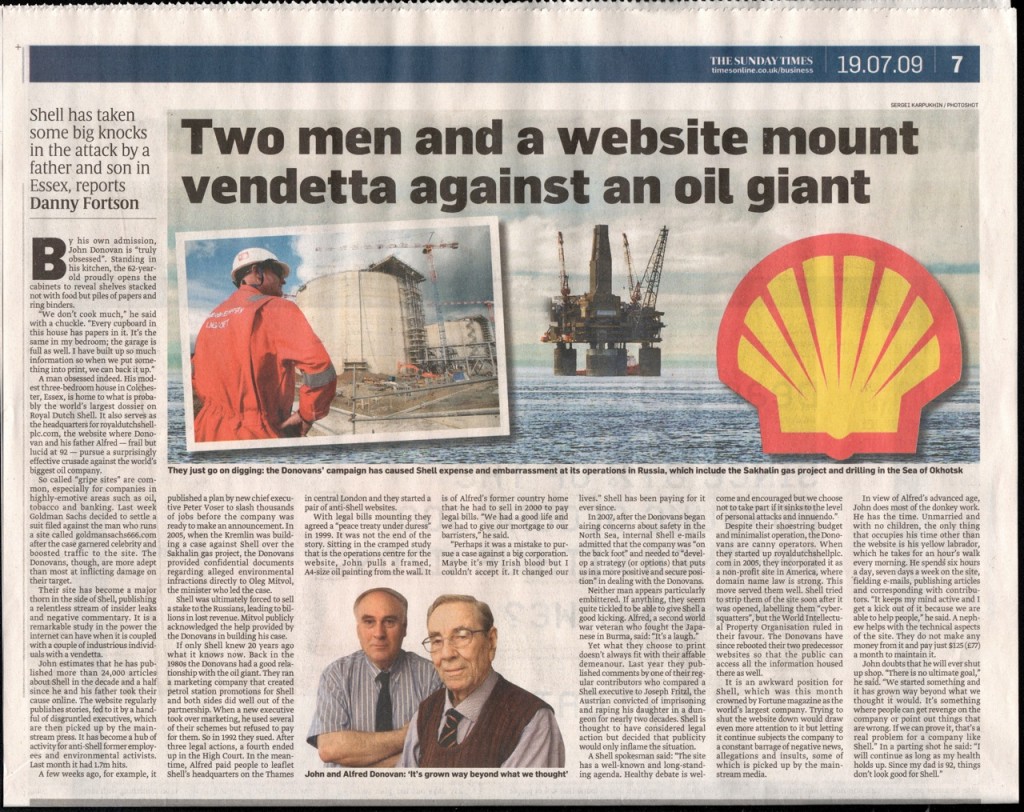
This website and sisters royaldutchshellplc.com, shellnazihistory.com, royaldutchshell.website, johndonovan.website, and shellnews.net, are owned by John Donovan. There is also a Wikipedia segment.


 Royal Dutch Shell conspired directly with Hitler, financed the Nazi Party, was anti-Semitic and sold out its own Dutch Jewish employees to the Nazis. Shell had a close relationship with the Nazis during and after the reign of Sir Henri Deterding, an ardent Nazi, and the founder and decades long leader of the Royal Dutch Shell Group. His burial ceremony, which had all the trappings of a state funeral, was held at his private estate in Mecklenburg, Germany. The spectacle (photographs below) included a funeral procession led by a horse drawn funeral hearse with senior Nazis officials and senior Royal Dutch Shell directors in attendance, Nazi salutes at the graveside, swastika banners on display and wreaths and personal tributes from Adolf Hitler and Reichsmarschall, Hermann Goring. Deterding was an honored associate and supporter of Hitler and a personal friend of Goring.

 Deterding was the guest of Hitler during a four day summit meeting at Berchtesgaden. Sir Henri and Hitler both had ambitions on Russian oil fields. Only an honored personal guest would be rewarded with a private four day meeting at Hitler’s mountain top retreat.


 IN JULY 2007, MR BILL CAMPBELL (ABOVE, A RETIRED GROUP AUDITOR OF SHELL INTERNATIONAL SENT AN EMAIL TO EVERY UK MP AND MEMBER OF THE HOUSE OF LORDS:


 MORE DETAILS:


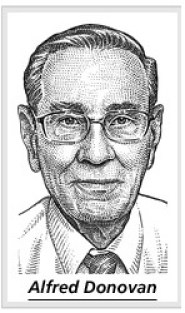 A head-cut image of Alfred Donovan (now deceased) appears courtesy of The Wall Street Journal.