The Times: European Briefing: Western oil firms face risk of being stung by Russians
“Oil companies don’t mind difficult governments so long as they let them run the oil business. In Russia, it is clear that no such deal is on offer and it would be foolish for BP or Shell to believe that Russia is the answer to their oil reserve problems.”
By Carl Mortished
September 22, 2004
RUSSIAN oil and gas are like a wild honeycomb hanging from a tree. Perched high off the ground along a perilous branch and guarded by angry bees, it is nonetheless deliciously tempting and few Western companies can resist the urge to climb the tree and lick the honey as it drips from the comb.
BP was quick to spot the golden prize and is now sitting contentedly on the branch sucking honey off its paws. Shell, too, made an early start but both companies, having successfully negotiated the shaking limb, forgot to keep their eyes on what the bees were doing.
BP got a nasty sting last week when the Kremlin threatened to withdraw the licence for BP’s flagship Russian gas project. Shell, too, has been stung, its huge liquefied gas project on Sakhalin Island beset by cost overruns and environmental problems.
A project billed at $9.6 billion (£5.4 billion) escalated to nearly $12 billion. The soaring cost of Sakhalin — the bill is now said to be reaching $13.5 billion — could make the bees buzz even more angrily around the nest as Shell sticks its paw into the comb.
These companies are big animals that can ignore a bee sting, but the greater worry is that the branch is rotten. On the ground beneath the tree lies another greedy creature that tried to take the bees’ honey. It is covered in stings, its leg is broken and it is a moot question whether it will survive the winter.
The fate of Yukos, the oil company once controlled by Mikhail Khodorkovsky, is almost sealed, the only question being which friend of the Kremlin will be afforded the chance of profiting from a fire sale of the Yukos assets.
Will others fall from the tree? Yukos was not alone in its aggressive exploitation of tax shelters, the cause of its imminent dismemberment. Total, the French oil company, was dissuaded from making an offer for Sibneft, the oil company controlled by Roman Abramovich, after a cursory glance at its tax arrangements. “It’s a poison pill,” the French company noted. BP insists that it has indemnities for the potential tax liabilities of its Russian partner, TNK, but what is an indemnity worth in a Russian court?
Still, having surveyed the bees’ nest sceptically from the ground for a year or two, Total has finally plucked up the courage to step out on the swaying branch. It is negotiating the purchase of a minority shareholding in a small Russian energy company.
Total is investing in Russia because it must. It is a case of be there or be nowhere. Total has had one of the fastest growing oil production portfolios among the majors, thanks to its big investments in Angola but looking beyond 2007, Total is challenged.
Total and all the major oil companies must fill up their tanks but they are locked out of the oilfields of the Middle East. Russia is the only significant honeypot left that is not under state lock and key.
So it seemed. A year ago, Russia shone like a beacon to the oil majors, its reserves lining up to be auctioned. The only deterrence was price and a confused legal system.
The latter is now resolved, in the sense that the legal system can be more or less ignored. All authority is now seen to flow almost exclusively from the executives in the Kremlin and at the same time new doubts surface about what role BP, Shell, ExxonMobil and Total can expect to play in Russia.
Their role is likely to be subordinate. Everything President Putin has done since the arrest of the former Yukos chief has pointed to a slow but steady effort to recover the oil assets given away by the corrupt regime of Boris Yeltsin. It is a recentralisation of economic power. The merger of Gazprom, the state gas giant, and Rosneft, blessed by the President last week, will create an enormous company with 117 billion barrels in reserves of oil and gas, more than six times those of BP.
With the government stake increased to 51 per cent, it is now firmly under state control and will have a finger in every significant energy project in Russia. Nothing will be achieved without its co-operation.
Oil companies don’t mind difficult governments so long as they let them run the oil business. In Russia, it is clear that no such deal is on offer and it would be foolish for BP or Shell to believe that Russia is the answer to their oil reserve problems.
It is only the beginning of a new kind of problem.
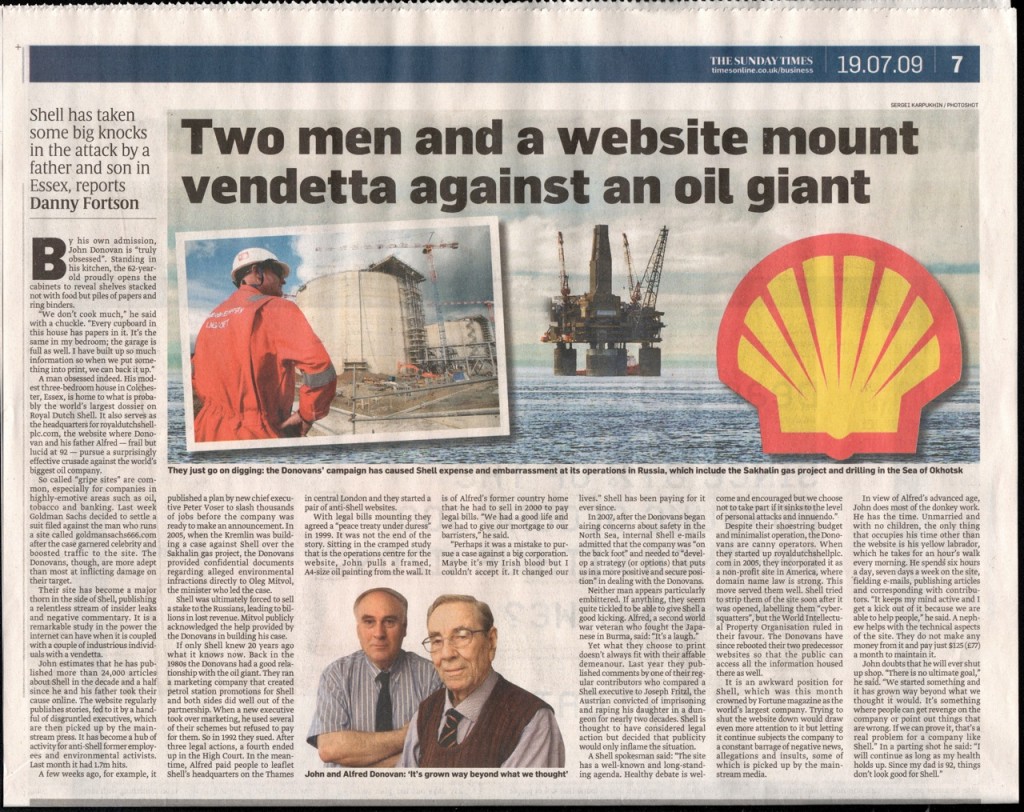
This website and sisters royaldutchshellplc.com, shellnazihistory.com, royaldutchshell.website, johndonovan.website, and shellnews.net, are owned by John Donovan. There is also a Wikipedia segment.


 Royal Dutch Shell conspired directly with Hitler, financed the Nazi Party, was anti-Semitic and sold out its own Dutch Jewish employees to the Nazis. Shell had a close relationship with the Nazis during and after the reign of Sir Henri Deterding, an ardent Nazi, and the founder and decades long leader of the Royal Dutch Shell Group. His burial ceremony, which had all the trappings of a state funeral, was held at his private estate in Mecklenburg, Germany. The spectacle (photographs below) included a funeral procession led by a horse drawn funeral hearse with senior Nazis officials and senior Royal Dutch Shell directors in attendance, Nazi salutes at the graveside, swastika banners on display and wreaths and personal tributes from Adolf Hitler and Reichsmarschall, Hermann Goring. Deterding was an honored associate and supporter of Hitler and a personal friend of Goring.

 Deterding was the guest of Hitler during a four day summit meeting at Berchtesgaden. Sir Henri and Hitler both had ambitions on Russian oil fields. Only an honored personal guest would be rewarded with a private four day meeting at Hitler’s mountain top retreat.


 IN JULY 2007, MR BILL CAMPBELL (ABOVE, A RETIRED GROUP AUDITOR OF SHELL INTERNATIONAL SENT AN EMAIL TO EVERY UK MP AND MEMBER OF THE HOUSE OF LORDS:


 MORE DETAILS:


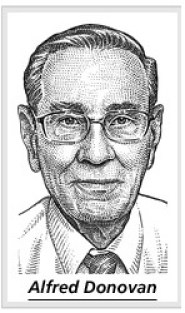 A head-cut image of Alfred Donovan (now deceased) appears courtesy of The Wall Street Journal.