Financial Times: Oil consortium faces anxious wait as Russia weighs cost overruns
“Shell recently raised its estimate for this year’s capital spending from $13bn to between $14.5bn and $15bn, largely because of budget overruns in Sakhalin and a Nigerian project.”
Published: September 8 2004
A consortium controlled by Royal Dutch/Shell is days away from handing the Russian government its estimate of cost overruns on a $10bn (€8.3bn, £6.8bn) oil and gas project in Sakhalin, sparking what are likely to be heated discussions with the Russian government.
Negotiations, which will take place by November at the latest, will be tense because under the production-sharing agreement (PSA) signed with Moscow, higher costs will mean less profit for Russia.
The project is the largest integrated energy investment in the industry’s history. It was concluded as a PSA in 1994 when Moscow was desperate for foreign investment. But Russia now considers such agreements faulty and insists that new energy investments be covered by a normal tax and royalty regime.
“There is a sector that believes the government of the day shouldn’t have entered into the agreement [and that] Russia didn’t get a good deal,” said Ian Craig, chief executive of Sakhalin Energy Investment Company (SEIC), the consortium in which Shell has a 55 per cent stake.
Mr Craig dismissed suggestions that Moscow might use the expected cost overruns as a pretext for renegotiating the deal.
“This really is a litmus test for foreign investment in Russia,” he said. “If they wanted to renegotiate the biggest investment in the country, it would raise questions about any future investment.”
But the Russian government has already threatened ExxonMobil, the world’s largest energy group, with an-auction of its exploration rights in another project, Sakhalin III. That disagreement, in which Moscow accuses Exxon and its partners of failing to invest enough, led to recent negotiations between Spencer Abraham, US energy secretary, and Vladimir Putin, Russia’s president.
Some politicians in Sakhalin, where the liquefied natural gas (LNG) phase of the Shell-led project will come on stream in 2007, are urging Moscow to renegotiate.
But Ivan Pavlovich Malakhov, governor of Sakhalin and vice-chairman of the supervisory board that will review SEIC’s proposed budget, said: “Renegotiating the terms of an agreement that was signed several years ago is not the right thing to do.”
Mr Craig would not elaborate on the extent of the project’s budget increase, though he made clear that costs were rising. “Throughout the world there are issues that everybody knows are pushing up project costs, like steel prices.”
Weakness of the US currency was also having a big impact, Mr Craig said. “A lot of your services are in yen, or euros or roubles and you’re getting a lot less services for the dollar.”
Shell recently raised its estimate for this year’s capital spending from $13bn to between $14.5bn and $15bn, largely because of budget overruns in Sakhalin and a Nigerian project.
Some analysts have suggested that Moscow may use rising costs as an excuse to negotiate a stake in the consortium for Gazprom, the state-backed gas monopoly.
Mr Craig denied any link between the two issues but said Gazprom might make a good equity partner.
He said equity participation “could change, as in any company like this, if existing shareholders saw some strategic benefit by someone else coming in”.
He also said potential signatories to long-term LNG contracts, including Sinopec, a big Chinese oil concern, had expressed interest in buying a stake.
“China is typically looking at those kind of things. That’s something we would definitely consider.”
Of the 9.6m tonnes of LNG the project intends to sell annually, SEIC has secured long-term contracts with Japanese companies for 3.4m tonnes. It is also “very close” to concluding a deal with California for the supply of 1.6m tonnes a year, the first such contract between Russia and the US.
The consortium calculates that the project will bring the Russian government at least $45bn over the project’s lifetime.
This website and sisters royaldutchshellplc.com, shellnazihistory.com, royaldutchshell.website, johndonovan.website, and shellnews.net, are owned by John Donovan. There is also a Wikipedia segment.


 Royal Dutch Shell conspired directly with Hitler, financed the Nazi Party, was anti-Semitic and sold out its own Dutch Jewish employees to the Nazis. Shell had a close relationship with the Nazis during and after the reign of Sir Henri Deterding, an ardent Nazi, and the founder and decades long leader of the Royal Dutch Shell Group. His burial ceremony, which had all the trappings of a state funeral, was held at his private estate in Mecklenburg, Germany. The spectacle (photographs below) included a funeral procession led by a horse drawn funeral hearse with senior Nazis officials and senior Royal Dutch Shell directors in attendance, Nazi salutes at the graveside, swastika banners on display and wreaths and personal tributes from Adolf Hitler and Reichsmarschall, Hermann Goring. Deterding was an honored associate and supporter of Hitler and a personal friend of Goring.

 Deterding was the guest of Hitler during a four day summit meeting at Berchtesgaden. Sir Henri and Hitler both had ambitions on Russian oil fields. Only an honored personal guest would be rewarded with a private four day meeting at Hitler’s mountain top retreat.


 IN JULY 2007, MR BILL CAMPBELL (ABOVE, A RETIRED GROUP AUDITOR OF SHELL INTERNATIONAL SENT AN EMAIL TO EVERY UK MP AND MEMBER OF THE HOUSE OF LORDS:


 MORE DETAILS:


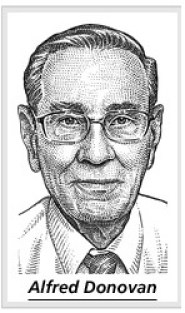 A head-cut image of Alfred Donovan (now deceased) appears courtesy of The Wall Street Journal.