The Times: Double Dutch: Once again, Shell has managed to strike negative publicity where it was thought that none could be found
June 17, 2004
By Mike Verdin
When you’re in a hole, they say, stop digging. Unless, perhaps, if you are in the oil industry. So while shareholders asked the reserve-poor oil giant to focus on drilling, Shell has instead kept on digging itself into the public relations hole which opened in January, when the company first admitted that its oil fields might not produce the harvest which had been thought.
Investors had hoped that three further revisions to reserves, the sacking of two directors and the publication of Shell’s 2003 annual report, had closed the well of mishaps.
Yet the Anglo-Dutch company has, in recent days, revealed its remarkable ability to strike negative publicity where none believed it could be found.
In March, Shell revealed that it was mounting a review into its complex operational structure, a move welcomed by investors. The company declined, however, to detail the scope of the appraisal or who was in charge of it, sparking widely reported investor concerns which threatened to spill over into rebellion at Shell’s annual meeting later this month.
So, this morning, the oil giant revealed what investors wanted to see, but only after alienating them and, once more, highlighting the opaqueness of the company’s operational procedures.
Indeed, promoting transparency is one of investors’ key demands of Shell, which, while making its money from fossil fuels, appears to have taken its love of relics too far. The group’s structure, based around British and Dutch boards, has changed little from when the company was formed in 1907 from the tie-up between Royal Dutch, an oil prospecting business, and Shell, a transport operator.
To outsiders, the arrangement appears as a half-completed merger. As the company itself puts it: “Shell stems from an arrangement between two separate companies, Royal Dutch Petroleum Company and The “Shell” Transport and Trading Company, whereby they share interests in the companies they jointly invest in – ‘the group’.”
The group consists of two parent companies which do not engage in “operational activities” but own investments in subsidiary businesses.
Confused? You will be once you consider the tangle of committees and responsibilities such a structure weaves. When investors last month demanded greater information on Shell’s corporate governance review, they sought a meeting not with Jeroen van der Veer, chairman of the group’s committee of managing directors, but Aad Jacobs, chairman of the group audit committee, who is widely viewed as the most powerful executive in the company.
The irony is, of course, that such confusion detracts from the, significant, positive publicity Shell can create. This morning’s publication of review details overshadowed an, applauded, admission from Lord Oxburgh, the Shell chairman, of the environmental dangers of the untempered, overuse of fossil fuels. The company, as a major investor in renewable energy, was even dubbed “progressive”.
Cynics may say that, with Shell suffering oil reserve shortfalls not shared by the likes of ExxonMobil, the company has a greater interest than rival in promoting alternative fuels.
Optimists may see hope that a story of two semi-merged companies can, under a unified board, reach one happy ending after all.
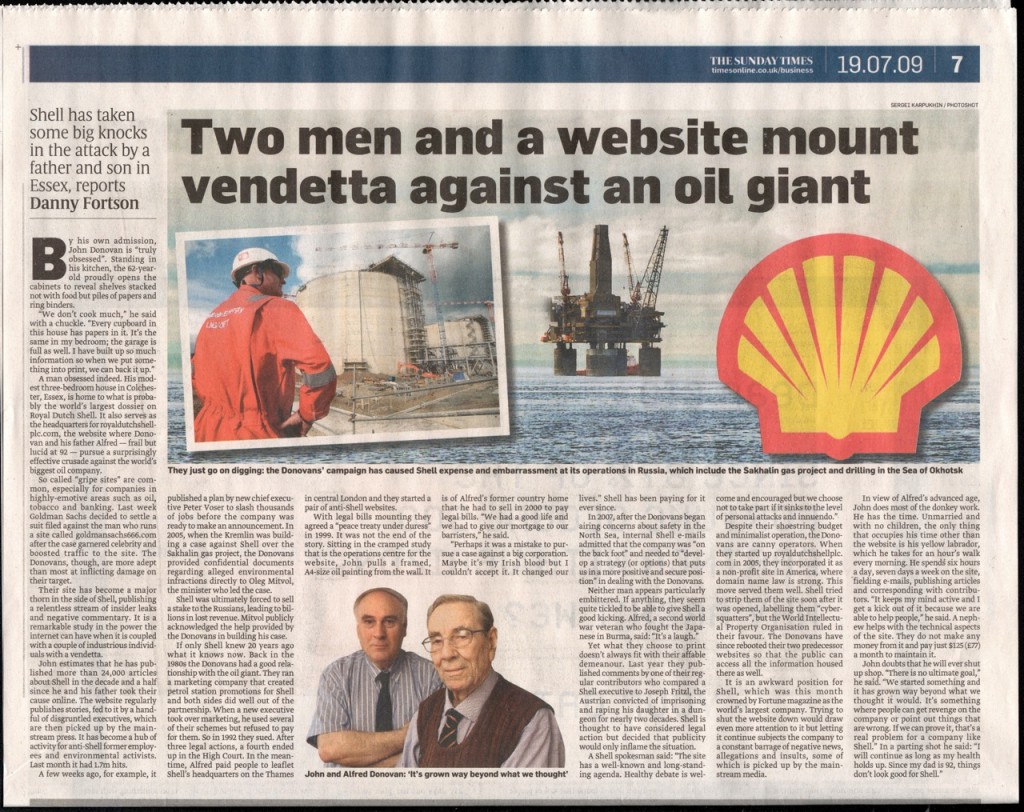
This website and sisters royaldutchshellplc.com, shellnazihistory.com, royaldutchshell.website, johndonovan.website, and shellnews.net, are owned by John Donovan. There is also a Wikipedia segment.


 Royal Dutch Shell conspired directly with Hitler, financed the Nazi Party, was anti-Semitic and sold out its own Dutch Jewish employees to the Nazis. Shell had a close relationship with the Nazis during and after the reign of Sir Henri Deterding, an ardent Nazi, and the founder and decades long leader of the Royal Dutch Shell Group. His burial ceremony, which had all the trappings of a state funeral, was held at his private estate in Mecklenburg, Germany. The spectacle (photographs below) included a funeral procession led by a horse drawn funeral hearse with senior Nazis officials and senior Royal Dutch Shell directors in attendance, Nazi salutes at the graveside, swastika banners on display and wreaths and personal tributes from Adolf Hitler and Reichsmarschall, Hermann Goring. Deterding was an honored associate and supporter of Hitler and a personal friend of Goring.

 Deterding was the guest of Hitler during a four day summit meeting at Berchtesgaden. Sir Henri and Hitler both had ambitions on Russian oil fields. Only an honored personal guest would be rewarded with a private four day meeting at Hitler’s mountain top retreat.


 IN JULY 2007, MR BILL CAMPBELL (ABOVE, A RETIRED GROUP AUDITOR OF SHELL INTERNATIONAL SENT AN EMAIL TO EVERY UK MP AND MEMBER OF THE HOUSE OF LORDS:


 MORE DETAILS:


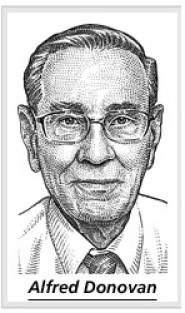 A head-cut image of Alfred Donovan (now deceased) appears courtesy of The Wall Street Journal.