

Two extracts from the CIOs featured in the CIO article.
Craig Walker, VP and global CIO, Shell Downstream
 Shell Downstream’s VP and global CIO Craig Walker has helped the organisation along its digital journey, and he sees business models, customer connectivity, innovation and digitisation as the main accelerators for change.
“Our history for 100 or more years has been oil and gas, predominantly oil in the early days and then far more gas business,” Walker said. “But these days, we’re very much moving to be an energy business.
In an interview with CIO UK earlier this year, Walker explained how the future of Shell will be driven by emerging technologies such as blockchain and autonomous vehicles.
“We are transforming from moving molecules to moving electrons,” he added. “And that business is all driven by IT. We are in the process of using digital technology to create business models we have not yet invented.”
Clare Patterson, CIO, Shell Energy
 Innovation is highly important for Shell Energy’s international trading and supply CIO Clare Patterson. In fact, Patterson has made some big investments taking on emerging technologies such as AI, machine learning and robotics processing over the past year.
“Having a computer science background and being more of an analytical person, the technology side of the transformation is the bit where I’m probably most comfortable,” Patterson said speaking at the 2019 CIO Summit. “It’s measurable, and you can plan it.”
With teams in Australia, Singapore, Japan, China, India, Dubai, London and Houston, Patterson has also been making equal efforts to drive staffing innovation across the organisation.
According to Patterson, one of the biggest successes of 2018 was moving away from project delivery to product-based teams. The result of assigning product owners and aligning IT teams with product delivery teams includes a reduction in release times and ticket backlogs.
“If you want to make changes, you do need to start from the leaders,” she explained. “With Shell Energy’s leadership team, we first got the training in the outward mindset and it was by humbly explaining the issues that we had, the mistakes we were making, that we could help other people have the confidence to pick up some of these ways of working.”
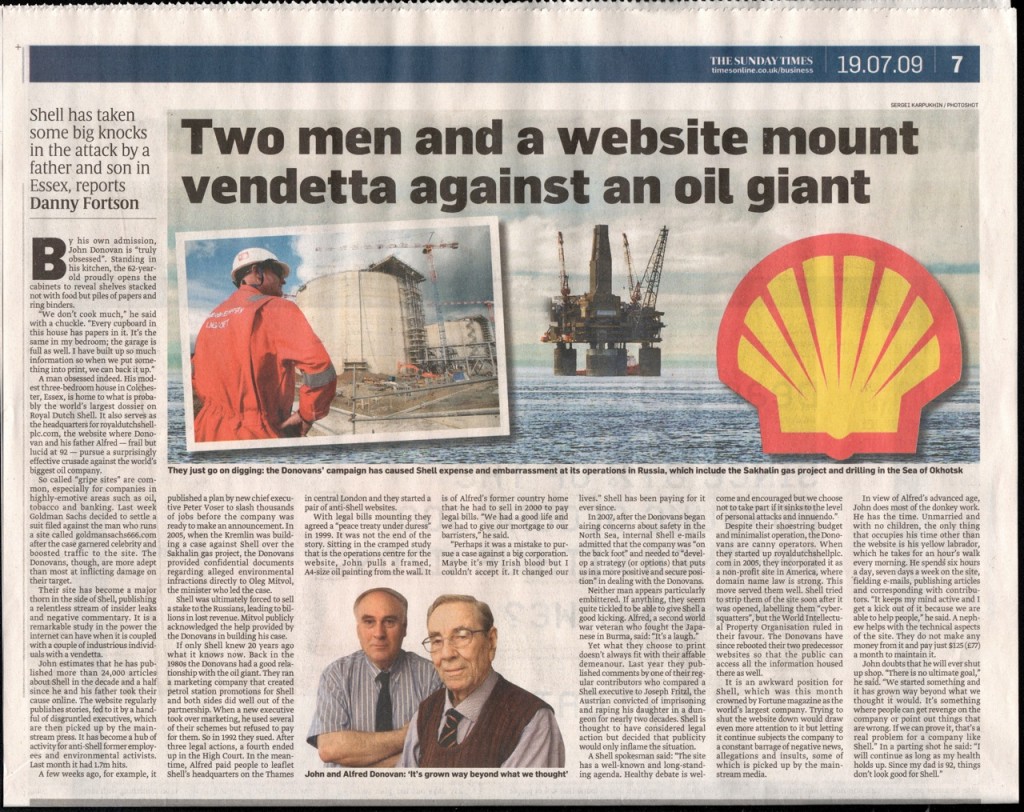
This website and sisters royaldutchshellplc.com, shellnazihistory.com, royaldutchshell.website, johndonovan.website, and shellnews.net, are owned by John Donovan. There is also a Wikipedia segment.


 Royal Dutch Shell conspired directly with Hitler, financed the Nazi Party, was anti-Semitic and sold out its own Dutch Jewish employees to the Nazis. Shell had a close relationship with the Nazis during and after the reign of Sir Henri Deterding, an ardent Nazi, and the founder and decades long leader of the Royal Dutch Shell Group. His burial ceremony, which had all the trappings of a state funeral, was held at his private estate in Mecklenburg, Germany. The spectacle (photographs below) included a funeral procession led by a horse drawn funeral hearse with senior Nazis officials and senior Royal Dutch Shell directors in attendance, Nazi salutes at the graveside, swastika banners on display and wreaths and personal tributes from Adolf Hitler and Reichsmarschall, Hermann Goring. Deterding was an honored associate and supporter of Hitler and a personal friend of Goring.

 Deterding was the guest of Hitler during a four day summit meeting at Berchtesgaden. Sir Henri and Hitler both had ambitions on Russian oil fields. Only an honored personal guest would be rewarded with a private four day meeting at Hitler’s mountain top retreat.


 IN JULY 2007, MR BILL CAMPBELL (ABOVE, A RETIRED GROUP AUDITOR OF SHELL INTERNATIONAL SENT AN EMAIL TO EVERY UK MP AND MEMBER OF THE HOUSE OF LORDS:


 MORE DETAILS:


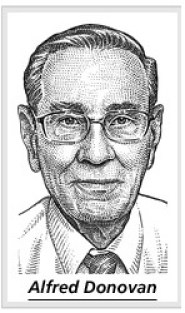 A head-cut image of Alfred Donovan (now deceased) appears courtesy of The Wall Street Journal.