
By John McManus: BBC News: 14 April 2016
The head of energy giant Shell’s UK and Ireland operations has said the UK government should have continued to support a scheme to develop carbon capture technology.
The technology – to store carbon emissions from fossil fuels underground – was being developed at Peterhead power station with the help of Shell.
Chancellor George Osborne cancelled the competition in his Autumn Statement.
Shell’s Paul Goodfellow said the technology needed more development.
Peterhead power station and the White Rose scheme in North Yorkshire were the bidders in the £1bn competition.
The Westminster government says it is still committed to tackling climate change.
Mr Goodfellow, director of Shell UK and Ireland upstream operations, spoke while attending an energy conference at the University of Aberdeen.
‘Using it elsewhere’
He told the BBC: “I do think it is a viable technology that should be used to help with decarbonisation, but it’s early in the technology phase, and therefore there is a collaborative approach needed between industry and government.
“And with government pulling out, that is not the right time for us to progress that at this point.
“But we would hope to be able to use that technology in the future, and of course we are using it elsewhere in the world already.”
Despite the oil price only hovering around the $44-a-barrel-mark, Mr Goodfellow said he was optimistic about the UK continental shelf (UKCS) – despite Shell’s expected job cuts.
He said: “We really have to focus on ‘can we be robust in the price environment today’. That’s where my focus is, that’s where the organisation’s focus is.”
‘Highly sceptical’
He said he believed that fracking, on which there is currently a moratorium in Scotland, would eventually happen.
Fracking is the process of drilling down into the earth before a high-pressure water mixture is directed at the rock to release the gas inside.
Mr Goodfellow said: “It’s sound from a technological perspective and being able to be balanced with the environmental impact that it can create.
“And it’s important that we look at both of those and not just focus on one or the other.”
Last month, First Minister Nicola Sturgeon said she was “highly sceptical” about fracking, but no decision on whether it should be permanently banned would be taken before next year.
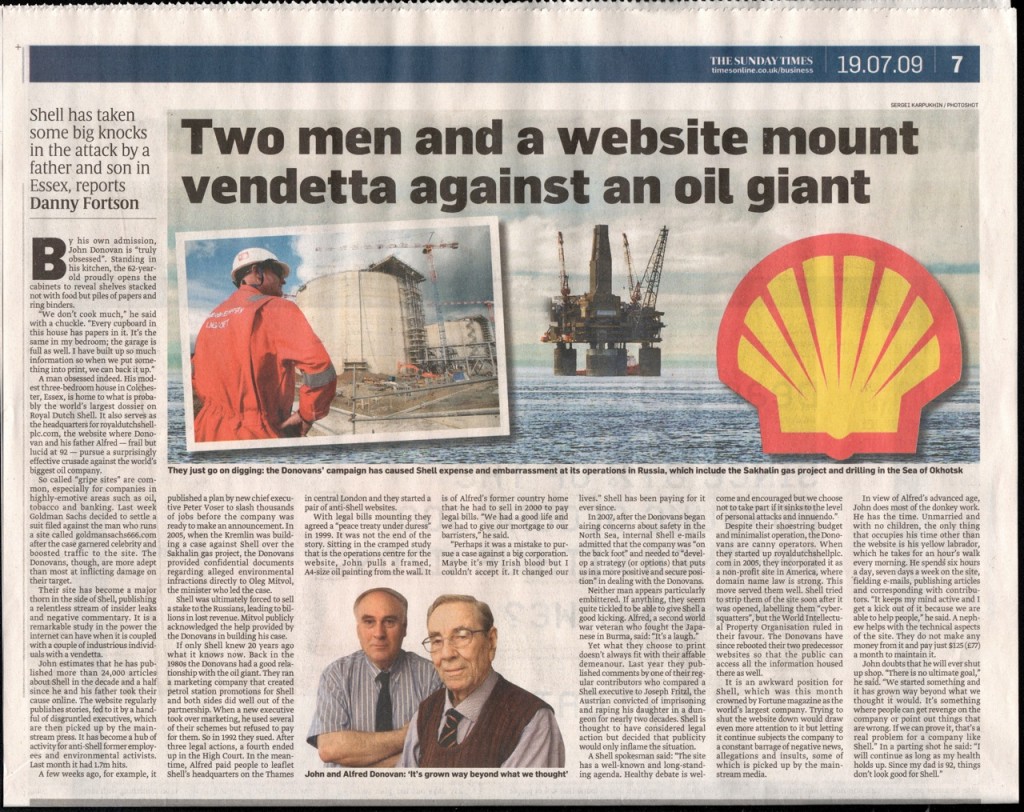
This website and sisters royaldutchshellplc.com, shellnazihistory.com, royaldutchshell.website, johndonovan.website, and shellnews.net, are owned by John Donovan. There is also a Wikipedia segment.


 Royal Dutch Shell conspired directly with Hitler, financed the Nazi Party, was anti-Semitic and sold out its own Dutch Jewish employees to the Nazis. Shell had a close relationship with the Nazis during and after the reign of Sir Henri Deterding, an ardent Nazi, and the founder and decades long leader of the Royal Dutch Shell Group. His burial ceremony, which had all the trappings of a state funeral, was held at his private estate in Mecklenburg, Germany. The spectacle (photographs below) included a funeral procession led by a horse drawn funeral hearse with senior Nazis officials and senior Royal Dutch Shell directors in attendance, Nazi salutes at the graveside, swastika banners on display and wreaths and personal tributes from Adolf Hitler and Reichsmarschall, Hermann Goring. Deterding was an honored associate and supporter of Hitler and a personal friend of Goring.

 Deterding was the guest of Hitler during a four day summit meeting at Berchtesgaden. Sir Henri and Hitler both had ambitions on Russian oil fields. Only an honored personal guest would be rewarded with a private four day meeting at Hitler’s mountain top retreat.


 IN JULY 2007, MR BILL CAMPBELL (ABOVE, A RETIRED GROUP AUDITOR OF SHELL INTERNATIONAL SENT AN EMAIL TO EVERY UK MP AND MEMBER OF THE HOUSE OF LORDS:


 MORE DETAILS:


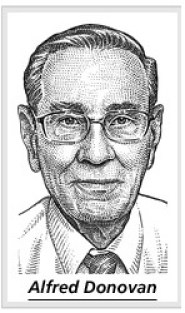 A head-cut image of Alfred Donovan (now deceased) appears courtesy of The Wall Street Journal.