While Greenpeace might find itself facing more burdensome regulation of its campaign against drilling in the Arctic, Shell can avoid any regulation of its efforts to influence government policy in the other direction by using in-house lobbyists.


The Guardian, Monday 2 September 2013 21.00 BST
Some deficiencies of the transparency of lobbying, non-party campaigning and trade union administration bill have been widely trailed. Part 1 of the bill fails to impose transparency obligations on all but a fraction of professional lobbyists. Meanwhile, the uncertainty of rules on non-party campaigning in part 2 poses a serious threat to campaigning by charities and others (Lobbying bill ‘could put charities at risk of prosecution’, 2 September).
Less widely trailed has been the inherent unfairness in the unequal treatment of these two parts of the bill. While Greenpeace might find itself facing more burdensome regulation of its campaign against drilling in the Arctic, Shell can avoid any regulation of its efforts to influence government policy in the other direction by using in-house lobbyists. While Friends of the Earth might find it harder to campaign for better environmental standards in the production of mobile phones, Apple and Samsung could avoid transparency obligations if their consultant lobbyists avoid speaking directly to government ministers and the most senior civil servants.
The government has said that part 2 of the bill is not intended to affect charities and other issue-based campaign groups, as only campaigning that affects the electoral success or standing of parties or candidates would be regulated. But there is much uncertainty about how the rules will apply to campaigning on issues that align with, or contradict, the policy of a particular party or candidate. When combined with threats of criminal liability and the impossibility of knowing for certain when a regulated pre-election period begins, charities and voluntary organisations may be more reluctant to engage in policy debates.
The bill was introduced just a day before the summer recess and its second reading will take place today, just days after parliament resumed. Many civil society organisations will be hoping that MPs are nonetheless able to give it the thought it needs and deserves.
Simon Steeden
Senior associate, Bates Wells Braithwaite solicitors


 Royal Dutch Shell conspired directly with Hitler, financed the Nazi Party, was anti-Semitic and sold out its own Dutch Jewish employees to the Nazis. Shell had a close relationship with the Nazis during and after the reign of Sir Henri Deterding, an ardent Nazi, and the founder and decades long leader of the Royal Dutch Shell Group. His burial ceremony, which had all the trappings of a state funeral, was held at his private estate in Mecklenburg, Germany. The spectacle (photographs below) included a funeral procession led by a horse drawn funeral hearse with senior Nazis officials and senior Royal Dutch Shell directors in attendance, Nazi salutes at the graveside, swastika banners on display and wreaths and personal tributes from Adolf Hitler and Reichsmarschall, Hermann Goring. Deterding was an honored associate and supporter of Hitler and a personal friend of Goring.

 Deterding was the guest of Hitler during a four day summit meeting at Berchtesgaden. Sir Henri and Hitler both had ambitions on Russian oil fields. Only an honored personal guest would be rewarded with a private four day meeting at Hitler’s mountain top retreat.


 IN JULY 2007, MR BILL CAMPBELL (ABOVE, A RETIRED GROUP AUDITOR OF SHELL INTERNATIONAL SENT AN EMAIL TO EVERY UK MP AND MEMBER OF THE HOUSE OF LORDS:


 MORE DETAILS:


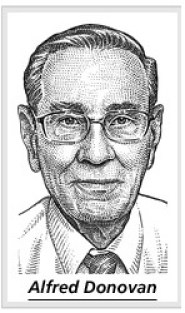 A head-cut image of Alfred Donovan (now deceased) appears courtesy of The Wall Street Journal.