
4 January 2012
 An Ecuadorean appeals court has upheld a ruling that Chevron should pay damages totalling $18.2bn (£11.5bn) over Amazon oil pollution.
Chevron said the judgement was “illegitimate” and “a fraud”.
Texaco, which merged with Chevron in 2001, was accused of dumping toxic materials in the Ecuadorean Amazon.
The original ruling ordered Chevron to pay $8.6bn in damages, which was more than doubled after the company failed to make a public apology.
“We ratify the ruling of February 14 2011 in all its parts, including the sentence for moral reparation,” the court in the Amazonian city of Lago Agrio said in its ruling, according to Reuters.
Long-running battle
In a statement released in response, Chevron said the decision was a “glaring example of the politicization and corruption of Ecuador’s judiciary”. It said it would continue to seek recourse through proceedings outside Ecuador.
The decision is the latest twist in a long-running legal battle between Chevron and the Ecuadorean plaintiffs.
The lawsuit was brought on behalf of 30,000 Ecuadoreans, in a case which has dragged on for years.
Ecuadorean indigenous groups said Texaco dumped more than 18bn gallons (68bn litres) of toxic materials into unlined pits and rivers between 1972 and 1992.
But Chevron says Texaco spent $40m cleaning up the area during the 1990s, and signed an agreement with Ecuador in 1998 absolving it of any further responsibility.
In September, a US appeals court overturned a decision to block the collection of the fine from the company.
Plaintiffs, who had agreed not to attempt to collect the damages until the appeals process was completed in Ecuador, welcomed Tuesday’s ruling.
“This [ruling] confirms and ratifies that the company polluted and affected the Amazon,” they said in a statement.
“It is necessary to clarify that no amount will be enough to repair all the crime they did in our area, nor will it be enough to bring the dead back to life.”
Ecuador’s President Rafael Correa described the dispute as a “David and Goliath” battle.
“I think justice has been done,” he said after the ruling was announced.
“The harm that Chevron caused to the Amazon cannot be denied.”
Chevron has challenged the fine, arguing that lawyers and supporters of the indigenous groups who brought the case conspired to fabricate evidence.
In a previous separate case, international arbitrators ordered the Ecuadorean government to pay $96m to Chevron because Ecuador’s courts had violated international law as a result of delays in resolving commercial disputes involving Texaco.
RELATED ARTICLES
- US court upholds Chevron oil fine
- Ecuador’s oil battle far from over
- Chevron hits back in Amazon row


 Royal Dutch Shell conspired directly with Hitler, financed the Nazi Party, was anti-Semitic and sold out its own Dutch Jewish employees to the Nazis. Shell had a close relationship with the Nazis during and after the reign of Sir Henri Deterding, an ardent Nazi, and the founder and decades long leader of the Royal Dutch Shell Group. His burial ceremony, which had all the trappings of a state funeral, was held at his private estate in Mecklenburg, Germany. The spectacle (photographs below) included a funeral procession led by a horse drawn funeral hearse with senior Nazis officials and senior Royal Dutch Shell directors in attendance, Nazi salutes at the graveside, swastika banners on display and wreaths and personal tributes from Adolf Hitler and Reichsmarschall, Hermann Goring. Deterding was an honored associate and supporter of Hitler and a personal friend of Goring.

 Deterding was the guest of Hitler during a four day summit meeting at Berchtesgaden. Sir Henri and Hitler both had ambitions on Russian oil fields. Only an honored personal guest would be rewarded with a private four day meeting at Hitler’s mountain top retreat.


 IN JULY 2007, MR BILL CAMPBELL (ABOVE, A RETIRED GROUP AUDITOR OF SHELL INTERNATIONAL SENT AN EMAIL TO EVERY UK MP AND MEMBER OF THE HOUSE OF LORDS:


 MORE DETAILS:


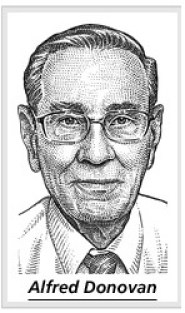 A head-cut image of Alfred Donovan (now deceased) appears courtesy of The Wall Street Journal.