Wednesday, June 24, 2009
The Moscow Times Issue 4173
By Anatoly Medetsky
A senior Natural Resources and Environment Ministry official on Tuesday called for a revision of the rules that govern access to strategic oil and gas fields by companies with foreign capital, following concern from the industry that the regulations would stifle exploration.
Without clarification, companies may lose interest in doing any exploration in Russia, said Grigory Vygon, the ministry’s economy and finance department chief, in the government’s first indication that it recognizes the problem.
“In the event that the license is revoked … it may turn out that companies will not have any interest in investing in exploration,” Vygon said at an industry conference.
He urged a “better definition” of the rules to develop strategic fields.
Under the amendments to the law on subsoil reserves that went into effect in May 2008, the government may ban a fully or partly foreign-owned company that finds gas or oil from developing the field if it contains at least 70 million tons of oil or 50 billion cubic meters of gas.
Royal Dutch Shell executives publicly complained about the rule earlier this year. The company’s director for exploration and production, Malcolm Brinded, said in February that foreign investors wanted more confidence about accessing the oil and gas riches they discover.
“We would like to see more confidence … that if you explore you will be able to get on and develop,” he said in an interview with The Moscow Times.
The subsoil reserves law lays out very broad terms under which the government may stop a foreign-owned company from developing a newly discovered field, defining them as a potential “threat to national defense and security.”
Vygon said the Natural Resources and Environment Ministry had no concrete proposals but was ready to draft them.
“It’s a delicate subject,” he told The Moscow Times on the sidelines of the conference. “We need to work on this.
“There are a lot of questions about this,” he said. “Companies have been contacting us.”
The current rules apply to all oil and gas companies working in Russia, he said.
“All our companies have a foreign owner,” he said.
Even the industry champion, state-controlled Rosneft, has a number of foreign minority shareholders, such as BP. The British oil major also owns half of TNK-BP, the third-largest oil producer in Russia.
LUKoil, the country’s second-biggest oil company, is 20 percent owned by U.S.-based ConocoPhillips.
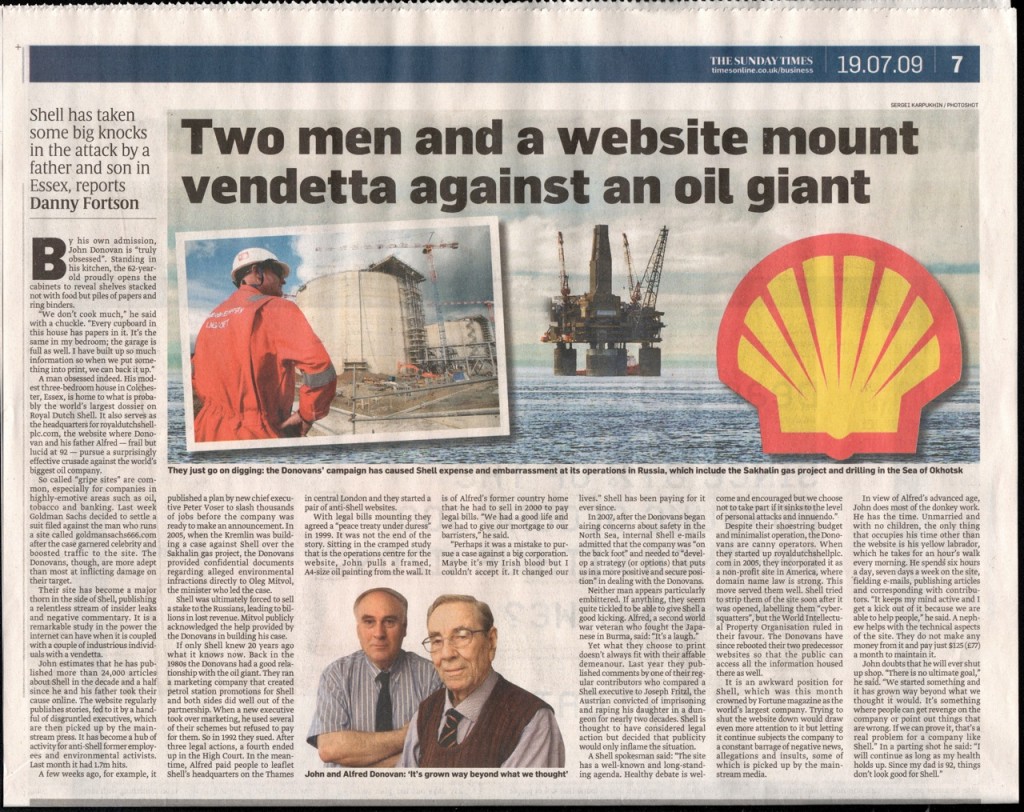
This website and sisters royaldutchshellplc.com, shellnazihistory.com, royaldutchshell.website, johndonovan.website, and shellnews.net, are owned by John Donovan. There is also a Wikipedia segment.


 Royal Dutch Shell conspired directly with Hitler, financed the Nazi Party, was anti-Semitic and sold out its own Dutch Jewish employees to the Nazis. Shell had a close relationship with the Nazis during and after the reign of Sir Henri Deterding, an ardent Nazi, and the founder and decades long leader of the Royal Dutch Shell Group. His burial ceremony, which had all the trappings of a state funeral, was held at his private estate in Mecklenburg, Germany. The spectacle (photographs below) included a funeral procession led by a horse drawn funeral hearse with senior Nazis officials and senior Royal Dutch Shell directors in attendance, Nazi salutes at the graveside, swastika banners on display and wreaths and personal tributes from Adolf Hitler and Reichsmarschall, Hermann Goring. Deterding was an honored associate and supporter of Hitler and a personal friend of Goring.

 Deterding was the guest of Hitler during a four day summit meeting at Berchtesgaden. Sir Henri and Hitler both had ambitions on Russian oil fields. Only an honored personal guest would be rewarded with a private four day meeting at Hitler’s mountain top retreat.


 IN JULY 2007, MR BILL CAMPBELL (ABOVE, A RETIRED GROUP AUDITOR OF SHELL INTERNATIONAL SENT AN EMAIL TO EVERY UK MP AND MEMBER OF THE HOUSE OF LORDS:


 MORE DETAILS:


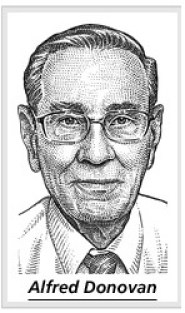 A head-cut image of Alfred Donovan (now deceased) appears courtesy of The Wall Street Journal.