
Fri Nov 28, 2008 3:21am EST
By Maria Golovnina
ALMATY, Nov 28 (Reuters) – If you are a foreign company doing business in the former Soviet republic of Kazakhstan, you might want to start taking some Kazakh lessons.
U.S. oil group Chevron (CVX.N: Quote,Profile, Research, Stock Buzz), developing Kazakhstan’s biggest oil deposit, said on Friday it had received a note from the authorities accusing it of neglecting Kazakh as a language of business communication.
The accusation is part of a broader trend in the resource-rich nation to revive Kazakh — a Turkic language spoken in most parts of Central Asia — as a symbol of the country’s independence from Moscow’s rule.
Chevron said it disagreed with the assertion.
“(We) developed a Kazakh language plan many years ago and we are proud to say that a significant portion of our most critical business is done in all three languages,” Chevron’s local unit said in a statement written in English, Russian and Kazakh.
Chevron was one of the first foreign investors to set up base in Kazakhstan after the 1991 collapse of the Soviet Union.
Home to some of the world’s biggest oil reserves, Kazakhstan has now attracted over $50 billion in foreign investment and the strategic energy sector is dominated by Western companies.
But, emboldened by its rapid economic growth, Kazakhstan has sought to increase the role of the state in key sectors and show foreign companies they have to abide more by local rules.
Language is a particularly contentious issue in a country where people were forced to speak Russian en masse — first under Tsarist rule and later during Soviet times.
Even though Russian remains the lingua franca and most government meetings are still held in Russian, the government is trying to change the picture.
It now requires civil servants to take a language test when applying for jobs and has put pressure on foreign companies to speak more Kazakh.
Britain’s HSBC (HSBA.L: Quote, Profile, Research, Stock Buzz) said it was introducing a Kazakh language programme for its staff from next year and planned to open a Kazakh-language website from next month.
“There is a growing trend for more Kazakh,” said Elmira Daukenova, an HSBC spokeswoman. “Documents, websites, advertisement, everything has to be translated into Kazakh now.”
(Editing by Mark Trevelyan)
© Thomson Reuters 2008 All rights reserved
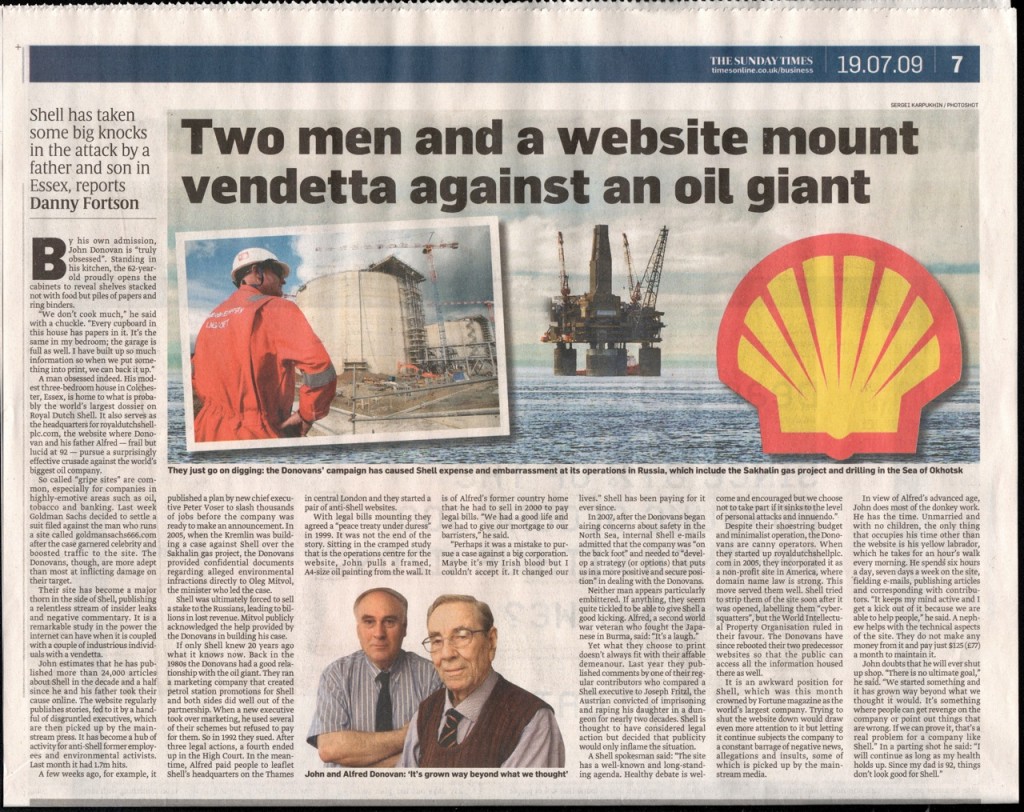
This website and sisters royaldutchshellplc.com, shellnazihistory.com, royaldutchshell.website, johndonovan.website, and shellnews.net, are owned by John Donovan. There is also a Wikipedia segment.


 Royal Dutch Shell conspired directly with Hitler, financed the Nazi Party, was anti-Semitic and sold out its own Dutch Jewish employees to the Nazis. Shell had a close relationship with the Nazis during and after the reign of Sir Henri Deterding, an ardent Nazi, and the founder and decades long leader of the Royal Dutch Shell Group. His burial ceremony, which had all the trappings of a state funeral, was held at his private estate in Mecklenburg, Germany. The spectacle (photographs below) included a funeral procession led by a horse drawn funeral hearse with senior Nazis officials and senior Royal Dutch Shell directors in attendance, Nazi salutes at the graveside, swastika banners on display and wreaths and personal tributes from Adolf Hitler and Reichsmarschall, Hermann Goring. Deterding was an honored associate and supporter of Hitler and a personal friend of Goring.

 Deterding was the guest of Hitler during a four day summit meeting at Berchtesgaden. Sir Henri and Hitler both had ambitions on Russian oil fields. Only an honored personal guest would be rewarded with a private four day meeting at Hitler’s mountain top retreat.


 IN JULY 2007, MR BILL CAMPBELL (ABOVE, A RETIRED GROUP AUDITOR OF SHELL INTERNATIONAL SENT AN EMAIL TO EVERY UK MP AND MEMBER OF THE HOUSE OF LORDS:


 MORE DETAILS:


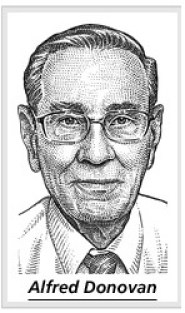 A head-cut image of Alfred Donovan (now deceased) appears courtesy of The Wall Street Journal.