Corporate Watch
October 13, 2008
Oil giant Shell has recently won the Big Oil race to become the first major oil company to gain access to Iraq’s energy sector since the 1970s. With no competitive bidding process, the Dutch-British multinational has ‘won’ a $4bn contract to process and market natural gas with the South Gas Company in Basra.
The deal has been conducted in secret, leaving important information about the terms and authorship unknown. This secrecy has meant the contract was not subject to any public scrutiny or debate. Platform co-director Greg Muttitt surmised that “a country under occupation has introduced an oil policy that is favourable to western oil companies. The [US] State Department has already admitted that it has advisers working on oil policy and there is a likelihood they may have drafted the Shell contract.”
However, attempts to gain control over Iraq’s oil fields have not gone so well. As Corporate Watch reported last year (www.corporatewatch.org/?lid=2912), an oil law permitting de-facto oil privatisation was drafted under pressure from Big Oil, the US and UK governments, their consultants, and the IMF. It was presented to the Iraqi parliament in May 2007 and was expected to pass quickly. However, Iraqi and international opposition to transferring oil sovereignty to multinational oil companies has helped create a climate in which the Iraqi parliament has been able to resist the extreme pressure by US and UK governments and the has not been passed to date. So the big oil companies and governments are busy finding other avenues to the eventual prize of control over Iraq’s vast oil fields.
These avenues include discussing, preparing, and now bidding for contracts such as Risk Service Contracts (RSCs). While usually offering companies less in terms of long-term control over production and revenue than the prized Production Sharing Contracts (PSCs), they can nonetheless be written to be very similar to PSCs. The ‘devil’ is in the detail with these complex agreements, details which have not been disclosed. What is certain is that, if secured, they will represent a radical departure from traditional Iraqi and indeed international oil policy.
Risk Service Contracts, for instance, would still put private companies in charge of oil fields that are currently run by the public sector. Even the rejected draft Oil Law prescribed that those oil fields already producing oil would be run by the Iraqi National Oil Company (INOC). But this policy was reversed in June 2008 when the government announced that oil companies would be invited to bid for RSC contracts on six fields which collectively produce over 90% of Iraq’s current oil. They also offer far more control and profit to the oil companies than in any other major oil-producing country. They grant INOC a mere 25% stake, paltry in comparison with the average 80% demanded by the Libyan State Oil Company for new exploration contracts, for example, or with Nigeria’s National Petroleum Company, which is regarded as one of OPEC’s members most friendly to western companies, with a 55% stake in onshore projects.
These PSC-lite versions represent a desperate attempt by Big Oil to combat the resistance and to get their foot in the back door to Iraq’s massive oil reserves. At the same time, the US administration is battling to ratify the Status of Forces Agreement (SOFA) in order to maintain the occupation beyond the end of 2008, when the UN Mandate expires. Rumours are circulating in Baghdad that this agreement will also include provisions allowing for the privatisation of the oil fields. While any agreement will not have the detail or the binding force of the Oil Law, the strategy seems to be to prolong the occupation to retain the political dominance to eventually get the privatisation they have been fighting for.
Of course, these attempts need coordination. On 13 October, 2008, Iraqi Oil Minister Hussein al-Shahristani will meet with representatives of 41 international oil companies in London. This will be the formal launch of a round of bidding for some of Iraq’s largest oil fields, with the aim of signing long-term contracts in June 2009. The Iraqi Oil Ministry claims these deals will be for risk service contracts in theory, a significant improvement over PSCs. But with such secrecy, it is impossible to know what the Iraqi government is signing away. What we do know is what the US and UK government, and Big Oil want, and the force enabled by prolonging the occupation that they will use to get it.
For more details, see Greg Muttitt’s recent articles at:
www.carbonweb.org/showitem.asp?article=332&parent=39,www.niqash.org/content.php?contentTypeID=28&id=2230?=0and www.carbonweb.org/showitem.asp?article=333&parent=9.


 Royal Dutch Shell conspired directly with Hitler, financed the Nazi Party, was anti-Semitic and sold out its own Dutch Jewish employees to the Nazis. Shell had a close relationship with the Nazis during and after the reign of Sir Henri Deterding, an ardent Nazi, and the founder and decades long leader of the Royal Dutch Shell Group. His burial ceremony, which had all the trappings of a state funeral, was held at his private estate in Mecklenburg, Germany. The spectacle (photographs below) included a funeral procession led by a horse drawn funeral hearse with senior Nazis officials and senior Royal Dutch Shell directors in attendance, Nazi salutes at the graveside, swastika banners on display and wreaths and personal tributes from Adolf Hitler and Reichsmarschall, Hermann Goring. Deterding was an honored associate and supporter of Hitler and a personal friend of Goring.

 Deterding was the guest of Hitler during a four day summit meeting at Berchtesgaden. Sir Henri and Hitler both had ambitions on Russian oil fields. Only an honored personal guest would be rewarded with a private four day meeting at Hitler’s mountain top retreat.


 IN JULY 2007, MR BILL CAMPBELL (ABOVE, A RETIRED GROUP AUDITOR OF SHELL INTERNATIONAL SENT AN EMAIL TO EVERY UK MP AND MEMBER OF THE HOUSE OF LORDS:


 MORE DETAILS:


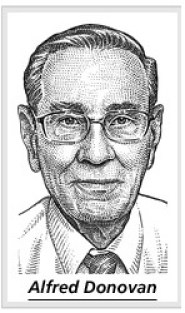 A head-cut image of Alfred Donovan (now deceased) appears courtesy of The Wall Street Journal.