
Financial Times: Opec chief warns oil could hit $200 a barrel
By Carola Hoyos in London
Published: April 29 2008 03:00 | Last updated: April 29 2008 03:00
Opec’s president yesterday warned oil prices could hit $200 a barrel and there would be little the cartel could do to help.
The comments made by Chakib Khelil, Algeria’s energy minister, came as oil prices hit a historic peak close to $120 a barrel, putting further pressure on global economies.
His remarks suggest Algeria wants Opec to continue to resist calls by US and European leaders for the cartel to pump more oil to help ease prices. But Mr Khelil blamed record oil prices on the weak dollar and global political insecurity.
He told El Moudjahid, Algeria’s government newspaper: “I don’t think that an increase in production would help lower prices, because there is a balance between supply and demand and the stocks of gasoline in the United States have recorded a surplus and are at their highest level for five years.”
He added: “The prices are high due to the recession in the United States and the economic crisis, which has touched several countries, a situation that has an effect on the value of the dollar. Each time the dollar falls 1 per cent, the price of the barrel rises by $4 and of course vice versa.”
Some US senators have pinned the blame for high oil prices directly on Opec and Saudi Arabia, its largest and most powerful member. In a letter to President George W. Bush last week, they said Riyadh had cut its oil production by about 2m barrels a day over the past three years even though oil prices had continued to rise.
Ali Naimi, Saudi Arabia’s oil minister, earlier this month said he did not believe the market needed any more oil, adding the kingdom would pump more if needed. Saudi Arabia, the only Opec country with significant spare capacity, has reduced output slightly in recent weeks as it believes demand will fall, especially in the US, because of the economic downturn and the end of winter.
The current impasse risks further worsening relations between the US and Saudi Arabia – one of the world’s most reliable suppliers of crude oil for decades. That relationship has been strained by the west’s growing dependence on Riyadh’s oil and the kingdom’s apparent unwillingness to do much to lower prices.
Opec ministers most recently put oil price expectations in the $90-$120 a barrel range.
Sand into gold, Page 9 Editorial Comment, Page 10
Copyright The Financial Times Limited 2008
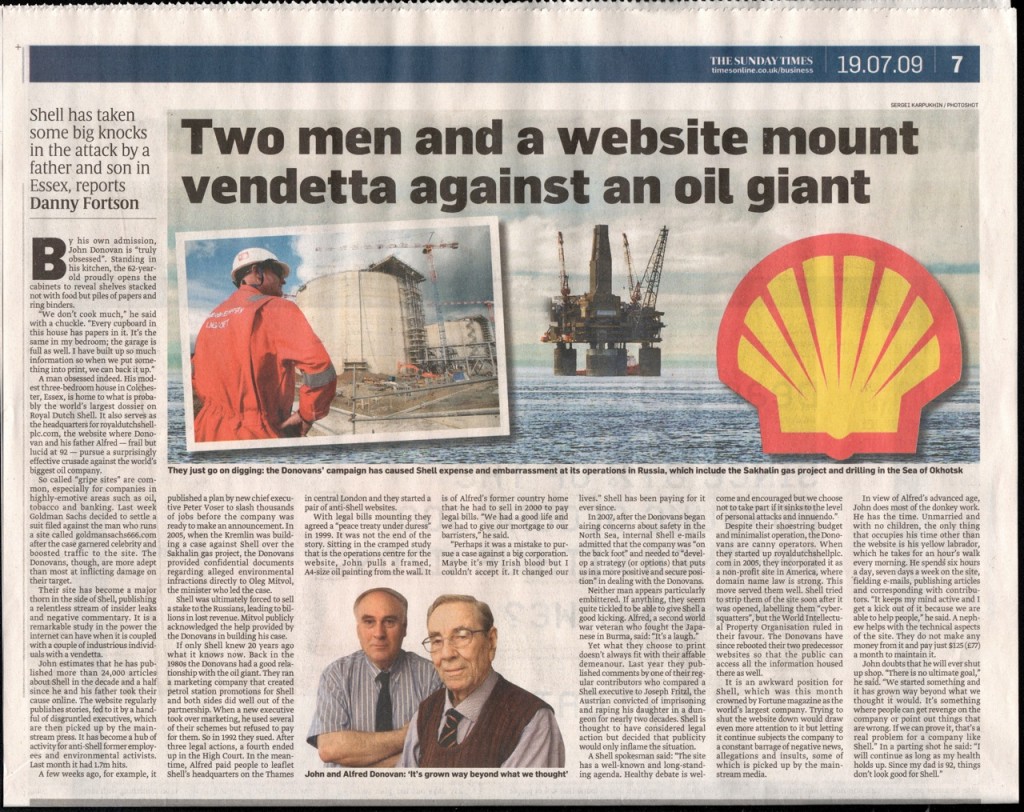
This website and sisters royaldutchshellplc.com, shellnazihistory.com, royaldutchshell.website, johndonovan.website, and shellnews.net, are owned by John Donovan. There is also a Wikipedia segment.


 Royal Dutch Shell conspired directly with Hitler, financed the Nazi Party, was anti-Semitic and sold out its own Dutch Jewish employees to the Nazis. Shell had a close relationship with the Nazis during and after the reign of Sir Henri Deterding, an ardent Nazi, and the founder and decades long leader of the Royal Dutch Shell Group. His burial ceremony, which had all the trappings of a state funeral, was held at his private estate in Mecklenburg, Germany. The spectacle (photographs below) included a funeral procession led by a horse drawn funeral hearse with senior Nazis officials and senior Royal Dutch Shell directors in attendance, Nazi salutes at the graveside, swastika banners on display and wreaths and personal tributes from Adolf Hitler and Reichsmarschall, Hermann Goring. Deterding was an honored associate and supporter of Hitler and a personal friend of Goring.

 Deterding was the guest of Hitler during a four day summit meeting at Berchtesgaden. Sir Henri and Hitler both had ambitions on Russian oil fields. Only an honored personal guest would be rewarded with a private four day meeting at Hitler’s mountain top retreat.


 IN JULY 2007, MR BILL CAMPBELL (ABOVE, A RETIRED GROUP AUDITOR OF SHELL INTERNATIONAL SENT AN EMAIL TO EVERY UK MP AND MEMBER OF THE HOUSE OF LORDS:


 MORE DETAILS:


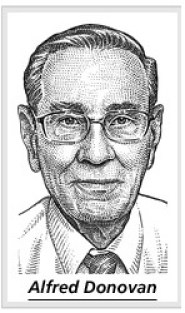 A head-cut image of Alfred Donovan (now deceased) appears courtesy of The Wall Street Journal.