Financial Times: Russia a prime location for retail invasion
By Alistair Gray
Published: April 15 2008 03:16 | Last updated: April 15 2008 03:16
British retailers, facing fragile prospects in their domestic markets, may be missing out on a “unique” expansion opportunity offered by Russia, according to senior figures at Ernst & Young and KPMG.
Ongoing concerns about corruption and bureaucracy have deterred many retail companies from the country. DSG, for example, walked away from a planned Russian acquisition last year after almost two years of due diligence, deciding it was not “appropriate” because of “corporate, economic and political risks”.
But Gavin George, head of retail at Ernst & Young, says the take-off in consumer spending by a rapidly expanding post-Soviet middle class, a relatively efficient tax system and greater economic stability make the country a better long-term prospect for store expansion than India or China.
Roger Munnings, chairman of KPMG in Russia, agrees. “The perception is different from the reality,” he says. “That’s not to say it [corruption] doesn’t exist [but] the reality is that it is possible to do business transparently … this is a potential opportunity not to ignore.”
Their comments come ahead of a planned charm offensive at the Russia Investment Roadshow in London next week, which will trumpet the country as a prime market for expansion by western companies.
Simon Joseph, an organiser of the roadshow, concedes it is a “challenging” time to host the annual event. Anglo-Russian relations are near a post-cold war low after the poisoning of Alexander Litvinenko, a London-based dissident. It also emerged last summer that the British government had stepped up warnings to businesses about the risks of investing in the country.
Although many luxury brands have done relatively well in the post-Soviet era, market penetration by mainstream foreign retailers remains low because of logistical problems and a chronic lack of suitable properties. Even the largest, such as grocers Wal-Mart and Tesco, have a relatively limited presence.
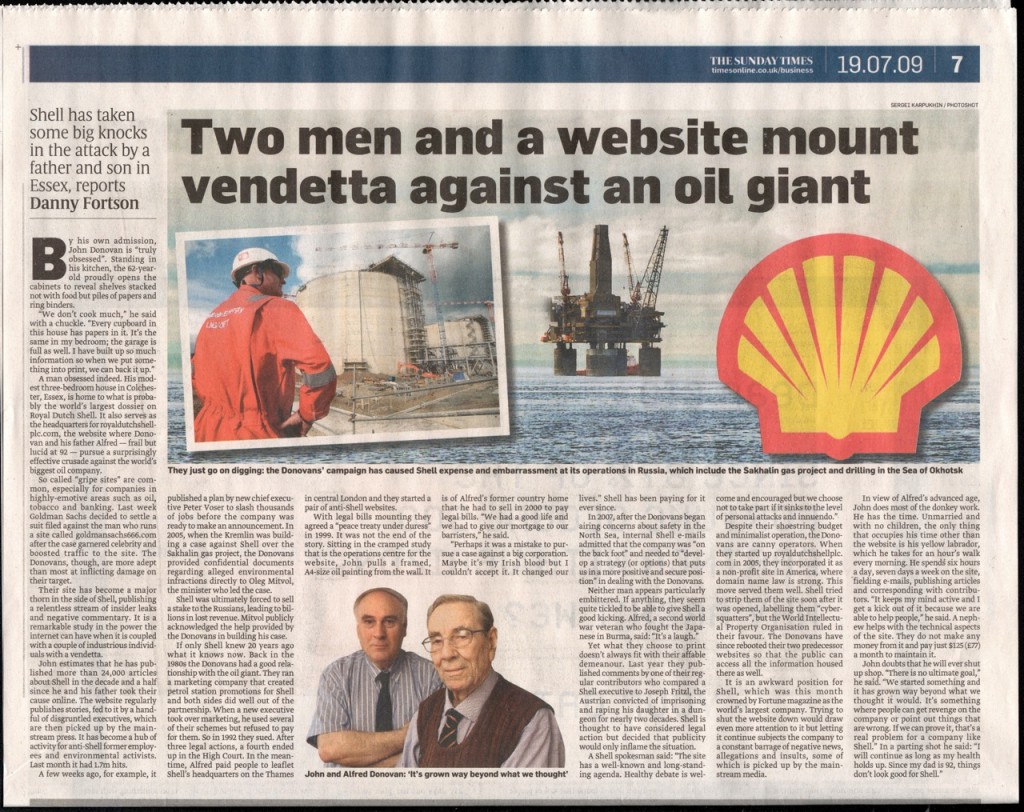
Moreover, retailers are far from the only sector to face difficulties. The Kremlin has flexed its muscles over foreign energy companies, with Shell and BP facing well-documented problems.
That said, per capita monthly income in the country is expected to increase by 44 per cent between 2007 and 2010, according to Ernst & Young, which argues Russia is a “compelling” potential market for retailers.
The market remains fragmented – the largest retailers only have about a 1.5 per cent share – and Germany’s Metro and Auchan of France have grown rapidly since the start of the decade. “Some of the business practices are different [but] once you trade there for a bit, you adapt your model to deal with it,” said Mr George. “We’re not talking about Africa, where you have open corruption.”
Copyright The Financial Times Limited 2008
This website and sisters royaldutchshellplc.com, shellnazihistory.com, royaldutchshell.website, johndonovan.website, and shellnews.net, are owned by John Donovan. There is also a Wikipedia segment.


 Royal Dutch Shell conspired directly with Hitler, financed the Nazi Party, was anti-Semitic and sold out its own Dutch Jewish employees to the Nazis. Shell had a close relationship with the Nazis during and after the reign of Sir Henri Deterding, an ardent Nazi, and the founder and decades long leader of the Royal Dutch Shell Group. His burial ceremony, which had all the trappings of a state funeral, was held at his private estate in Mecklenburg, Germany. The spectacle (photographs below) included a funeral procession led by a horse drawn funeral hearse with senior Nazis officials and senior Royal Dutch Shell directors in attendance, Nazi salutes at the graveside, swastika banners on display and wreaths and personal tributes from Adolf Hitler and Reichsmarschall, Hermann Goring. Deterding was an honored associate and supporter of Hitler and a personal friend of Goring.

 Deterding was the guest of Hitler during a four day summit meeting at Berchtesgaden. Sir Henri and Hitler both had ambitions on Russian oil fields. Only an honored personal guest would be rewarded with a private four day meeting at Hitler’s mountain top retreat.


 IN JULY 2007, MR BILL CAMPBELL (ABOVE, A RETIRED GROUP AUDITOR OF SHELL INTERNATIONAL SENT AN EMAIL TO EVERY UK MP AND MEMBER OF THE HOUSE OF LORDS:


 MORE DETAILS:


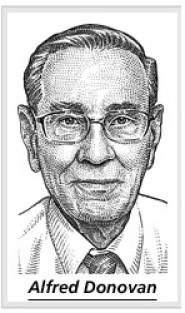 A head-cut image of Alfred Donovan (now deceased) appears courtesy of The Wall Street Journal.