With financing from the federal government, large-scale plant would be the first in Canada to use wheat straw to make ethanol
SHAWN MCCARTHY
GLOBAL ENERGY REPORTER
March 15, 2008
OTTAWA — Iogen Corp. said yesterday it is closing in on federal funding that will allow it to build Canada’s first cellulosic ethanol refinery, a $500-million plant in northern Saskatchewan that will use wheat straw to produce biofuel, electricity, enzymes and fertilizer.
Ottawa’s Sustainable Development Technology Canada (SDTC) confirmed yesterday that Iogen is eligible for financing under its next-generation biofuel fund, subject to the corporation completing its due diligence and a final decision from its board.
The federal government, in its 2007 budget, created a $500-million investment fund to finance as much as 40 per cent of eligible costs for next-generation biofuels plants. At the time, Iogen was mentioned specifically as a company that might benefit from such a fund.
Environment Minister John Baird said that, as a result of government funding and Iogen’s progress, “Canada is one step closer to making our country’s first full-scale cellulosic ethanol facility a reality.
“With technologies such as this, Canada is well-positioned to be a world leader in the renewable fuels sector,” he said.
Ottawa-based Iogen has had a demonstration plant running for four years, producing 2.5 million litres of ethanol a year from agricultural waste products. It is the only plant in North America producing significant quantities of cellulosic ethanol.
Iogen now intends to build a bio-refinery in Prince Albert, Sask., that will process 750 tonnes of wheat straw a day into 90 million litres of ethanol annually, as well as electricity and other value-added products.
The company, which is backed by Royal Dutch Shell and Goldman Sachs Group Inc., is developing a similar project in Idaho after being selected as one of six companies that qualify for U.S. Department of Energy funding. It is still negotiating the terms of the funding.
Other Canadian companies as well are pursuing the dream of turning agricultural or wood waste into ethanol. Governments in North America and around the world are aggressively pursuing the replacement of gasoline and diesel with biofuels as a way to reduce greenhouse gas emissions and reduce reliance on imported oil.
Cellulosic ethanol is considered a major improvement over corn-based fuel because it does not compete with a food staple and achieves better reductions in greenhouse gas emissions over the life of its production.
Iogen is years ahead of such competitors as British Columbia-based Lignol Energy Corp. or Quebec’s Enerkem Technologies Inc., both of which have received funding from SDTC to build pilot projects to test their processes.
Iogen executive vice-president Jeff Passmore said he expects SDTC will provide financing once it is satisfied that the company’s process is commercially viable.
“It is the intent of the parties, subject to the conclusion of due diligence, to proceed with the project,” he said.
He said Iogen expects to follow the initial commercial demonstration plant with others that will not require government financing. “It makes it a lot easier [to be commercially viable] with high oil prices,” he said, adding the U.S. government has set an aggressive target for fuel use from cellulosic ethanol and will subsidize the consumption of the fuel.
SDTC president Vicky Sharpe cautioned that the corporation still has a significant amount of work to do before it can sign off on support for Iogen.
“This is the first applicant to the fund that has been declared to be eligible, and that is very exciting for us,” she said in an interview from Vancouver, where she and Mr. Baird attended the Globe 2008 environmental technology show.
“We hope that we’re going to work together in terms of funding and support, but we’ve got to undertake our due diligence and we also have to take that due diligence to our board of directors for their approval.”
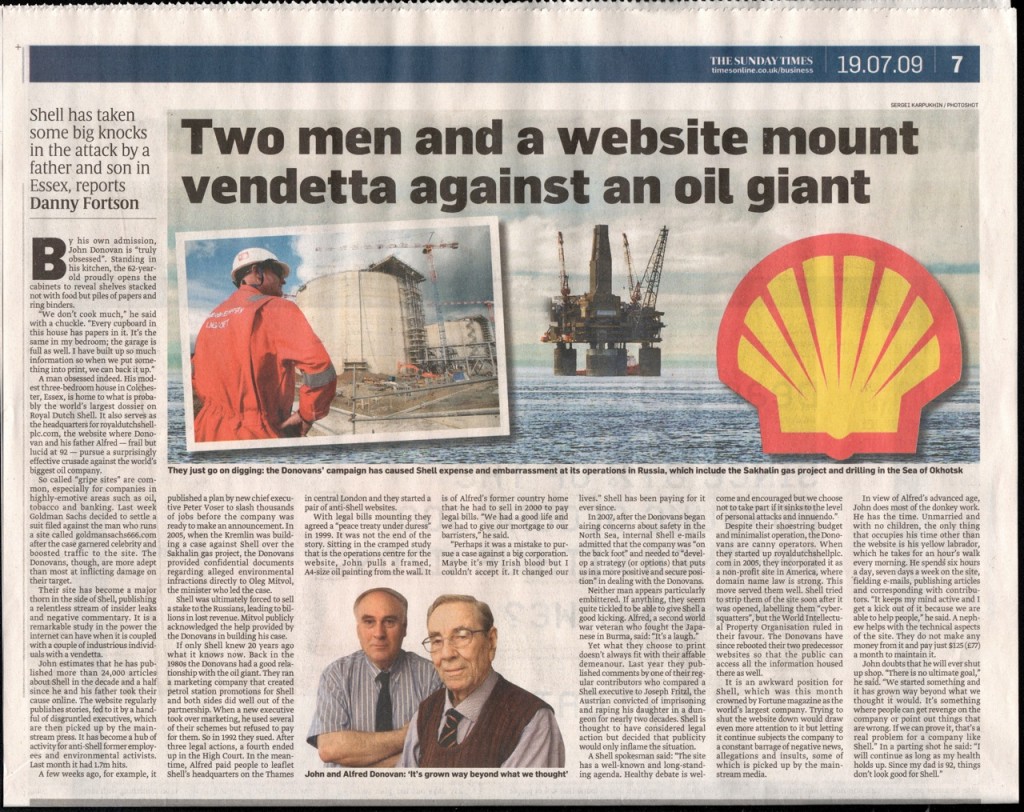
This website and sisters royaldutchshellplc.com, shellnazihistory.com, royaldutchshell.website, johndonovan.website, and shellnews.net, are owned by John Donovan. There is also a Wikipedia segment.


 Royal Dutch Shell conspired directly with Hitler, financed the Nazi Party, was anti-Semitic and sold out its own Dutch Jewish employees to the Nazis. Shell had a close relationship with the Nazis during and after the reign of Sir Henri Deterding, an ardent Nazi, and the founder and decades long leader of the Royal Dutch Shell Group. His burial ceremony, which had all the trappings of a state funeral, was held at his private estate in Mecklenburg, Germany. The spectacle (photographs below) included a funeral procession led by a horse drawn funeral hearse with senior Nazis officials and senior Royal Dutch Shell directors in attendance, Nazi salutes at the graveside, swastika banners on display and wreaths and personal tributes from Adolf Hitler and Reichsmarschall, Hermann Goring. Deterding was an honored associate and supporter of Hitler and a personal friend of Goring.

 Deterding was the guest of Hitler during a four day summit meeting at Berchtesgaden. Sir Henri and Hitler both had ambitions on Russian oil fields. Only an honored personal guest would be rewarded with a private four day meeting at Hitler’s mountain top retreat.


 IN JULY 2007, MR BILL CAMPBELL (ABOVE, A RETIRED GROUP AUDITOR OF SHELL INTERNATIONAL SENT AN EMAIL TO EVERY UK MP AND MEMBER OF THE HOUSE OF LORDS:


 MORE DETAILS:


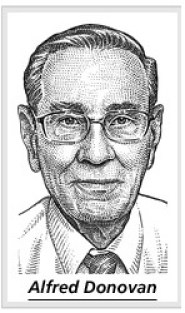 A head-cut image of Alfred Donovan (now deceased) appears courtesy of The Wall Street Journal.