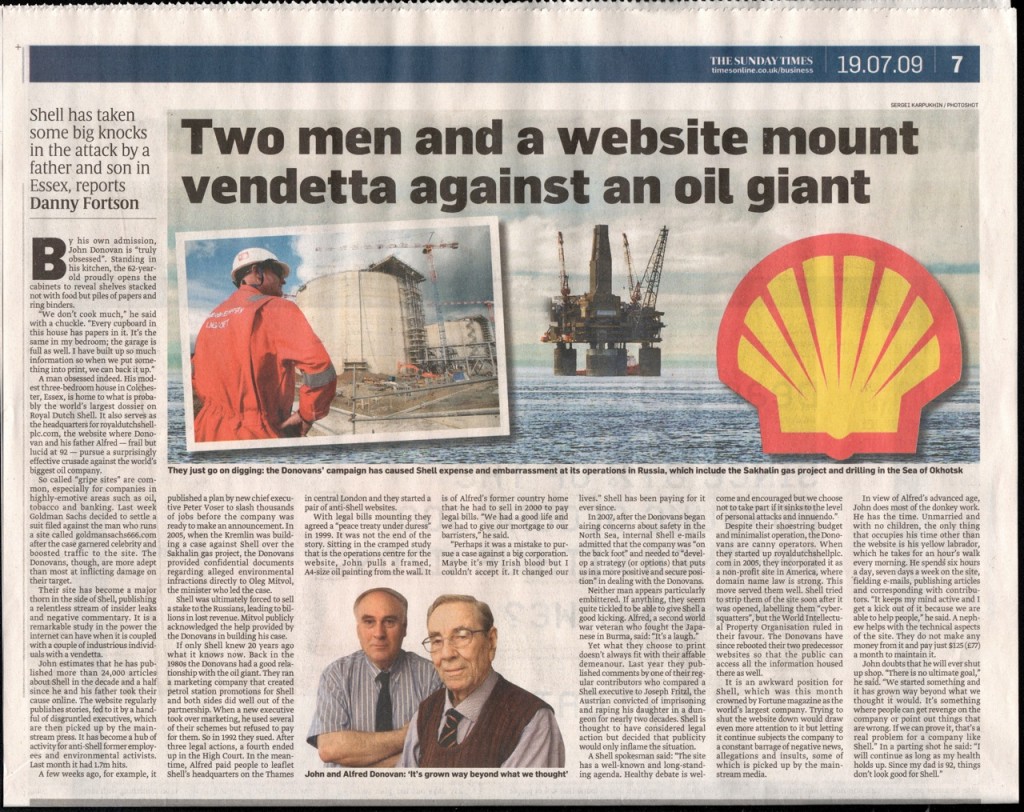
London, 6 March: The consortium behind the much-criticised Sakhalin II oil and gas project in Russia has withdrawn applications for support from the US and UK export credit agencies, citing their drawn-out and uncertain timetable for decision making.
However, environmental groups claimed Monday’s decision to cancel applications to the UK’s Export Credit Guarantee Department (ECGD) and the US Export Import Bank (Ex-Im) as a success for their campaign against the project. Dmitry Lisitsyn, chairman of local NGO Sakhalin Environment Watch, said: “We celebrate this tremendous victory. Since its inception over a decade ago, Sakhalin II has committed severe environmental violations of these public banks’ policies.”
David Gordon, executive director of the NGO Pacific Environment, said: “This announcement demonstrates that the Sakhalin II project’s environmental problems are irreversible violations of the environmental standards of these public banks.”
However, Steve Roberts-Mee, London-based spokesman for ECGD, said: “From ECGD’s perspective, we had not finished our due diligence on the project. There were still issues we were looking to address and consequently we were not … in the position to make a judgement.”
The project on the Russian island of Sakhalin puts at risk the rare Western Grey Whale, the NGOs argue, as well as wild salmon runs inland. It is being built by a consortium that includes Russian gas giant Gazprom, Shell, Mitsui and Mitsubishi.
Galina Dubina, a representative of the Sakhalin Energy consortium, told Environmental Finance that the decision was taken in light of the construction schedule at Sakhalin II, which is nearing completion.
Dubina said that the decision was not influenced by environmental concerns, however she cited a judicial review against the ECGD as a delaying factor. The review was launched by WWF, prompted by a letter which the environmental group said represented a positive decision to underwrite $1 billion of contracts connected to the project before the environmental impact assessment was completed. Ex-Im began its consideration of the project in 2002, although this was halted several times for significant periods at the request of Sakhalin Energy.
“We need the secure financing in place in the first half of the year,” she said, so the project is turning its attention to other funding sources, such as private banks. The consortium is also in negotiations with the Japan Bank for International Cooperation, which Dubina said are making “very good progress”.
Sakhalin abandons petition to UK and US export credit agencies
London, 6 March: The consortium behind the much-criticised Sakhalin II oil and gas project in Russia has withdrawn applications for support from the US and UK export credit agencies, citing their drawn-out and uncertain timetable for decision making.
However, environmental groups claimed Monday’s decision to cancel applications to the UK’s Export Credit Guarantee Department (ECGD) and the US Export Import Bank (Ex-Im) as a success for their campaign against the project. Dmitry Lisitsyn, chairman of local NGO Sakhalin Environment Watch, said: “We celebrate this tremendous victory. Since its inception over a decade ago, Sakhalin II has committed severe environmental violations of these public banks’ policies.”
David Gordon, executive director of the NGO Pacific Environment, said: “This announcement demonstrates that the Sakhalin II project’s environmental problems are irreversible violations of the environmental standards of these public banks.”
However, Steve Roberts-Mee, London-based spokesman for ECGD, said: “From ECGD’s perspective, we had not finished our due diligence on the project. There were still issues we were looking to address and consequently we were not … in the position to make a judgement.”
The project on the Russian island of Sakhalin puts at risk the rare Western Grey Whale, the NGOs argue, as well as wild salmon runs inland. It is being built by a consortium that includes Russian gas giant Gazprom, Shell, Mitsui and Mitsubishi.
Galina Dubina, a representative of the Sakhalin Energy consortium, told Environmental Finance that the decision was taken in light of the construction schedule at Sakhalin II, which is nearing completion.
Dubina said that the decision was not influenced by environmental concerns, however she cited a judicial review against the ECGD as a delaying factor. The review was launched by WWF, prompted by a letter which the environmental group said represented a positive decision to underwrite $1 billion of contracts connected to the project before the environmental impact assessment was completed. Ex-Im began its consideration of the project in 2002, although this was halted several times for significant periods at the request of Sakhalin Energy.
“We need the secure financing in place in the first half of the year,” she said, so the project is turning its attention to other funding sources, such as private banks. The consortium is also in negotiations with the Japan Bank for International Cooperation, which Dubina said are making “very good progress”.
http://www.environmental-finance.com/onlinews/0306sak.html
This website and sisters royaldutchshellplc.com, shellnazihistory.com, royaldutchshell.website, johndonovan.website, and shellnews.net, are owned by John Donovan. There is also a Wikipedia segment.


 Royal Dutch Shell conspired directly with Hitler, financed the Nazi Party, was anti-Semitic and sold out its own Dutch Jewish employees to the Nazis. Shell had a close relationship with the Nazis during and after the reign of Sir Henri Deterding, an ardent Nazi, and the founder and decades long leader of the Royal Dutch Shell Group. His burial ceremony, which had all the trappings of a state funeral, was held at his private estate in Mecklenburg, Germany. The spectacle (photographs below) included a funeral procession led by a horse drawn funeral hearse with senior Nazis officials and senior Royal Dutch Shell directors in attendance, Nazi salutes at the graveside, swastika banners on display and wreaths and personal tributes from Adolf Hitler and Reichsmarschall, Hermann Goring. Deterding was an honored associate and supporter of Hitler and a personal friend of Goring.

 Deterding was the guest of Hitler during a four day summit meeting at Berchtesgaden. Sir Henri and Hitler both had ambitions on Russian oil fields. Only an honored personal guest would be rewarded with a private four day meeting at Hitler’s mountain top retreat.


 IN JULY 2007, MR BILL CAMPBELL (ABOVE, A RETIRED GROUP AUDITOR OF SHELL INTERNATIONAL SENT AN EMAIL TO EVERY UK MP AND MEMBER OF THE HOUSE OF LORDS:


 MORE DETAILS:


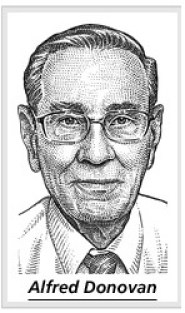 A head-cut image of Alfred Donovan (now deceased) appears courtesy of The Wall Street Journal.