By Upstream staff
Russian gas monopoly Gazprom has suspended asset swap talks with Shell due to uncertainty surrounding the Anglo-Dutch supermajor’s Sakhalin 2 development.
Gazprom had planned to swap half of a giant Siberian gas field for a 25% stake in Sakhalin 2, the world’s biggest liquefied natural gas project off Russia’s Pacific coast.
“We have learned about the withdrawal of ecological approval (for Sakhalin 2) from the press and it was news to us,” spokesman Sergei Kupriyanov told Reuters.
“As far as our assets swap talks are concerned they haven’t progressed for more than a year after Sakhalin 2 declared changes to the initial economic parameters of the project, which have yet to be approved by the Russian Federation.
“In this situation, we cannot continue talks,” he said.
Gazprom had planned to swap 50% in lower deposits of its Siberian Zapolyarnoye field against a 25% stake in Sakhalin 2.
But the plan ran into trouble after Sakhalin 2’s project costs doubled to $20 billion, and the first LNG delivery from the project was pushed back by six months to the second quarter of 2008.
The Russian government has so far declined to approve the cost overrun, while state agencies have attacked Shell for breaking the environmental terms of the project.
The tensions climaxed yesterday, when the Resources Ministry revoked environmental approvals for the second and main phase of Sakhalin 2 and it may require more than six months for the project to seek a new permit.
Analysts have said Russia’s ultimate goal was not to withdraw production licences or paralyse the project, but to help Gazprom get a stake in Sakhalin 2 on better terms.
They have also said the Kremlin was seeking to replace Sakhalin’s production sharing agreement, which was signed in the early 1990s at a time of very low oil prices.
Shell has a 55% stake as the operator of the project. The other shareholders are Japan’s Mitsui & Co with 25% and Mitsubishi Corporation with 20%.
Sakhalin 2’s first phase has been producing about 70,000 barrels of oil per day for the past six months, but output should more than double during the development’s second phase.
The second phase also involves building the world’s biggestLNG plant with a capacity of 9.6 million tonnes per year.
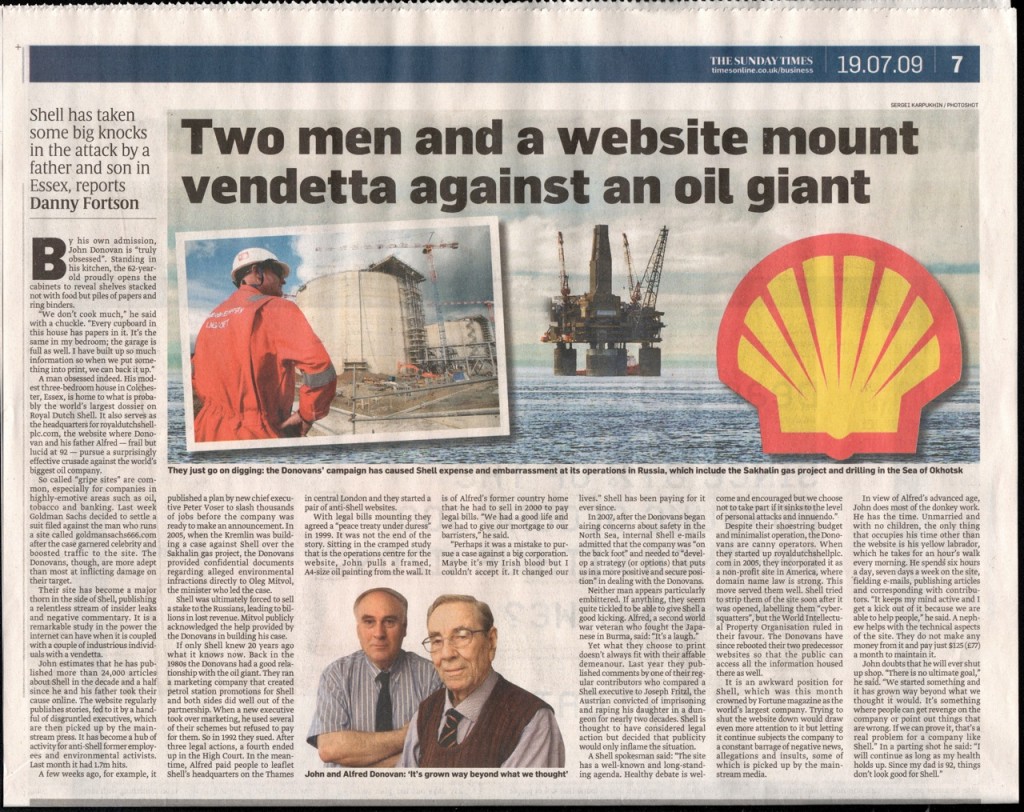
This website and sisters royaldutchshellplc.com, shellnazihistory.com, royaldutchshell.website, johndonovan.website, and shellnews.net, are owned by John Donovan. There is also a Wikipedia segment.


 Royal Dutch Shell conspired directly with Hitler, financed the Nazi Party, was anti-Semitic and sold out its own Dutch Jewish employees to the Nazis. Shell had a close relationship with the Nazis during and after the reign of Sir Henri Deterding, an ardent Nazi, and the founder and decades long leader of the Royal Dutch Shell Group. His burial ceremony, which had all the trappings of a state funeral, was held at his private estate in Mecklenburg, Germany. The spectacle (photographs below) included a funeral procession led by a horse drawn funeral hearse with senior Nazis officials and senior Royal Dutch Shell directors in attendance, Nazi salutes at the graveside, swastika banners on display and wreaths and personal tributes from Adolf Hitler and Reichsmarschall, Hermann Goring. Deterding was an honored associate and supporter of Hitler and a personal friend of Goring.

 Deterding was the guest of Hitler during a four day summit meeting at Berchtesgaden. Sir Henri and Hitler both had ambitions on Russian oil fields. Only an honored personal guest would be rewarded with a private four day meeting at Hitler’s mountain top retreat.


 IN JULY 2007, MR BILL CAMPBELL (ABOVE, A RETIRED GROUP AUDITOR OF SHELL INTERNATIONAL SENT AN EMAIL TO EVERY UK MP AND MEMBER OF THE HOUSE OF LORDS:


 MORE DETAILS:


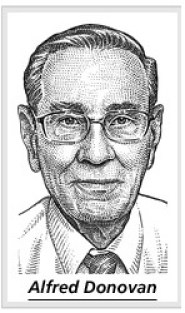 A head-cut image of Alfred Donovan (now deceased) appears courtesy of The Wall Street Journal.