By Andrew Osborn in Moscow
Published: 26 May 2006
Royal Dutch Shell’s flagship investment in Russia was facing uncertainty last night after the Natural Resources Ministry threatened to scale back the company’s stake in a huge liquefied natural gas project to allow the Kremlin greater control.
The threat concerns the Sakhalin-2 project, the largest direct foreign investment in Russia, and a venture that will result in the world’s biggest liquefied natural gas plant in the far east of Russia. Shell has a 55 per cent stake in the $10bn (£5.3bn) project while two Japanese firms own the other two stakes. The Russian government has a revenue-sharing arrangement with the consortium but is known to be keen to get a direct stake in the project as Moscow seeks to bring more strategic energy reserves under the Kremlin’s control.
President Vladimir Putin has already urged Shell to honour a promise it apparently made to surrender a 25 per cent stake in the project in exchange for a share of a Siberian gas field.
Yesterday the pressure intensified when the Natural Resources Minister said it supported radical advice it had received from the country’s Academy of Natural Science urging it to take a 51 per cent stake in three different revenue-sharing projects including Sakhalin-2.
“The Academy suggests boosting the presence of Russian companies in these consortiums to 51 per cent as one of the measures to boost efficiency,” it said.
The other two projects were the Sakhalin-1 oil and gas venture, in which Exxon has a 30 per cent stake, and a large oil extraction operation in Russia’s far north in which Total is involved.
The ministry said it intended to act on the academics’ recommendation and to write to other government ministries to “correct the situation”.
Shell declined to comment but is known to have incurred the Kremlin’s wrath due to massive cost overruns on Sakhalin-2, which have prompted the Anglo-Dutch firm to ask the government to allow it to double its investment to $20bn.
There were also reports that the Natural Resources Ministry intended to take legal action against Total, a company the authorities believe is mismanaging its Russian investments, and to initiate detailed investigations into the efficiency of Shell and Exxon.
When revenue-sharing projects such as Sakhalin-2 were launched in the 1990s, Russia was relaxed about giving foreign firms large stakes in big oil and gas projects, but under Vladimir Putin that policy has changed and Russian, often state-controlled, firms usually take a 51 per cent stake.
The Natural Resource Ministry’s threat came on a day when Mr Putin told a summit of EU leaders the West could count on Russia as a reliable energy partner.


 Royal Dutch Shell conspired directly with Hitler, financed the Nazi Party, was anti-Semitic and sold out its own Dutch Jewish employees to the Nazis. Shell had a close relationship with the Nazis during and after the reign of Sir Henri Deterding, an ardent Nazi, and the founder and decades long leader of the Royal Dutch Shell Group. His burial ceremony, which had all the trappings of a state funeral, was held at his private estate in Mecklenburg, Germany. The spectacle (photographs below) included a funeral procession led by a horse drawn funeral hearse with senior Nazis officials and senior Royal Dutch Shell directors in attendance, Nazi salutes at the graveside, swastika banners on display and wreaths and personal tributes from Adolf Hitler and Reichsmarschall, Hermann Goring. Deterding was an honored associate and supporter of Hitler and a personal friend of Goring.

 Deterding was the guest of Hitler during a four day summit meeting at Berchtesgaden. Sir Henri and Hitler both had ambitions on Russian oil fields. Only an honored personal guest would be rewarded with a private four day meeting at Hitler’s mountain top retreat.


 IN JULY 2007, MR BILL CAMPBELL (ABOVE, A RETIRED GROUP AUDITOR OF SHELL INTERNATIONAL SENT AN EMAIL TO EVERY UK MP AND MEMBER OF THE HOUSE OF LORDS:


 MORE DETAILS:


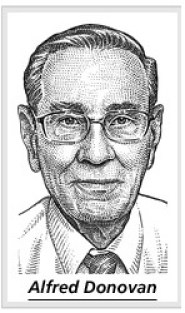 A head-cut image of Alfred Donovan (now deceased) appears courtesy of The Wall Street Journal.