Sands of time still running in favour of sands of tar
Spending £1.2bn on the acquisition of another company is loose change to a business the size of Shell (less than 1pc of its market capitalisation), but the acquisition of BlackRock Ventures tells us two things about Shell's thinking.
First, that it believes the oil price will not return to its 1990s level of under $10 a barrel for many years. Digging out sticky tar sands in Canada and then extracting the black gold is not cheap and Shell's valuation for BlackRock Ventures is assuming a long-run oil price of at least $50 a barrel. If the Anglo-Dutch oil giant cannot find cheaper ways to extract the oil, then the acquisition is essentially a £1bn punt on the price of a barrel of crude – the kind of bet that only companies the size of Shell can make.
Second, it shows that boss Jeroen van der Veer has strapped on his acquisition boots. Big oil deals are usually done when the price is very high or very low, and this is no exception. Essentially, Shell is using some of the billions of dollars generated from the high oil price to top up its reserves portfolio.
This is Shell's first notable deal since it bought Enterprise Oil four years ago and shows that Van the Man is willing to back up his boast at Davos that bigger deals are on the agenda for Shell again.
Shareholders will be praying that Shell is not over-paying for BlackRock's sticky black corner of Canada.
Four years ago, when Lord Browne of Madingley was leading BP into Russia with the TNK joint venture, BlackRock's shares were trading at just C$3 each. Now Shell is offering C$24 a share. How times have changed.
Sarin's premium-rate call to Verizon may be a long one | Oil money burning big holes in Middle Eastern pockets | Sands of time still running in favour of sands of tar
.emailandprint{float: left; magin-top:5px; margin-bottom: 5px;}
.emailandprint A{font: 10px}
.emailandprintright{float: left; magin-top:5px; margin-bottom: 5px; margin-left: 15px;}
.emailandprintright A{font: 10px}
.emailandprintspacer{margin-left: 6px}
.emailandprintspacer A{font: 10px}
.cl{clear:both}


 Royal Dutch Shell conspired directly with Hitler, financed the Nazi Party, was anti-Semitic and sold out its own Dutch Jewish employees to the Nazis. Shell had a close relationship with the Nazis during and after the reign of Sir Henri Deterding, an ardent Nazi, and the founder and decades long leader of the Royal Dutch Shell Group. His burial ceremony, which had all the trappings of a state funeral, was held at his private estate in Mecklenburg, Germany. The spectacle (photographs below) included a funeral procession led by a horse drawn funeral hearse with senior Nazis officials and senior Royal Dutch Shell directors in attendance, Nazi salutes at the graveside, swastika banners on display and wreaths and personal tributes from Adolf Hitler and Reichsmarschall, Hermann Goring. Deterding was an honored associate and supporter of Hitler and a personal friend of Goring.

 Deterding was the guest of Hitler during a four day summit meeting at Berchtesgaden. Sir Henri and Hitler both had ambitions on Russian oil fields. Only an honored personal guest would be rewarded with a private four day meeting at Hitler’s mountain top retreat.


 IN JULY 2007, MR BILL CAMPBELL (ABOVE, A RETIRED GROUP AUDITOR OF SHELL INTERNATIONAL SENT AN EMAIL TO EVERY UK MP AND MEMBER OF THE HOUSE OF LORDS:


 MORE DETAILS:


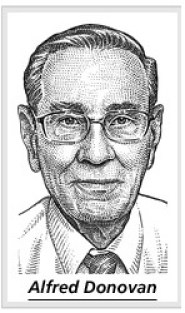 A head-cut image of Alfred Donovan (now deceased) appears courtesy of The Wall Street Journal.