 Hydrogen Council members – including Royal Dutch Shell Plc, BMW, Microsoft Corp and Sinopec – plan to increase hydrogen investments six-fold through 2025, from 2019 levels.

Europe pulls ahead in race for hydrogen, as global project pipeline grows: report
 FILE PHOTO: The new Febus hydrogen bus is seen before a presentation in Pau, France, January 14, 2020. REUTERS/Regis Duvignau/File Photo
By Kate Abnett: FEBRUARY 17, 2021
BRUSSELS (Reuters) – Most of the world’s planned hydrogen projects and the biggest chunk of related investments this decade are expected to be in Europe, an industry report said on Wednesday, as the continent races to scale up the low-carbon fuel to meet climate goals.
The European Union has made hydrogen a key plank in its aim to eliminate its greenhouse gas emissions by 2050, with plans to install 40GW of electrolysers this decade – equipment to produce emissions-free hydrogen using water and renewable power.
The EU currently has less than 0.1GW of electrolysers, and is betting on a rapid scale-up to decarbonise steel, heavy transport and chemicals, the latter of which already uses hydrogen produced from fossil fuels.
Of the 228 hydrogen projects announced globally, 55% of them – 126 projects – are in Europe, business group the Hydrogen Council said in its first tally of the global project pipeline, done with consultancy McKinsey.
Most are due to launch this decade, focusing on renewable hydrogen or fossil fuel-based hydrogen using technology to capture the resulting emissions.
If all planned projects were realised, the report said global investments would exceed $300 billion this decade – around 1.4% of total energy sector investments – with Europe pulling in around 45% of the total. The majority of that funding has not yet been secured.
Hydrogen Council executive director Daryl Wilson attributed Europe’s lead to early investments in hydrogen supply chains and projects like Germany’s hydrogen-fuelled trains, plus climate change policies.
“That stable policy commitment environment allows the industry to have the confidence to act,” he said.
Hydrogen Council members – including Royal Dutch Shell Plc, BMW, Microsoft Corp and Sinopec – plan to increase hydrogen investments six-fold through 2025, from 2019 levels.
The report pointed to the huge challenges ahead to scale up hydrogen production, build transportation and storage infrastructure, and massively expand renewable power capacity to produce the fuel.
If that happened, renewable hydrogen could hit cost parity with fossil fuel-based versions by 2028 in regions with abundant cheap renewable power, like the Middle East, under Hydrogen Council members’ estimates.
Reporting by Kate Abnett in Brussels; Editing by Matthew Lewis


 Royal Dutch Shell conspired directly with Hitler, financed the Nazi Party, was anti-Semitic and sold out its own Dutch Jewish employees to the Nazis. Shell had a close relationship with the Nazis during and after the reign of Sir Henri Deterding, an ardent Nazi, and the founder and decades long leader of the Royal Dutch Shell Group. His burial ceremony, which had all the trappings of a state funeral, was held at his private estate in Mecklenburg, Germany. The spectacle (photographs below) included a funeral procession led by a horse drawn funeral hearse with senior Nazis officials and senior Royal Dutch Shell directors in attendance, Nazi salutes at the graveside, swastika banners on display and wreaths and personal tributes from Adolf Hitler and Reichsmarschall, Hermann Goring. Deterding was an honored associate and supporter of Hitler and a personal friend of Goring.

 Deterding was the guest of Hitler during a four day summit meeting at Berchtesgaden. Sir Henri and Hitler both had ambitions on Russian oil fields. Only an honored personal guest would be rewarded with a private four day meeting at Hitler’s mountain top retreat.


 IN JULY 2007, MR BILL CAMPBELL (ABOVE, A RETIRED GROUP AUDITOR OF SHELL INTERNATIONAL SENT AN EMAIL TO EVERY UK MP AND MEMBER OF THE HOUSE OF LORDS:


 MORE DETAILS:


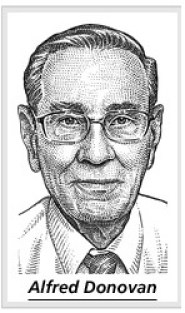 A head-cut image of Alfred Donovan (now deceased) appears courtesy of The Wall Street Journal.