
2020 Was One of the Worst-Ever Years for Oil Write-Downs

Royal Dutch Shell’s Prelude floating facility has struggled to deliver income. PHOTO: ROYAL DUTCH SHELL AUSTRALIA/REUTERS
By Collin Eaton and Sarah McFarlane: Dec. 27, 2020 9:00 am ET
The pandemic has triggered the largest revision to the value of the oil industry’s assets in at least a decade, as companies sour on costly projects amid the prospect of low prices for years.
Oil-and-gas companies in North America and Europe wrote down roughly $145 billion combined in the first three quarters of 2020, the most for that nine-month period since at least 2010, according to a Wall Street Journal analysis. That total significantly surpassed write-downs taken over the same periods in 2015 and 2016, during the last oil bust, and is equivalent to roughly 10% of the companies’ collective market value.
Companies across the major Western economies are writing down more of their assets during the coronavirus pandemic than they have in years. But the oil industry has written down more than any other major segment of the economy, following an unprecedented collapse in global energy demand, according to an analysis of data from S&P Global Market Intelligence.
Oil producers frequently write down assets when commodity prices crash, as cash flows from oil-and-gas properties diminish. This year’s industrywide reappraisal is among its starkest ever because oil companies also face longer-term uncertainty over future demand for their main products amid the rise of electric cars, the proliferation of renewable energy and growing concern about the lasting impact of climate change.
European major oil companies Royal Dutch Shell PLC, BP PLC and Total SE were among the most aggressive cutters, accounting for more than one third of the industry’s write-downs this year. U.S. shale producers including Concho Resources Inc. and Occidental Petroleum Corp. booked more impairments than they had in the past four years combined. The data, which encompassed the first three quarters of 2020, excluded Exxon Mobil Corp.’s recently announced plan to write down up to $20 billion in the fourth quarter and the $10 billion Chevron Corp. slashed in late 2019.


 Royal Dutch Shell conspired directly with Hitler, financed the Nazi Party, was anti-Semitic and sold out its own Dutch Jewish employees to the Nazis. Shell had a close relationship with the Nazis during and after the reign of Sir Henri Deterding, an ardent Nazi, and the founder and decades long leader of the Royal Dutch Shell Group. His burial ceremony, which had all the trappings of a state funeral, was held at his private estate in Mecklenburg, Germany. The spectacle (photographs below) included a funeral procession led by a horse drawn funeral hearse with senior Nazis officials and senior Royal Dutch Shell directors in attendance, Nazi salutes at the graveside, swastika banners on display and wreaths and personal tributes from Adolf Hitler and Reichsmarschall, Hermann Goring. Deterding was an honored associate and supporter of Hitler and a personal friend of Goring.

 Deterding was the guest of Hitler during a four day summit meeting at Berchtesgaden. Sir Henri and Hitler both had ambitions on Russian oil fields. Only an honored personal guest would be rewarded with a private four day meeting at Hitler’s mountain top retreat.


 IN JULY 2007, MR BILL CAMPBELL (ABOVE, A RETIRED GROUP AUDITOR OF SHELL INTERNATIONAL SENT AN EMAIL TO EVERY UK MP AND MEMBER OF THE HOUSE OF LORDS:


 MORE DETAILS:


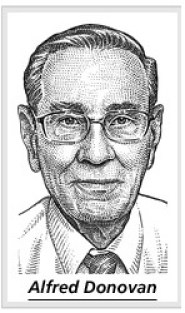 A head-cut image of Alfred Donovan (now deceased) appears courtesy of The Wall Street Journal.