

 By Anna Hirtenstein: May 26, 2017
Kite Power Systems, known as KPS, is working on a 17-meter device that flies on air currents high above the ground and generates power by pulling at a cable. It raised 5 million pounds ($6.4 million) from the three energy giants last December.
“The reason we are interested in something like this is that it has potential to reduce the cost of offshore wind in the future,” said Geert van de Wouw, managing director of Shell Technology Ventures BV. “Fundamentally, looking at the science, flying the kite at high altitudes so there’s lots of wind, and the cost of materials is quite a lot lower than a normal offshore wind turbine.”
Alternatives to traditional wind turbines are in the works at multiple start-ups, some backed by corporations in energy and tech such as Alphabet Inc. German utility EON has also invested in a test site in Ireland for drones that are designed to fly at high altitudes and generate energy.
The kites work by sending aloft a wing to fly in a circular looping path much like the tip of a wind turbine blade. The machines harness aerodynamic lift from the wind exerted against the tether linked to the ground. Tension in that tether causes the line to rapidly spool out from a drum, which is connected to a generator.
Kite Power Systems will start testing its machines in July or August at a site in Scotland. Offshore wind farms could someday be repowered with the technology, according to David Ainsworth, interim chief executive officer.
“There’s 3 gigawatts of offshore wind coming to the end of life in the 2020s,” Ainsworth said. “It’ll have to be decommissioned, but you’ll still have the infrastructure there, the grid. There’s an opportunity to repower with kites.”
Kite Power Systems believes that its system could generate electricity between 55 and 58 percent of the time, a capacity factor that’s higher than a conventional wind farm. It has made a 500-kilowatt kite and is working on a 3-megawatt version. Ainsworth expects that the company’s technology could eventually reach as much as 6 megawatts from each machine.


 Royal Dutch Shell conspired directly with Hitler, financed the Nazi Party, was anti-Semitic and sold out its own Dutch Jewish employees to the Nazis. Shell had a close relationship with the Nazis during and after the reign of Sir Henri Deterding, an ardent Nazi, and the founder and decades long leader of the Royal Dutch Shell Group. His burial ceremony, which had all the trappings of a state funeral, was held at his private estate in Mecklenburg, Germany. The spectacle (photographs below) included a funeral procession led by a horse drawn funeral hearse with senior Nazis officials and senior Royal Dutch Shell directors in attendance, Nazi salutes at the graveside, swastika banners on display and wreaths and personal tributes from Adolf Hitler and Reichsmarschall, Hermann Goring. Deterding was an honored associate and supporter of Hitler and a personal friend of Goring.

 Deterding was the guest of Hitler during a four day summit meeting at Berchtesgaden. Sir Henri and Hitler both had ambitions on Russian oil fields. Only an honored personal guest would be rewarded with a private four day meeting at Hitler’s mountain top retreat.


 IN JULY 2007, MR BILL CAMPBELL (ABOVE, A RETIRED GROUP AUDITOR OF SHELL INTERNATIONAL SENT AN EMAIL TO EVERY UK MP AND MEMBER OF THE HOUSE OF LORDS:


 MORE DETAILS:


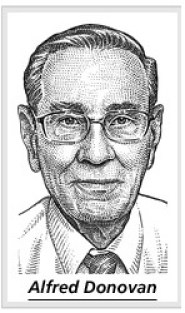 A head-cut image of Alfred Donovan (now deceased) appears courtesy of The Wall Street Journal.