
By Prabhat Sakya – Thursday, 19 May, 2016
Change is an unavoidable part of business. Schlumpeter’s concept of “creative destruction” means that no company can afford to stand still.
For example, the photographic industry, which had always been based on film, made the move to electronic CCD technology, and people now take photos not just using digital cameras but also phones and tablets.
And the television was based on the clunky and expensive cathode ray tube (CRT) for around a century, but now LCD and LED flat screens have transformed this sector.
Long in the tooth
Yet the automotive industry has been a surprising exception — at least until now.
The current car industry is very long in the tooth. The motor car was invented in 1886, some 130 years ago. Cars have always been petrol or diesel driven. All that has happened over the decades is that cars have become more fuel efficient (recent fuel economy testing scandals notwithstanding), faster and safer.
That’s why I think oil companies such as BP (LSE: BP) and Royal Dutch Shell (LSE: RDSB) are living on borrowed time. I’m not saying that the oil industry will collapse overnight, but it is certainly likely to gradually — perhaps very gradually — fade out.
Just as advances in technology mean that, for the first time, solar cells are now commercially viable, so advances in battery, hybrid and fuel cell technology will mean that they will become more and more competitive with petrol and diesel.
No short-term blip
Over this broad brushstroke trend, we can overlay the commodities supercycle, which shows that the oil and gas boom of the last 17 years is well and truly over. This has led to tumbling commodity prices, which has sent the share prices of BP and Royal Dutch Shell sliding. Massive investment in production capacity has meant that global supply has overtaken global demand, leading to falling prices.
What’s more, when none of the major oil producers is willing to cut production to bring supply and demand into balance, it’s unlikely to be just a short-term blip. That’s why I feel the valuations of these companies have not yet bottomed, but in fact could slide a lot further.
Just what price levels could they sink to?
Well, let’s take BP first. At its current price of 357p, it made a net loss of £4.31bn in 2015, after a profit of £2.57bn in 2014. Analysts reckon its 2016 P/E ratio will be an expensive 27.37. I think a downward re-rating is on the cards and the share price could, over the next decade, nearly halve. That means a low of 200p.
What about Royal Dutch Shell? At its current price of 1,669p, this business made a net profit of £1.48bn in 2015, down from £9.46bn in 2014. The prediction is a 2016 P/E ratio of 27.13. At the current valuation, Shell is also pricey. Much of Shell’s money is now made from gas rather than oil, but gas prices have also been tumbling. That’s why I suspect, over the next decade, the share price could fall to a low of 1,000p.
That’s why, if you are a small investor, my view is that you should not invest in either of these firms.
Prabhat Sakya has no position in any shares mentioned. The Motley Fool UK has recommended BP and Royal Dutch Shell B. We Fools don’t all hold the same opinions, but we all believe that considering a diverse range of insights makes us better investors.
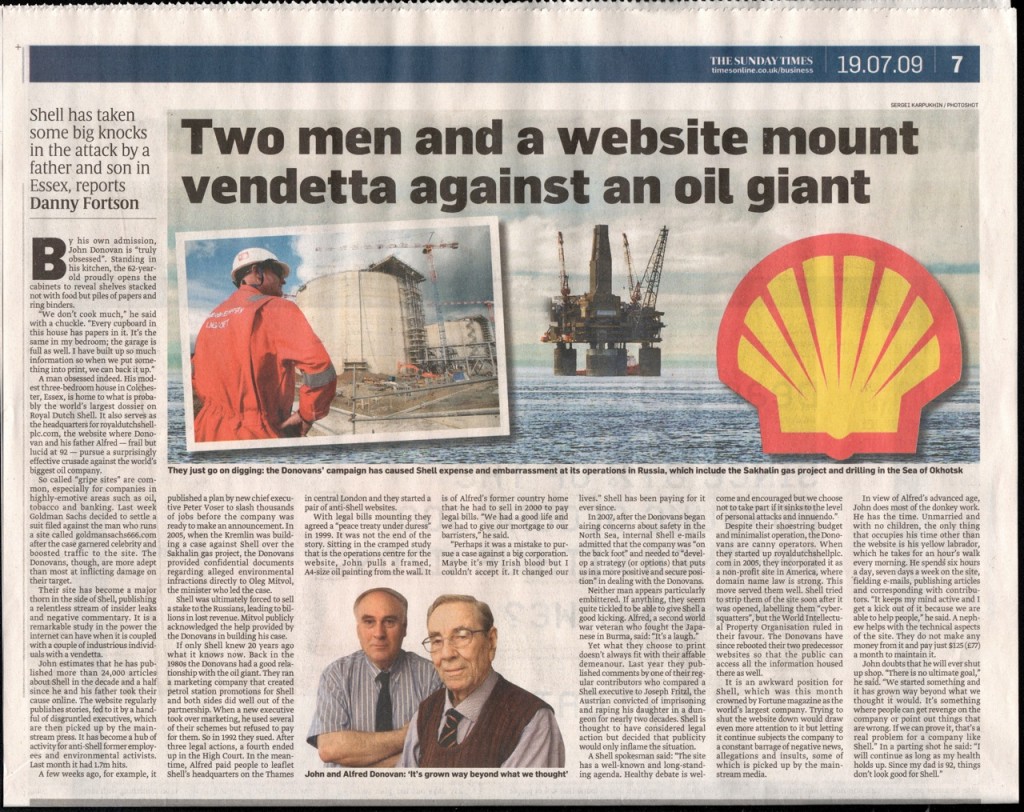
This website and sisters royaldutchshellplc.com, shellnazihistory.com, royaldutchshell.website, johndonovan.website, and shellnews.net, are owned by John Donovan. There is also a Wikipedia segment.


 Royal Dutch Shell conspired directly with Hitler, financed the Nazi Party, was anti-Semitic and sold out its own Dutch Jewish employees to the Nazis. Shell had a close relationship with the Nazis during and after the reign of Sir Henri Deterding, an ardent Nazi, and the founder and decades long leader of the Royal Dutch Shell Group. His burial ceremony, which had all the trappings of a state funeral, was held at his private estate in Mecklenburg, Germany. The spectacle (photographs below) included a funeral procession led by a horse drawn funeral hearse with senior Nazis officials and senior Royal Dutch Shell directors in attendance, Nazi salutes at the graveside, swastika banners on display and wreaths and personal tributes from Adolf Hitler and Reichsmarschall, Hermann Goring. Deterding was an honored associate and supporter of Hitler and a personal friend of Goring.

 Deterding was the guest of Hitler during a four day summit meeting at Berchtesgaden. Sir Henri and Hitler both had ambitions on Russian oil fields. Only an honored personal guest would be rewarded with a private four day meeting at Hitler’s mountain top retreat.


 IN JULY 2007, MR BILL CAMPBELL (ABOVE, A RETIRED GROUP AUDITOR OF SHELL INTERNATIONAL SENT AN EMAIL TO EVERY UK MP AND MEMBER OF THE HOUSE OF LORDS:


 MORE DETAILS:


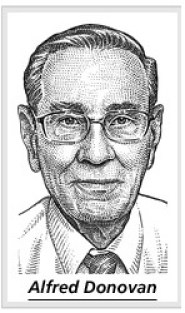 A head-cut image of Alfred Donovan (now deceased) appears courtesy of The Wall Street Journal.