 The United States’ oil and gas industry has “over-fracked and overdrilled”, according to Matthias Bichsel, projects and technology director at Royal Dutch Shell Plc.


“The reservoirs don’t need that many wells. The reservoirs don’t need that many stages of fracks, because not all the pieces of the rocks are as good,” Mr. Bichsel said in a telephone interview from Vancouver last week, where he was speaking at a company event.
The United States is on course to become the world’s largest oil supplier, according to PIRA Energy Group, a New York-based energy consultancy.
“The U.S. shale liquids growth of 3.2 million barrels per day over the last four years has been nearly unparalleled in the history of world oil; only Saudi Arabia in 1970-74 raised its production faster,” PIRA said in a statement.
But it has not translated into a boost in profits of all companies, especially as natural gas prices have slid amid a production surge. Shell came late to the U.S. shale boom and has been left disappointed by the performance of its Eagle Ford shale assets. The company recently announced that it’s selling its 106,000 net acres in Dimmit, LaSalle and Webb counties as they did not fit its “global targets for materiality and scale.”
While Mr. Bichsel does not believe the U.S. shale gas is overhyped, he does think that not all fields are created equal.
“We only talk about the Bakken, Eagle Ford, and the Permian in West Texas, and the Marcellus – we never talk about the basins that have not worked,” said Mr. Bichsel, a geologist by training. “We have some areas that are simply not as good as others.”
In Wyoming and Utah, for instance, the industry could not get the Green River basin to really work, Mr. Bichsel said in a speech this year.
“And I’m afraid that some countries may be setting themselves up for dashed expectations.
“Take Poland, for instance, where a number of operators have announced that they’re pulling out.”
The shale industry is evoking either over-optimism or excessive negativity, which is not helping the industry, Mr. Bichsel said.
“What we are often lacking is the middle-of-the-road approach – and it is very dangerous when we hype things, because it sets expectation which perhaps can’t be fulfilled to the degree that you would like.”
Shale gas opportunities in British Columbia are also gaining momentum, with Shell and its Asian partners among the consortiums interested in shipping liquefied natural gas from the West Coast to Asian markets.
Canada has the opportunity to create a vibrant export industry for a commodity that is ready to take on a greater role in the world’s energy mix, Mr. Bichsel said in a speech in Vancouver last week.
But there are challenges ahead. “An LNG project also requires a large capital outlay, and so the project owners also must keep a wary eye on the global financial markets. As any investor knows, these are susceptible to unpredictable changes, too,” Mr. Bichsel noted.
A key sticking point could be pricing that’s crucial to determine feasibility of projects. Shell, which sells 80% of its LNG linked to oil prices, believes long-term, oil-indexed contracts reassures investors who are building the capital-intensive projects.
Major natural gas importers such as Japan, India and China, however, want to delink LNG prices from oil prices.
“But energy security is also a priority for them, and LNG sellers that offer reliable supply have a competitive advantage. And caveat emptor – let the buyer beware: linking LNG to the vagaries of a gas-trading hub may not necessarily provide as stable a pricing mechanism.”


 Royal Dutch Shell conspired directly with Hitler, financed the Nazi Party, was anti-Semitic and sold out its own Dutch Jewish employees to the Nazis. Shell had a close relationship with the Nazis during and after the reign of Sir Henri Deterding, an ardent Nazi, and the founder and decades long leader of the Royal Dutch Shell Group. His burial ceremony, which had all the trappings of a state funeral, was held at his private estate in Mecklenburg, Germany. The spectacle (photographs below) included a funeral procession led by a horse drawn funeral hearse with senior Nazis officials and senior Royal Dutch Shell directors in attendance, Nazi salutes at the graveside, swastika banners on display and wreaths and personal tributes from Adolf Hitler and Reichsmarschall, Hermann Goring. Deterding was an honored associate and supporter of Hitler and a personal friend of Goring.

 Deterding was the guest of Hitler during a four day summit meeting at Berchtesgaden. Sir Henri and Hitler both had ambitions on Russian oil fields. Only an honored personal guest would be rewarded with a private four day meeting at Hitler’s mountain top retreat.


 IN JULY 2007, MR BILL CAMPBELL (ABOVE, A RETIRED GROUP AUDITOR OF SHELL INTERNATIONAL SENT AN EMAIL TO EVERY UK MP AND MEMBER OF THE HOUSE OF LORDS:


 MORE DETAILS:


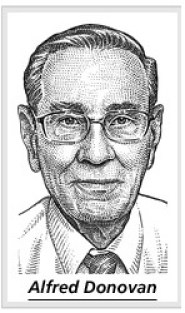 A head-cut image of Alfred Donovan (now deceased) appears courtesy of The Wall Street Journal.