Lifting sanctions and opening up Iran’s vast oil and gas resources to global companies will be vital to meeting the world’s future energy needs, according to the chief executives of two of Europe’s top oil companies. Before the tightening of sanctions against Iran a few years ago, Shell and Total were two of the most active companies doing business with the Islamic republic.

By Andrew Critchlow, Business News Editor: 8:20PM BST 01 Oct 2013
Peter Voser, chief executive of Royal Dutch Shell, and Christophe de Margerie, his counterpart at France’s Total, used the Oil & Money conference in London on Tuesday to highlight the potential energy windfall if sanctions preventing international oil companies from dealing with Tehran were lifted.
“Longer term, Iran’s oil and gas resources will have to be developed to meet demand,†Mr Voser said.
He was echoed by Mr de Margerie, who said that he hoped doing business with Iran would again be permitted “as soon as possible, not just for Total but for the world and for Iran. Any country cannot stay out of the system.â€
Before the tightening of sanctions against Iran a few years ago, Shell and Total were two of the most active companies doing business with the Islamic republic.
In 1999, Shell defied a US sanctions threat to sign an estimated $800m (£492m) deal with Iran to develop two offshore oil fields in the Persian Gulf known as Soroosh and Nowrooz.
The project was completed in 2005. Until 2009, Total was involved in the drawn-out development of Iran’s vast South Pars natural gas field, also in the Gulf’s waters.
Iran has said it would be willing to offer access to its controversial nuclear programme if the US lifted its economic sanctions. A recent call between US president Barack Obama and his Iranian counterpart Hassan Rouhani — the first such dialogue between the two nations for more than 30 years — has raised hopes that a diplomatic solution can be found which could eventually mean Iran is again accessible to international oil companies.
Shell was reportedly blocked earlier this year from settling a $2.3bn debt with Iran through the supply of grain and medicine.
Since an oil embargo was imposed in July, the European Union has extended sanctions to include gas exports and shipbuilding equipment.


 Royal Dutch Shell conspired directly with Hitler, financed the Nazi Party, was anti-Semitic and sold out its own Dutch Jewish employees to the Nazis. Shell had a close relationship with the Nazis during and after the reign of Sir Henri Deterding, an ardent Nazi, and the founder and decades long leader of the Royal Dutch Shell Group. His burial ceremony, which had all the trappings of a state funeral, was held at his private estate in Mecklenburg, Germany. The spectacle (photographs below) included a funeral procession led by a horse drawn funeral hearse with senior Nazis officials and senior Royal Dutch Shell directors in attendance, Nazi salutes at the graveside, swastika banners on display and wreaths and personal tributes from Adolf Hitler and Reichsmarschall, Hermann Goring. Deterding was an honored associate and supporter of Hitler and a personal friend of Goring.

 Deterding was the guest of Hitler during a four day summit meeting at Berchtesgaden. Sir Henri and Hitler both had ambitions on Russian oil fields. Only an honored personal guest would be rewarded with a private four day meeting at Hitler’s mountain top retreat.


 IN JULY 2007, MR BILL CAMPBELL (ABOVE, A RETIRED GROUP AUDITOR OF SHELL INTERNATIONAL SENT AN EMAIL TO EVERY UK MP AND MEMBER OF THE HOUSE OF LORDS:


 MORE DETAILS:


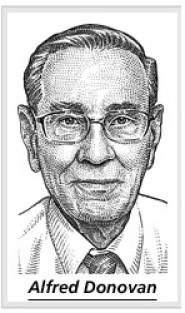 A head-cut image of Alfred Donovan (now deceased) appears courtesy of The Wall Street Journal.