Financial Times: Scarcely a whimper as Shell votes for unification
Wednesday 29 June 2005
By Ian Bickerton in Scheveningen
Dutch shareholders bade farewell to nearly a century of history in less than 45 minutes on Tuesday, overwhelmingly approving the unification of Royal Dutch and Shell, the two arms of the energy group.
Shortly afterwards shareholders in London also backed the unification plan.
The proposal prompted barely half-a-dozen gentle inquiries in the Netherlands, from elderly investors seeking reassurance that the company would continue to have its headquarters in the Netherlands and that they would be able to ask questions in Dutch at its annual meeting.
Aad Jacobs, chairman of Royal Dutch’s supervisory board, told them: “We have done everything we can to ensure there is a Dutch touch to this company.”
A polite round of applause greeted the result of the vote – 97.4 per cent in favour – which was flashed on a video screen behind the 11 executives and directors on the stage flanked by the drums and congas awaiting use in that evening’s performance of the musical The Lion King.
The momentous transition to a single company had been expected to be the centre-piece of the shareholder meeting at the Circus Theatre, in Scheveningen.
Instead events kicked off with more than two hours of often heated exchanges as human rights campaigners accused the energy group of “polluting communities and destroying lives”.
Shell vote to trigger shake-up of London market
UK institutional shareholders still need to buy billions of pounds worth of shares in Shell to pump up their exposure to the oil major following its planned merger with Royal Dutch.
A string of campaigners expressed fury and frustration at what they claimed was the company’s failure to address the concerns of local communities. “Our lives are being destroyed,” said one man from Africa’s Niger delta.
A campaigner dressed as the grim reaper, who said he represented communities in Durban, South Africa, attempted to present Jeroen van der Veer, chief executive, with an award for the “worst corporate practice”. He was barred from climbing onto the stage by a security guard.
The Dutch branch of Friends of the Earth lined up half-a-dozen residents from the “fence-line communities” who had travelled in some cases thousands of miles from their homes next to Royal Dutch/Shell refineries and plants in places like Port Arthur, Texas, and the Philippines.
The more than 600 shareholders who attended the meeting were required to walk under a large banner urging Shell to “stop worldwide pollution”.
Once inside even Peter Paul de Vries, from VEB, the Dutch shareholder association, often a thorn in the side of companies on issues of governance, temporarily set aside his questions to urge a special meeting to consider the issues.
“These people are emotional, but rational. You seem to have a real problem here,” Mr de Vries said to Mr Jacobs, suggesting members of the board sacrifice a week’s holiday to live in troubled communities.
The company defended its environmental record but said it took seriously the concerns. Rob Routs, a member of the company’s executive board, said: “We are not perfect but we are working hard to improve our environmental record.”
Mr der Veer promised to meet with one campaign group to discuss the matter further. However he said that such issues were initially “not a matter for The Hague or London, but local management who should consult with local stakeholders.”
Campaigners claimed the company was being fed the impression that communities supported its actions by neighbourhood consultative committees comprising people who did not represent local views.
They were left fuming, protesting that their questions had not been answered and after Mr Jacobs called time on the issue. By contrast, the company’s ordinary shareholders streamed out satisfed with their contribution, and headed for the bars and buffet.
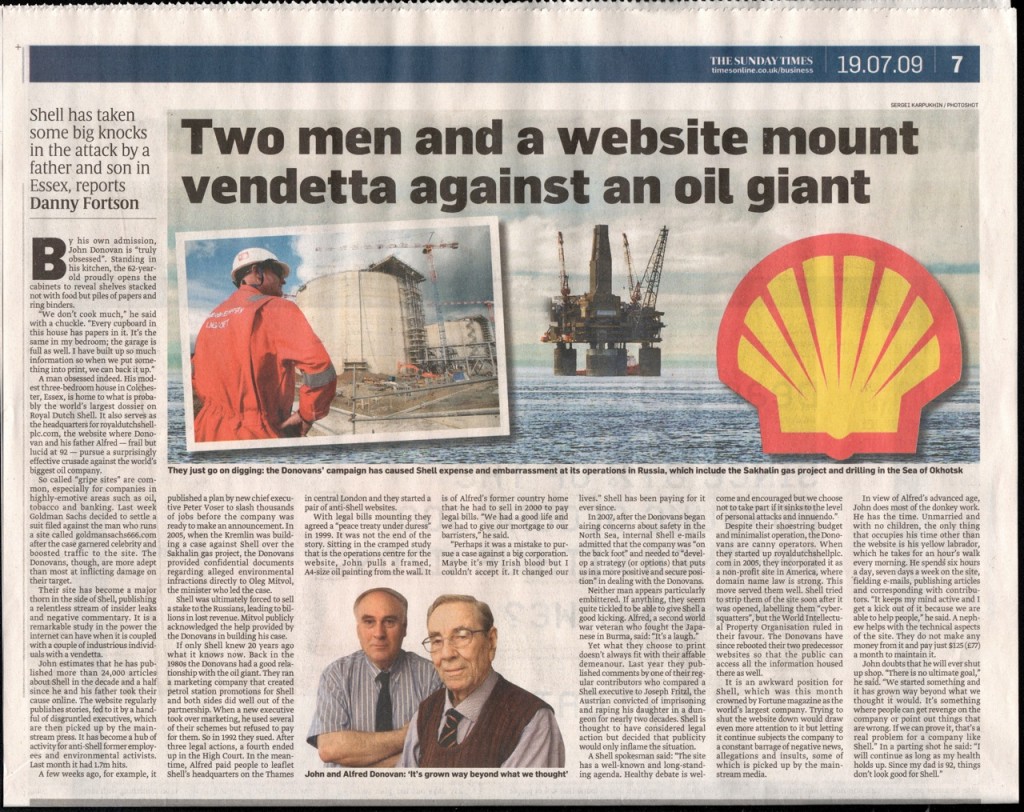
This website and sisters royaldutchshellplc.com, shellnazihistory.com, royaldutchshell.website, johndonovan.website, and shellnews.net, are owned by John Donovan. There is also a Wikipedia segment.


 Royal Dutch Shell conspired directly with Hitler, financed the Nazi Party, was anti-Semitic and sold out its own Dutch Jewish employees to the Nazis. Shell had a close relationship with the Nazis during and after the reign of Sir Henri Deterding, an ardent Nazi, and the founder and decades long leader of the Royal Dutch Shell Group. His burial ceremony, which had all the trappings of a state funeral, was held at his private estate in Mecklenburg, Germany. The spectacle (photographs below) included a funeral procession led by a horse drawn funeral hearse with senior Nazis officials and senior Royal Dutch Shell directors in attendance, Nazi salutes at the graveside, swastika banners on display and wreaths and personal tributes from Adolf Hitler and Reichsmarschall, Hermann Goring. Deterding was an honored associate and supporter of Hitler and a personal friend of Goring.

 Deterding was the guest of Hitler during a four day summit meeting at Berchtesgaden. Sir Henri and Hitler both had ambitions on Russian oil fields. Only an honored personal guest would be rewarded with a private four day meeting at Hitler’s mountain top retreat.


 IN JULY 2007, MR BILL CAMPBELL (ABOVE, A RETIRED GROUP AUDITOR OF SHELL INTERNATIONAL SENT AN EMAIL TO EVERY UK MP AND MEMBER OF THE HOUSE OF LORDS:


 MORE DETAILS:


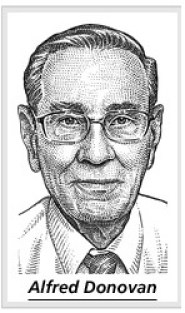 A head-cut image of Alfred Donovan (now deceased) appears courtesy of The Wall Street Journal.