23 May 2012
Shell became the latest company to receive a bloody nose yesterday, as more than a tenth of the oil giant’s investors failed to approve the pay awards of its top-level executives.
Despite Shell reporting a 54 per cent jump in profits last year, just over 9 per cent of investors voted against the pay award for chief executive Peter Voser, which more than doubled over the period. Including abstentions, 11 per cent of shareholders failed to back Shell’s remuneration report, which also included a €2.52m (£2m) severance payment for Malcolm Brinded, who stepped down as head of exploration and production in April.
“I think it is excessive,” said John Farmer, a Shell shareholder, about Mr Voser’s €11.7m total pay award – up from €5.2m in 2010 – helped by a €4.6m payout as three lucrative, long-term incentive plans vested. In 2011, Mr Brinded received a total of €11.4m.
Although it was considerably smaller than the majority votes against some recent remuneration reports – such as Aviva and Pendragon – opposition to Shell was well up on last year, when the no vote came to just 1.24 per cent.
The rise in opposition came against a backdrop of growing shareholder resistance to large executive payouts, and, in part, on the recommendation of investor advisory group PIRC which guided investors to oppose Shell’s remuneration report for 2011.
“Combined remuneration is excessive in the year under review with the CEO receiving annual incentive and conditional L-tip (long-term incentive plan) awards worth 526 per cent of salary,” Pirc said in its report ahead of the Shell AGM.
A Shell spokesman said: “Shell’s remuneration policy firmly links executive compensation with the performance of the company, and the 2011 outcomes reflect what was a positive year.”
At the meeting, shareholders lined up to attack Shell over plans to step up production in the Arctic, its record of cleaning oil spills – and compensating their victims – in Nigeria and for its contribution to global warming by producing fossil fuels.
Shell’s chairman Jorma Ollila explained that the company “recognised the special challenges” of drilling in the Arctic and was behaving responsibly and that it was committed to cleaning all the oil spills that emanate from the operations of its SPDC Nigerian joint venture – even those that are caused by theft or sabotage.


 Royal Dutch Shell conspired directly with Hitler, financed the Nazi Party, was anti-Semitic and sold out its own Dutch Jewish employees to the Nazis. Shell had a close relationship with the Nazis during and after the reign of Sir Henri Deterding, an ardent Nazi, and the founder and decades long leader of the Royal Dutch Shell Group. His burial ceremony, which had all the trappings of a state funeral, was held at his private estate in Mecklenburg, Germany. The spectacle (photographs below) included a funeral procession led by a horse drawn funeral hearse with senior Nazis officials and senior Royal Dutch Shell directors in attendance, Nazi salutes at the graveside, swastika banners on display and wreaths and personal tributes from Adolf Hitler and Reichsmarschall, Hermann Goring. Deterding was an honored associate and supporter of Hitler and a personal friend of Goring.

 Deterding was the guest of Hitler during a four day summit meeting at Berchtesgaden. Sir Henri and Hitler both had ambitions on Russian oil fields. Only an honored personal guest would be rewarded with a private four day meeting at Hitler’s mountain top retreat.


 IN JULY 2007, MR BILL CAMPBELL (ABOVE, A RETIRED GROUP AUDITOR OF SHELL INTERNATIONAL SENT AN EMAIL TO EVERY UK MP AND MEMBER OF THE HOUSE OF LORDS:


 MORE DETAILS:


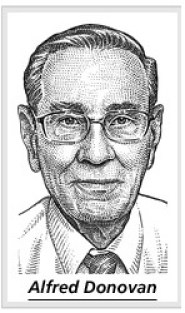 A head-cut image of Alfred Donovan (now deceased) appears courtesy of The Wall Street Journal.