Daily Telegraph
By Norman Tebbit July 9th, 2010
In its Business News (July 7) the Telegraph questioned how well the four BP non-executive directors required to oversee safety, ethical and enviromental matters had discharged their responsibilities. At around £100,000 a year they are not badly paid. They should have been alert to the dangers of a lack of operational experience not only of their executive colleagues, but further down the line, among those more immediately assessing the quality of sub-contractors operations.
Old BP hands have long been telling anyone who would listen (and that certainly did not include Lord Browne) that BP was not just contracting out the operations of refineries, pipe-lines and rigs, but easing out almost anyone who had experience and knowledge in those fields.
The Mexican Gulf disaster was not the first failure at operational level in BP. The Texas City refinery and the Trans Alaska pipeline incidents should have alerted someone to a possible systemic problem. It should not have been beyond the ability of those four experienced executive directors from other major companies to spot the dangers of not just giving up direct control of the messy, dangerous operations on which BPs retailing business depends, but of progressively losing the ability to assess the competence of its sub- contractors.
So just why did they not question the policy of their executive colleagues? I think it may not be in the nature of executives from one FTSE 100 company, sitting as non-executives on the board of another, to do so.
BP is not the only company in which the non-executives seem to have failed to save the executives from themselves. At the Prudential the non-executives not only failed to restrain the chief executive from persisting with a strategy which had become clearly unrealistic: they smilingly rewarded their executive colleagues with bonuses for throwing almost half a billion pounds of shareholders money down the drain. Again, with one exception, the non-executives were the executives from the PLC around the corner.
If the non-executives failed, one might have hoped that the owners of the business might have either fired, or at least issued a written warning to their employees at the annual general meeting of the company. I think that was very much in the minds of those who had invested their own money in the Prudential, but of course the major shareholders are other institutions and PLCs. The last thing the executives of those would want to encourage is a culture of nastiness towards executives at company annual general meetings. I think that there are some good reasons for that, as well as some very, very bad ones.
But non-executive directors are there to question their executive colleagues and to use their own critical judgement. They should be the shareholders men. There is no case for going back to the appointment of the Tufton Buftons of this world (if they still survive), but a colonel or two, perhaps an academic even, or (Oh Lord forgive me for saying it) even a lawyer, but please, someone who might say: I dont understand why we are doing that. Please explain it. And if you cant, we will find someone else who can.


 Royal Dutch Shell conspired directly with Hitler, financed the Nazi Party, was anti-Semitic and sold out its own Dutch Jewish employees to the Nazis. Shell had a close relationship with the Nazis during and after the reign of Sir Henri Deterding, an ardent Nazi, and the founder and decades long leader of the Royal Dutch Shell Group. His burial ceremony, which had all the trappings of a state funeral, was held at his private estate in Mecklenburg, Germany. The spectacle (photographs below) included a funeral procession led by a horse drawn funeral hearse with senior Nazis officials and senior Royal Dutch Shell directors in attendance, Nazi salutes at the graveside, swastika banners on display and wreaths and personal tributes from Adolf Hitler and Reichsmarschall, Hermann Goring. Deterding was an honored associate and supporter of Hitler and a personal friend of Goring.

 Deterding was the guest of Hitler during a four day summit meeting at Berchtesgaden. Sir Henri and Hitler both had ambitions on Russian oil fields. Only an honored personal guest would be rewarded with a private four day meeting at Hitler’s mountain top retreat.


 IN JULY 2007, MR BILL CAMPBELL (ABOVE, A RETIRED GROUP AUDITOR OF SHELL INTERNATIONAL SENT AN EMAIL TO EVERY UK MP AND MEMBER OF THE HOUSE OF LORDS:


 MORE DETAILS:


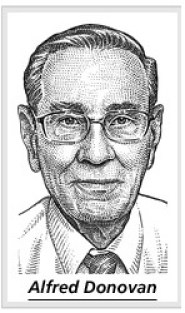 A head-cut image of Alfred Donovan (now deceased) appears courtesy of The Wall Street Journal.