Up to 24,000 jobs are at risk in Shell after the Anglo-Dutch oil group unveiled plans for a major restructuring.
The oil giant this morning revealed a shake-up in which its exploration and production, gas and power and oil sands units are to be merged into two new divisions.
About 24,000 staff will be “impacted” by the changes – nearly one fifth of the group’s 102,000 worldwide workforce – and redundancies are expected. Sources said that more than 30 per cent of senior executives in the two divisions could go.
The move forms part of efforts by Peter Voser, the group’s chief executive-designate, to stamp his mark on the company and help it better to weather the problems caused by the plunge in oil prices, which hit a record $147 a barrel in July but are now at $63.
The changes began yesterday with the abrupt departure of Linda Cook, head of the gas and power division and a former contender for the chief executive post.
Mrs Cook, who fought Mr Voser for the top job, is to leave by “mutual decision” and is forgoing an £800,000 loyalty bonus because she is quitting before 2011.
Last week, in a huge embarrassment for Shell, angry investors rejected its executive pay plan and called for the pay-setting committee to resign.
Under a three-year scheme agreed in 2005, Shell directors would have earned up to 200 per cent of their salaries in shares if the company outperformed three peers. The group finished fourth, but the remuneration commitee decided to exercise discretion and allow some of the award.
In April, Shell unveiled a 58 per cent fall in earnings. It blamed the drop on weaker oil prices and continued violence in oil-rich Nigeria. The result reflected a more than halving in the average price paid to Shell for each barrel of oil it produced, down from $90.72 last year to $42.16.
The restructuring will see Malcolm Brinded head the larger of the two new divisions, Upstream International, while Marvin Odum, currently Shell’s executive vice-president for exploration and production Americas, will become director of Upstream Americas.
Mr Brinded was also a contender for the top job, which Mr Voser will formally take up on July 1.
A spokesman for Shell said that the shake-up was about “a simpler structure, more accountability and faster implementation of decisions and strategy”. He said: “Thousands of staff will be impacted.”
The group currently employs 22,000 people in three upstream businesses. A further 2,000 people working in the group’s headquarters are also thought to be at risk as the group seeks savings there.


 Royal Dutch Shell conspired directly with Hitler, financed the Nazi Party, was anti-Semitic and sold out its own Dutch Jewish employees to the Nazis. Shell had a close relationship with the Nazis during and after the reign of Sir Henri Deterding, an ardent Nazi, and the founder and decades long leader of the Royal Dutch Shell Group. His burial ceremony, which had all the trappings of a state funeral, was held at his private estate in Mecklenburg, Germany. The spectacle (photographs below) included a funeral procession led by a horse drawn funeral hearse with senior Nazis officials and senior Royal Dutch Shell directors in attendance, Nazi salutes at the graveside, swastika banners on display and wreaths and personal tributes from Adolf Hitler and Reichsmarschall, Hermann Goring. Deterding was an honored associate and supporter of Hitler and a personal friend of Goring.

 Deterding was the guest of Hitler during a four day summit meeting at Berchtesgaden. Sir Henri and Hitler both had ambitions on Russian oil fields. Only an honored personal guest would be rewarded with a private four day meeting at Hitler’s mountain top retreat.


 IN JULY 2007, MR BILL CAMPBELL (ABOVE, A RETIRED GROUP AUDITOR OF SHELL INTERNATIONAL SENT AN EMAIL TO EVERY UK MP AND MEMBER OF THE HOUSE OF LORDS:


 MORE DETAILS:


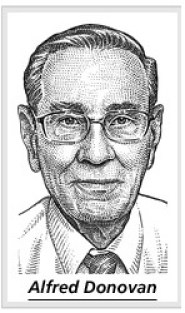 A head-cut image of Alfred Donovan (now deceased) appears courtesy of The Wall Street Journal.