Globe & Mail (Canada)
Irving Oil, Shell stall plans amid slump in prices
CALGARY — The global economic downturn has delayed two more major Canadian oil projects, as high costs and low commodity prices cause companies to re-evaluate the cost of development.
Royal Dutch Shell PLC said yesterday that it has withdrawn an application to build its 100,000-barrel-a-day Carmon Creek oil sands project, near Peace River in northwest Alberta. The company will now seek to reduce the costs of development before it goes back to regulators.
Separately, privately held Irving Oil said it will now take eight years to build its new $8-billion Eider Rock oil refinery in Saint John, rather than four years as previously expected, because of labour shortages and the wider economic downturn.
The changes are the latest in a long string of delays and cancellations announced since September to major proposed Canadian oil and gas developments. A huge drop in oil prices, coupled with far tighter credit markets because of the financial crisis, means energy companies across the country are re-evaluating their plans.
In the oil sands, several producers have reacted to the changing market by pushing back construction and hoping that costs will fall. As well as the changes at Carmon Creek, Shell announced last month that it will also delay a planned expansion of the Athabasca Oil Sands Project, its main largest Canadian project.
Shell has been unsuccessfully trying to build an oil sands project at Carmon Creek since 1979, and hoped it would finally be able to bring a first 50,000 b/d plant on stream by around 2012. However, high costs have forced yet another rethink, Shell spokeswoman Adrienne Lamb said.
“We are conducting a review of the project to reduce costs and increase profitability. It’s a tremendous resource, but we need to make some additional changes,” she said.
Projections made before the economic downturn suggested that output from the oil sands could increase to 2.8 million b/d by 2015 from around 1.2 million b/d currently. But the project delays mean output now likely won’t measure up to previous expectations, said Joseph Doucet, Professor of Energy Policy at the University of Alberta School of Business.
“If prices stay where they are, we’re going to see a lot less development in the next five years than we thought,” he said. “Prices have come down by two-thirds, but costs will not come down by that much. As a result, some projects have price tags that don’t justify construction.”
Meanwhile, Kevin Scott, Irving Oil’s director of refining growth, said the proposed Eider Rock refinery would likely now be built in two separate four-year stages in order to reduce costs and lower the impact of construction on the local community. Irving, along with partner BP PLC, will decide whether to go ahead with development next year.
“We still believe strongly in the merits of the project … [but] a lot of things have changed since we proposed this project in 2006, and our industry is facing some huge challenges,” he said.
“We’re seeing rising capital costs, a shortage of labour availability, and increased global competition.”
*****
Oil sands delays
Royal Dutch Shell has postponed a planned 100,000-barrel-a-day expansion of its 155,000 b/d Athabasca oil sands mine. It’s also withdrawn an application to build a 100,000 b/d Carmon Creek thermal oil sands project.
Suncor has slowed construction of its $20.6-billion Voyageur oil sands project, delaying the completion date of its upgrader to 2013 from 2012. Voyageur will nearly double Suncor’s output to 550,000 b/d when complete.
The consortium behind the Fort Hills mine, which includes Petro-Canada, Teck Cominco Ltd. and UTS Energy Corp., has pushed back a decision on whether to build the project.
Partners Nexen Inc. and OPTI Canada Ltd. have delayed a decision to expand the Long Lake project. The first phase of the $6.6-billion, 60,000 b/d development has just been completed; five more similarly sized stages are planned.
Value Creation Inc. has delayed its proposed $5-billion upgrader by up to three years as it seeks a partner. The company is prioritizing the development of its oil sands extraction project.
Total SA pushed back the on-stream date of its Joslyn mine to 2014 from 2013 because of regulatory delays and outlook uncertainty. It was originally expected to be in service by 2010.
StatoilHydro, based in Norway, pushed its upgrader project back to 2016 from 2014 because of potential regulatory issues relating to the sale of oil sands crude in the U.S.
Norval Scott


 Royal Dutch Shell conspired directly with Hitler, financed the Nazi Party, was anti-Semitic and sold out its own Dutch Jewish employees to the Nazis. Shell had a close relationship with the Nazis during and after the reign of Sir Henri Deterding, an ardent Nazi, and the founder and decades long leader of the Royal Dutch Shell Group. His burial ceremony, which had all the trappings of a state funeral, was held at his private estate in Mecklenburg, Germany. The spectacle (photographs below) included a funeral procession led by a horse drawn funeral hearse with senior Nazis officials and senior Royal Dutch Shell directors in attendance, Nazi salutes at the graveside, swastika banners on display and wreaths and personal tributes from Adolf Hitler and Reichsmarschall, Hermann Goring. Deterding was an honored associate and supporter of Hitler and a personal friend of Goring.

 Deterding was the guest of Hitler during a four day summit meeting at Berchtesgaden. Sir Henri and Hitler both had ambitions on Russian oil fields. Only an honored personal guest would be rewarded with a private four day meeting at Hitler’s mountain top retreat.


 IN JULY 2007, MR BILL CAMPBELL (ABOVE, A RETIRED GROUP AUDITOR OF SHELL INTERNATIONAL SENT AN EMAIL TO EVERY UK MP AND MEMBER OF THE HOUSE OF LORDS:


 MORE DETAILS:


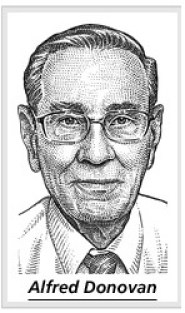 A head-cut image of Alfred Donovan (now deceased) appears courtesy of The Wall Street Journal.