
By Dinakar Sethuraman
Nov. 19 (Bloomberg) — The biggest oil companies including Saudi Aramco,Royal Dutch Shell Plc and Petroleo Brasileiro SA are accelerating spending cuts and delaying projects as the world enters a recession, said Morgan Stanley & Co.
As many as 44 projects have been delayed and faced cuts in investments as of Nov. 18, compared with 19 in a Nov. 5 report, analysts Theepan Jothilingam and James Hubbard said in a note today.
Benchmark oil prices in New York have declined 63 percent since reaching a record $147.27 a barrel in July because of concerns a slowing world economy will erode demand. The world will need to invest more than $26 trillion, almost twice the annual domestic product of the U.S., by 2030 to ensure energy supply, the International Energy Agency said on Nov. 6.
“The oil industry continues to respond to the cash flow challenge of oil price falls by trimming capex plans,” the analysts said in the report. “In our updated database we are now seeing delays to downstream investments, as well as the upstream.”
Shell has postponed plans for a pilot test on bitumen carbonates in northern Alberta while Brazil’s Petrobras announced a delay in confirming a 5-year business plan and investment schedule, the report said. OAO Gazprom is reassessing its spending plan by the middle of next month.
Aramco may delay inviting bids for the Total SA-partnered Jubail and Yanbu refineries to gain from declines in steel and cement prices, the report said. The report cited Aramco as saying that “prior plans made in $80-$100 a barrel environment don’t all work in a $65 a barrel world.”
Nine-Month Delays
Technip SA, Europe’s second-largest oilfield-services provider, said that bids for oil-processing projects may face delays of three to nine months as customers seek to renegotiate contracts, the report said.
“This trend of managing cost budgets is consistent with the industry’s 1998 response to oil price declines,” the report said. “The risk is that 2009 cuts to investment plans increase these longer-term supply risks.”
The International Energy Agency said on Nov. 14 OPEC’s slowing investment in new oil projects amid the global economic slowdown may cause an energy supply crunch in the next two decades. Declining production rates from oil fields at 6.7 percent were higher than previous forecasts.
To contact the reporter on this story: Dinakar Sethuraman in Singapore at[email protected].
Last Updated: November 18, 2008 23:56 EST
This website and sisters royaldutchshellplc.com, shellnazihistory.com, royaldutchshell.website, johndonovan.website, and shellnews.net, are owned by John Donovan. There is also a Wikipedia segment.


 Royal Dutch Shell conspired directly with Hitler, financed the Nazi Party, was anti-Semitic and sold out its own Dutch Jewish employees to the Nazis. Shell had a close relationship with the Nazis during and after the reign of Sir Henri Deterding, an ardent Nazi, and the founder and decades long leader of the Royal Dutch Shell Group. His burial ceremony, which had all the trappings of a state funeral, was held at his private estate in Mecklenburg, Germany. The spectacle (photographs below) included a funeral procession led by a horse drawn funeral hearse with senior Nazis officials and senior Royal Dutch Shell directors in attendance, Nazi salutes at the graveside, swastika banners on display and wreaths and personal tributes from Adolf Hitler and Reichsmarschall, Hermann Goring. Deterding was an honored associate and supporter of Hitler and a personal friend of Goring.

 Deterding was the guest of Hitler during a four day summit meeting at Berchtesgaden. Sir Henri and Hitler both had ambitions on Russian oil fields. Only an honored personal guest would be rewarded with a private four day meeting at Hitler’s mountain top retreat.


 IN JULY 2007, MR BILL CAMPBELL (ABOVE, A RETIRED GROUP AUDITOR OF SHELL INTERNATIONAL SENT AN EMAIL TO EVERY UK MP AND MEMBER OF THE HOUSE OF LORDS:


 MORE DETAILS:


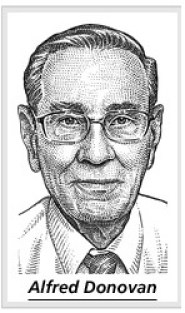 A head-cut image of Alfred Donovan (now deceased) appears courtesy of The Wall Street Journal.