
Published: November 13 2008 15:03 | Last updated: November 13 2008 19:38
Had crude prices remained above $100 a barrel for any length of time, Canadians may have taken to calling their country Saudi Canadia, perhaps replacing the maple leaf with an oil derrick. It was only a slight boast to say that Canada had the second largest recoverable oil reserves in the world by virtue of its oil sands, or that Venezuela, with similar deposits, was number one. Development prospects look less attractive now, though, as crude hovers around $55 a barrel almost two-thirds below its recent peak.
Suncor, the biggest oil sands producer, has pruned its budget by a third even as investors have slashed its value by almost two-thirds. Others, such as Royal Dutch/Shell, Nexen and EnCana are also re-evaluating the future. The frenzied rate of investment that had turned a small Canadian town such as Fort McMurray into a sub-Arctic El Dorado with rapid inflation and scarce housing is unlikely to continue without more certainty on crude prices.
When the boom was picking up steam earlier this decade, the cost of a new project was as low as C$30,000-C$50,000 per barrel of annual output. Now it is four times as much. Variable costs have soared too because extracting bitumen is energy and labour-intensive. And, unlike other types of development, oil sands development must take place in big chunks costing billions. There is also the risk of environmental sanctions, given the awful greenhouse gas emissions of oil sands production.
Still, it is too soon to write the industrys epitaph. As development wanes, costs will moderate too. Existing facilities and those under way can easily cover variable costs, and they are already a meaningful part of the North American energy mix. Just as Saudi Arabia could swing oil markets when they got too low in the good old days, now it may be Saudi Canadia and others putting an involuntary floor under the market.
To e-mail the Lex team confidentially click here
OR
To post public comments click here
EDITORS CHOICE
Oil at $55 on demand gloom – Nov-13
In depth: Oil – Oct-30
Copyright The Financial Times Limited 2008
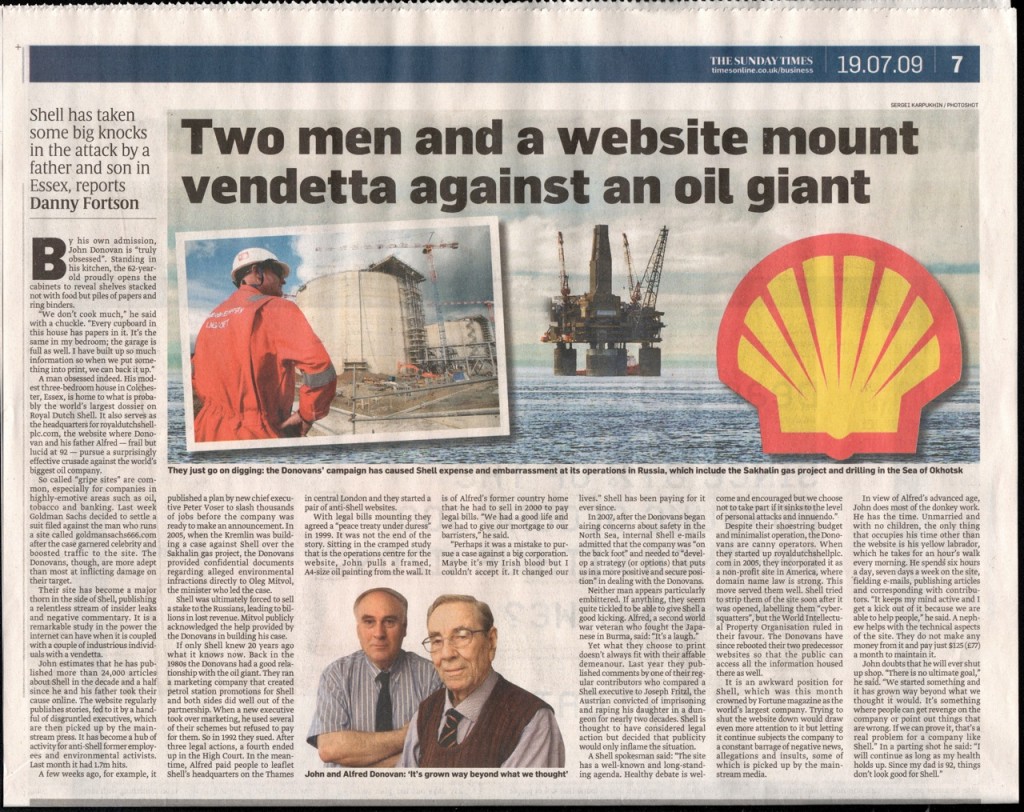
This website and sisters royaldutchshellplc.com, shellnazihistory.com, royaldutchshell.website, johndonovan.website, and shellnews.net, are owned by John Donovan. There is also a Wikipedia segment.


 Royal Dutch Shell conspired directly with Hitler, financed the Nazi Party, was anti-Semitic and sold out its own Dutch Jewish employees to the Nazis. Shell had a close relationship with the Nazis during and after the reign of Sir Henri Deterding, an ardent Nazi, and the founder and decades long leader of the Royal Dutch Shell Group. His burial ceremony, which had all the trappings of a state funeral, was held at his private estate in Mecklenburg, Germany. The spectacle (photographs below) included a funeral procession led by a horse drawn funeral hearse with senior Nazis officials and senior Royal Dutch Shell directors in attendance, Nazi salutes at the graveside, swastika banners on display and wreaths and personal tributes from Adolf Hitler and Reichsmarschall, Hermann Goring. Deterding was an honored associate and supporter of Hitler and a personal friend of Goring.

 Deterding was the guest of Hitler during a four day summit meeting at Berchtesgaden. Sir Henri and Hitler both had ambitions on Russian oil fields. Only an honored personal guest would be rewarded with a private four day meeting at Hitler’s mountain top retreat.


 IN JULY 2007, MR BILL CAMPBELL (ABOVE, A RETIRED GROUP AUDITOR OF SHELL INTERNATIONAL SENT AN EMAIL TO EVERY UK MP AND MEMBER OF THE HOUSE OF LORDS:


 MORE DETAILS:


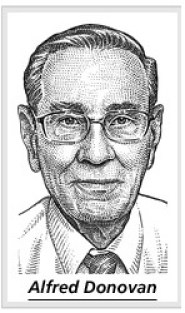 A head-cut image of Alfred Donovan (now deceased) appears courtesy of The Wall Street Journal.