
By Carola Hoyos, Javier Blas and Ed Crooks in London
Published: November 13 2008 02:00 | Last updated: November 13 2008 02:00
A lack of investment in new sources of oil risks a supply crunch worse than the problems that pushed prices to $147 a barrel this summer, the developed world’s energy watchdog said yesterday.
The International Energy Agency warned that cuts and delays in investment that were prompted by the fall in oil prices and the credit crunch had put the world “on a bad path”.
Fatih Birol, chief economist at the IEA, said: “We hear almost every day about a project being postponed. This is a major problem.”
Last year, $390bn (311bn, £259bn) was invested in oil and gas exploration and production, one of the highest amounts in recent years. Yet it still fell short of the $450bn the IEA said would be needed in both sectors.
There was no respite for the IEA in oil prices yesterday. West Texas Intermediate on the New York Mercantile Exchange dropped to a 20-month low of $56.35 a barrel, down almost $3, after the US Department of Energy said demand would remain flat for 2008-09.
Oil prices have fallen as economies have struggled in the credit crisis and demand has dropped, especially in the developed world.
The IEA predicted that shrinking demand would be a long-term phenomenon among members of the Organisation for Economic Co-operation and Development. “We think OECD oil demand has peaked. The OECD countries’ role in the energy world is becoming less and less important,” said Mr Birol.
Developing countries are expected to be the only source of growth in oil demand until 2030, with China contributing 43 per cent and India and the Middle East each about 20 per cent. The remainder will come from other emerging economies in Asia.
But meeting the demand growth is secondary to the big challenge of compen-sating for the fast-declining production from the world’s older fields, the IEA said. It suggested the oil price was too low to guarantee the necessary investment and noted that high-cost ventures, such as Canada’s tar sands, were producing oil at a cost of about $80 a barrel – more than $20 higher than the prevailing oil price.
The warning represents a change of tone from an organisation that has often criticised the Opec cartel of oil-producing nations for reducing production to prop up prices.
The main spur for the IEA’s focus on investment – and the oil price that it regards as necessary to stimulate investors – has been its exhaustive study on the rates of decline in production from 800 of the world’s biggest oil fields.
The watchdog found that even after recent investment, production from the fields was declining at an annual 6.7 per cent and that this rate was accelerating. This means 45m barrels a day would have to be found and tapped in the next 22 years simply to meet an unchanged world demand. As it stands, however, the IEA expects demand to rise from 85m b/d last year to 106m b/d in 2030, making the challenge that much greater.
Many of the fields experiencing the sharpest decline in production lie in developed countries, including in areas such as the North Sea and Alaska. This meant the west would become less and less of an influence in terms of production, while Gulf countries would become more important.
Petrobras
Copyright The Financial Times Limited 2008
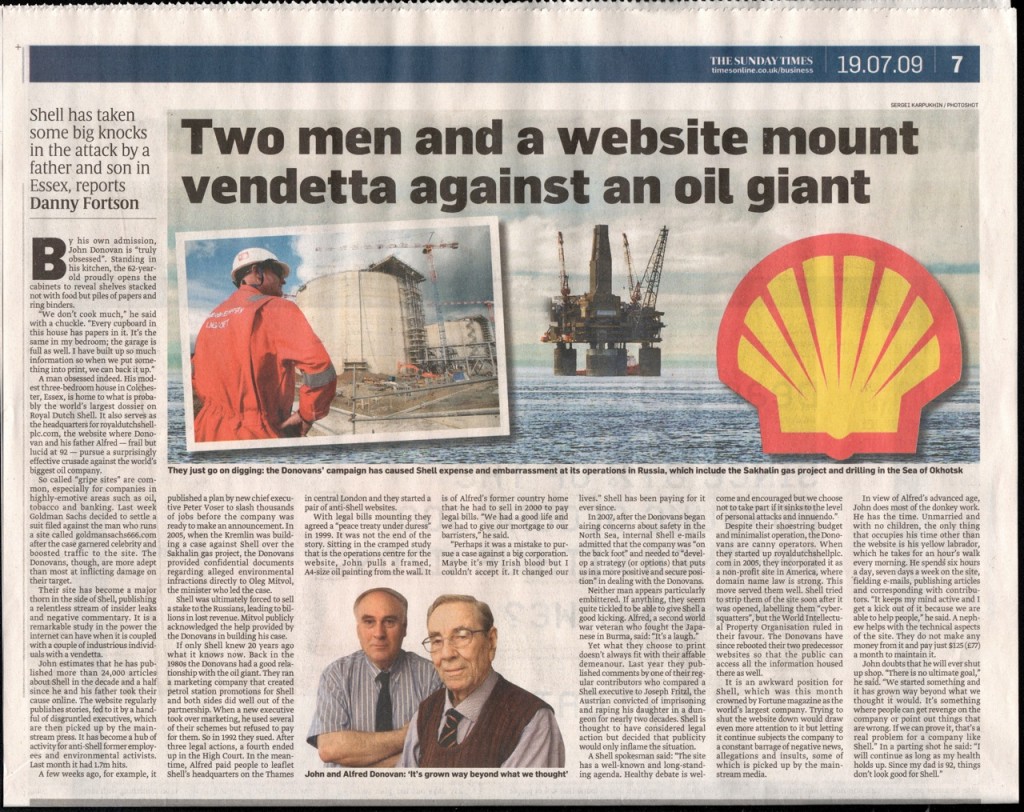
This website and sisters royaldutchshellplc.com, shellnazihistory.com, royaldutchshell.website, johndonovan.website, and shellnews.net, are owned by John Donovan. There is also a Wikipedia segment.


 Royal Dutch Shell conspired directly with Hitler, financed the Nazi Party, was anti-Semitic and sold out its own Dutch Jewish employees to the Nazis. Shell had a close relationship with the Nazis during and after the reign of Sir Henri Deterding, an ardent Nazi, and the founder and decades long leader of the Royal Dutch Shell Group. His burial ceremony, which had all the trappings of a state funeral, was held at his private estate in Mecklenburg, Germany. The spectacle (photographs below) included a funeral procession led by a horse drawn funeral hearse with senior Nazis officials and senior Royal Dutch Shell directors in attendance, Nazi salutes at the graveside, swastika banners on display and wreaths and personal tributes from Adolf Hitler and Reichsmarschall, Hermann Goring. Deterding was an honored associate and supporter of Hitler and a personal friend of Goring.

 Deterding was the guest of Hitler during a four day summit meeting at Berchtesgaden. Sir Henri and Hitler both had ambitions on Russian oil fields. Only an honored personal guest would be rewarded with a private four day meeting at Hitler’s mountain top retreat.


 IN JULY 2007, MR BILL CAMPBELL (ABOVE, A RETIRED GROUP AUDITOR OF SHELL INTERNATIONAL SENT AN EMAIL TO EVERY UK MP AND MEMBER OF THE HOUSE OF LORDS:


 MORE DETAILS:


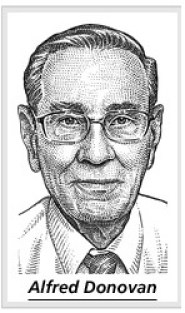 A head-cut image of Alfred Donovan (now deceased) appears courtesy of The Wall Street Journal.