DAILY TELEGRAPH
Royal Dutch Shell shares jumped 12pc after it revealed that chief financial officer Peter Voser will take over as the company’s chief executive next July.

Mr Voser, 50, will succeed Jeroen van der Veer, who is to retire after almost five years at the company, which posted a second-quarter net profit of $11.6bn (£7.1bn) in July, boosted by record crude oil prices.
Shell chairman Jorma Ollila said he was “delighted” with the company’s choice, adding that he expected Mr Voser to build on the “strong position” established by 61-year-old Mr van der Veer.
Mr Van der Veer, who became chief executive in October 2004, stayed at Shell beyond the normal retirement age in the Netherlands to restore confidence in the company after a reserves scandal in January 2004. The company admitted that it had overstated its reserves, leading to lawsuits from investors and fines by regulators.
Voser joined Shell in 1982 and held a number of finance and business roles in Switzerland, Argentina, Chile and in the UK before joining Asea Brown Boveri in 2002. He returned to Shell four years ago and is understood to have seen off rivals including Malcolm Brinded, head of exploration and production at the company, and Linda Cook, currently executive director gas and power, for the top role.
His appointment has been widely supported by analysts and investors. Alexandre Weinberg, an analyst at Petercam, said Mr Voser would reap the rewards of the company’s projects in areas such as Russia and Qatar, but said he expected him to oversee of period of cost-cutting as the global economic crisis hits company margins.
“There were rumours that Peter was going to UBS earlier this year, so this is a positive surprise and a good move for Shell to make. Jeroen van der Veer has done a very good job developing the company’s assets and will leave it with a sound business strategy in place,” he added.
“However, with his financial background, I expect Mr Voser will oversee a period of optimisation at the company and may look to cut costs in order to keep the company’s balance sheet in good health.”
Mr Voser is likely to face a number of challenges posed by Shell’s international presence. The company recently admitted it was turning to Australia, Brazil and Iraq to counter problems in Nigeria, where rebel unrest saw the company lose 195,000 barrels a day during the second quarter. Shell was also forced to sell its controlling stake in Russia’s Sakhalin-2 venture deal earlier this year.
Shares in the company closed up 180p at £16.70.


 Royal Dutch Shell conspired directly with Hitler, financed the Nazi Party, was anti-Semitic and sold out its own Dutch Jewish employees to the Nazis. Shell had a close relationship with the Nazis during and after the reign of Sir Henri Deterding, an ardent Nazi, and the founder and decades long leader of the Royal Dutch Shell Group. His burial ceremony, which had all the trappings of a state funeral, was held at his private estate in Mecklenburg, Germany. The spectacle (photographs below) included a funeral procession led by a horse drawn funeral hearse with senior Nazis officials and senior Royal Dutch Shell directors in attendance, Nazi salutes at the graveside, swastika banners on display and wreaths and personal tributes from Adolf Hitler and Reichsmarschall, Hermann Goring. Deterding was an honored associate and supporter of Hitler and a personal friend of Goring.

 Deterding was the guest of Hitler during a four day summit meeting at Berchtesgaden. Sir Henri and Hitler both had ambitions on Russian oil fields. Only an honored personal guest would be rewarded with a private four day meeting at Hitler’s mountain top retreat.


 IN JULY 2007, MR BILL CAMPBELL (ABOVE, A RETIRED GROUP AUDITOR OF SHELL INTERNATIONAL SENT AN EMAIL TO EVERY UK MP AND MEMBER OF THE HOUSE OF LORDS:


 MORE DETAILS:


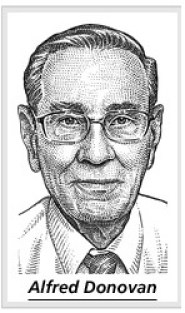 A head-cut image of Alfred Donovan (now deceased) appears courtesy of The Wall Street Journal.