Lionel Laurent, 01.31.08, 8:50 AM ET
LONDON – Oil prices may be booming, but the strain of higher costs is beginning to show for Royal Dutch Shell.
The Anglo-Dutch oil and gas stalwart posted a 60.4% increase in fourth-quarter profits Thursday, to $8.5 billion, from $5.3 billion, but most of the gain came from the jump in crude prices this year. Excluding price fluctuations and a $963 million gain from asset sales, net profit for the quarter came in at a more modest $5.7 billion.
Royal Dutch Shell’s (other-otc: RDS.A – news – people ) ‘B’ shares fell 26 pence (52 cents), or 1.5%, to £17.18 ($34.22), on Thursday afternoon in London, while its ‘A’ shares fell 32 pence (64 cents), or 1.8%, to £17.57 ($35.00). Analysts had been hoping for profits of $5.8 billion, with Citigroup analyst James Neale noting that earnings from Shell’s oil products division missed forecasts by 33%.
Excluding oil price fluctuations, profits from oil products fell 40.4% year-on-year, to $876 million. The United States accounted for most of the drop, with American earnings down 59.5%, to $87 million. Last September, Shell announced a $7 billion expansion of its Texas refinery in partnership with Saudi Arabia’s Aramco.
Shell said its fourth-quarter performance reflected industry-wide problems: higher costs, higher taxes and lower production volumes. Despite the fact that the benchmark West Texas Intermediate crude price is still above $90 per barrel, it is not always easy for companies like Shell to pass on increased costs to its customers.
“In earlier years, there were bonanza refining margins,” said Brendan Wilders, analyst with Oriel Securities. But higher crude oil prices have since outpaced gasoline prices, and the differential is currently squeezing integrated oil and gas companies like ExxonMobil (nyse: XOM – news – people ) and ConocoPhillips (nyse: COP – news – people ).
Wilders told Forbes.com that he rated Shell a “Hold,” recommending BP (nyse: BP – news – people ) as a better profitability play instead. He said that the British icon had a stronger position regarding oil and reserves. The firm has reportedly added 1 billion barrels’ worth of new reserves for 2007, which would be a drop from the 2006 figure of over 2 billion. But Shell did not provide details on its new reserves on Thursday.
Earlier this month, press reports suggested that Shell could axe as many as 3,000 jobs in an effort to offset higher costs. The company believes it can generate cost and operational synergies of around £500 million.
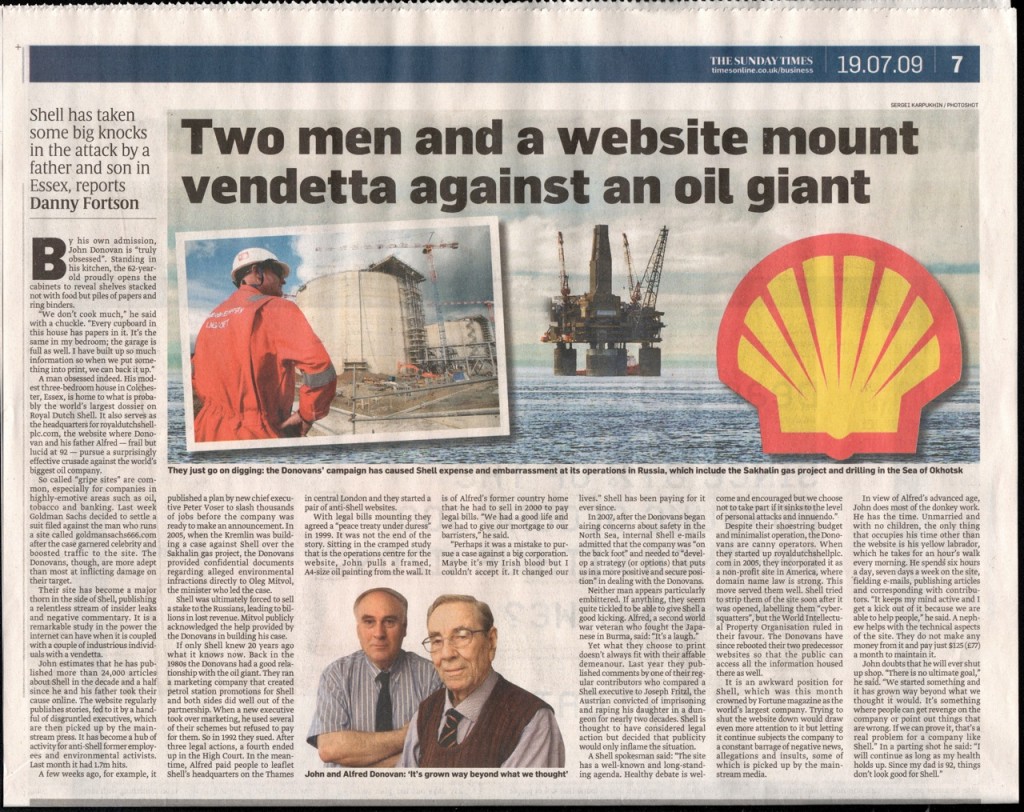
This website and sisters royaldutchshellplc.com, shellnazihistory.com, royaldutchshell.website, johndonovan.website, and shellnews.net, are owned by John Donovan. There is also a Wikipedia segment.


 Royal Dutch Shell conspired directly with Hitler, financed the Nazi Party, was anti-Semitic and sold out its own Dutch Jewish employees to the Nazis. Shell had a close relationship with the Nazis during and after the reign of Sir Henri Deterding, an ardent Nazi, and the founder and decades long leader of the Royal Dutch Shell Group. His burial ceremony, which had all the trappings of a state funeral, was held at his private estate in Mecklenburg, Germany. The spectacle (photographs below) included a funeral procession led by a horse drawn funeral hearse with senior Nazis officials and senior Royal Dutch Shell directors in attendance, Nazi salutes at the graveside, swastika banners on display and wreaths and personal tributes from Adolf Hitler and Reichsmarschall, Hermann Goring. Deterding was an honored associate and supporter of Hitler and a personal friend of Goring.

 Deterding was the guest of Hitler during a four day summit meeting at Berchtesgaden. Sir Henri and Hitler both had ambitions on Russian oil fields. Only an honored personal guest would be rewarded with a private four day meeting at Hitler’s mountain top retreat.


 IN JULY 2007, MR BILL CAMPBELL (ABOVE, A RETIRED GROUP AUDITOR OF SHELL INTERNATIONAL SENT AN EMAIL TO EVERY UK MP AND MEMBER OF THE HOUSE OF LORDS:


 MORE DETAILS:


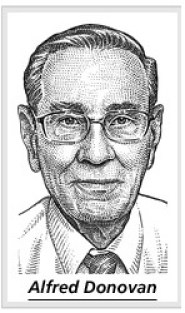 A head-cut image of Alfred Donovan (now deceased) appears courtesy of The Wall Street Journal.