Richard Wachman
Sunday January 27 2008
Oil giant Shell is this week expected to unveil the biggest profit by a British company when it posts earnings of about $26bn thanks to soaring oil prices in 2007.
The figures are expected to spark a political storm, but the ire of lobby groups representing motorists and road hauliers will be directed at the government rather than Shell, as by far the biggest components of petrol prices are fuel duties and VAT.
Sheila Ranger, acting director of the RAC Foundation, established in 1991 to champion the interests of motorists, says: ‘Petrol in Britain is cheap compared to the continent; what makes it expensive are the taxes. Nearly 70 per cent of the cost of a litre of petrol goes the government – it is unacceptable.’
The foundation is to write to the Chancellor Alistair Darling ahead of the Budget, asking him to scrap plans to raise duties further and to look at a series of cuts to reflect the high cost of fuel. Ranger says: ‘We have received many letters from consumers who say they have been forced to cut their budgets to afford petrol, which has climbed to over £1 a litre.’
Despite producing bumper profits, the oil giants are facing increased downstream costs at their refining operations, while the costs associated with extracting and transporting oil are also rising. Jason Kenney, energy analyst at broker ING, says: ‘Many people don’t realise that Western oil companies are under pressure because they must find more and more oil to justify their huge cost infrastructures.’
In the City, analysts have occasionally published papers suggesting that companies such as Shell and BP should split their exploration and production arms from their refining and retail operations. JP Morgan Cazenove, financial adviser to BP, issued research that reviewed the case for breaking up ‘big oil’.
Many of the majors are viewed as lumbering giants, especially when they are compared with more nimble-footed competitors such as Cairn Energy, which has focused solely on oil and gas exploration. Cairn doesn’t get involved in expensive refining, processing and distribution.
Cazenove challenged one of the industry’s most sacred orthodoxies – that it makes commercial sense for multinationals such as BP to have both an ‘upstream’ research, exploration and drilling arm and ‘downstream’ businesses that process, refine and deliver gas and oil products.
The practice was first put into operation 100 years ago by JD Rockefeller, who was keen to protect his growing oil empire by controlling every aspect of the supply chain. In modern times, oil giants have argued that owning upstream and downstream operations makes sense because when oil prices are high, downstream earnings fall, and vice versa.
Cazenove shot down this argument. Researcher Fred Lucas said: ‘Financial data for Exxon, BP, Shell and Chevron shows that upstream and downstream earnings are actually very positively correlated. The arguments for adhering to an integrated structure have lost much, if not all, of their historical validity.’
http://www.guardian.co.uk/business/2008/jan/27/oil
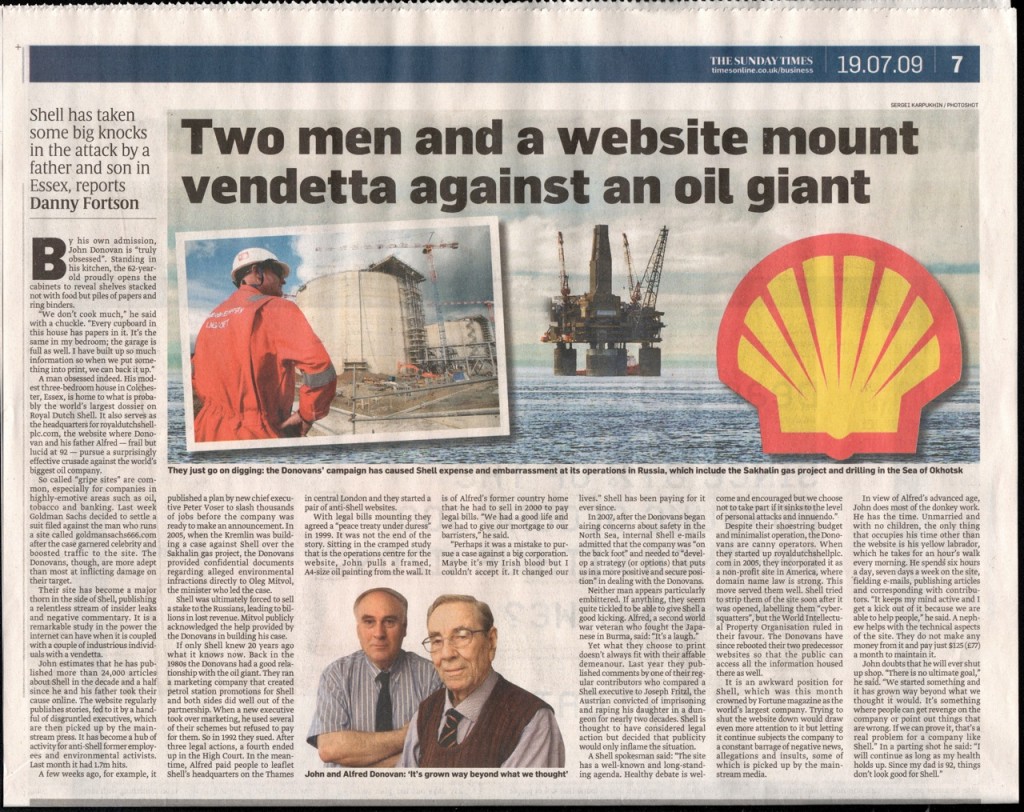
This website and sisters royaldutchshellplc.com, shellnazihistory.com, royaldutchshell.website, johndonovan.website, and shellnews.net, are owned by John Donovan. There is also a Wikipedia segment.


 Royal Dutch Shell conspired directly with Hitler, financed the Nazi Party, was anti-Semitic and sold out its own Dutch Jewish employees to the Nazis. Shell had a close relationship with the Nazis during and after the reign of Sir Henri Deterding, an ardent Nazi, and the founder and decades long leader of the Royal Dutch Shell Group. His burial ceremony, which had all the trappings of a state funeral, was held at his private estate in Mecklenburg, Germany. The spectacle (photographs below) included a funeral procession led by a horse drawn funeral hearse with senior Nazis officials and senior Royal Dutch Shell directors in attendance, Nazi salutes at the graveside, swastika banners on display and wreaths and personal tributes from Adolf Hitler and Reichsmarschall, Hermann Goring. Deterding was an honored associate and supporter of Hitler and a personal friend of Goring.

 Deterding was the guest of Hitler during a four day summit meeting at Berchtesgaden. Sir Henri and Hitler both had ambitions on Russian oil fields. Only an honored personal guest would be rewarded with a private four day meeting at Hitler’s mountain top retreat.


 IN JULY 2007, MR BILL CAMPBELL (ABOVE, A RETIRED GROUP AUDITOR OF SHELL INTERNATIONAL SENT AN EMAIL TO EVERY UK MP AND MEMBER OF THE HOUSE OF LORDS:


 MORE DETAILS:


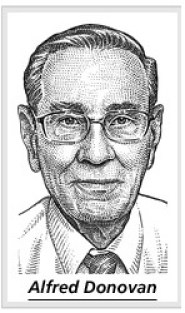 A head-cut image of Alfred Donovan (now deceased) appears courtesy of The Wall Street Journal.