EXTRACT: The authors quote approvingly the candid thoughts of an ex-CEO of Shell, Lo van Wachem: “The actual revenue I realise today is grossly dependent on the energy reserves acquired and explored by the two CEOs before me, and CEOs two generations after me will reap the rewards of my efforts.”
THE ARTICLE
By Stefan Stern
Published: December 27 2007 02:00 | Last updated: December 27 2007 02:00
There is no such thing as a growth industry. No, this is not the latest doom-laden forecast for 2008. It is the penetrating insight offered by three management consultants – two from McKinsey, the other a former McKinsey partner – in this thought-provoking new book.
Too often people speak in the most general terms about market trends. “The world’s ageing population will generate increasing demand for healthcare,” we might say, or “You have to invest in the booming Chinese economy.”
But closer analysis reveals these sweeping remarks do not help you to understand how businesses actually make money. “Most discussions of megatrends take place at a very broad and superficial level,” Viguerie, Smit and Baghai argue. “That may be fine for financial commentators on TV or casual dinner-party chat, but it’s not much use if you happen to be the CEO of a large company trying to make decisions about where to compete or to allocate resources.”
Consider a customer walking into a branch of Starbucks. Will he or she simply order “a cup of coffee”? Unlikely. The customer makes a specific and deliberate choice. In economies and product categories this effect is magnified on an industrial scale. So, the authors say, managers’ understanding of markets has to go much deeper, down to a “granular” level. “We believe that the leaders of large institutions need to avoid taking an averaged view of all their businesses; instead, they should manage them with greater focus at a more detailed level, while continuing to take advantage of their scale,” they write.
McKinsey has hired a team of data analysts based in India to carry out what the firm calls “granular growth decompositions” – a detailed study of the way companies make money. They have separated this revenue generation into three main categories: mergers and acquisitions; “portfolio momentum” or growth in revenue achieved in the markets where a business competes; and “share gain” or achieving a greater share of a given market.
Their findings are pretty startling. For one thing, M&A does not seem to be an inevitably value-destroying route. Indeed, the coming slowdown could be a great time to make some smart acquisitions, the authors say.
Second, “portfolio momentum” is of supreme importance. This vital measure of strategic performance reveals the wisdom of decisions taken many years earlier. The authors quote approvingly the candid thoughts of an ex-CEO of Shell, Lo van Wachem: “The actual revenue I realise today is grossly dependent on the energy reserves acquired and explored by the two CEOs before me, and CEOs two generations after me will reap the rewards of my efforts.”
Third, agonising over market share can be a waste of time, however important we believe it to be. Have “superior insights” or “truly distinctive capabilities” instead, they advise. “If you don’t, you’ll find your competitors’ execution soon matches yours, and your market-share performance will take a dive . . . stalling your growth programme.”
McKinsey’s analysis has confirmed the authors in their belief that a business’s success depends heavily on the markets in which it operates. “So the next time a company announces stellar performance, it’s worth taking a closer look to see how much of its growth came from better steering, and how much from a favourable tailwind,” they write. “What is driving performance: execution or strategic choices?”
Practically, a company like Procter and Gamble seems to have taken the granularity message on board. Its skilful brand management embodies this. And yet, P&G’s rival Unilever arguably tripped up in recent years by cannibalising its own brands, getting its granules in a twist.
So “going granular” is not easy. And doesn’t it all sound rather time-consuming? It needn’t be so. “In our experience . . . the critical issues affecting growth are brought to light immediately, making the dialogue between the executive board and the business unit much more specific,” the authors say. “In most cases, the number of issues discussed doesn’t increase, but the specificity and quality of those issues rises dramatically.”
In 2008, you can stop worrying so much about market share and get to grips with choice market granules instead.
Stefan Stern
Copyright The Financial Times Limited 2007


 Royal Dutch Shell conspired directly with Hitler, financed the Nazi Party, was anti-Semitic and sold out its own Dutch Jewish employees to the Nazis. Shell had a close relationship with the Nazis during and after the reign of Sir Henri Deterding, an ardent Nazi, and the founder and decades long leader of the Royal Dutch Shell Group. His burial ceremony, which had all the trappings of a state funeral, was held at his private estate in Mecklenburg, Germany. The spectacle (photographs below) included a funeral procession led by a horse drawn funeral hearse with senior Nazis officials and senior Royal Dutch Shell directors in attendance, Nazi salutes at the graveside, swastika banners on display and wreaths and personal tributes from Adolf Hitler and Reichsmarschall, Hermann Goring. Deterding was an honored associate and supporter of Hitler and a personal friend of Goring.

 Deterding was the guest of Hitler during a four day summit meeting at Berchtesgaden. Sir Henri and Hitler both had ambitions on Russian oil fields. Only an honored personal guest would be rewarded with a private four day meeting at Hitler’s mountain top retreat.


 IN JULY 2007, MR BILL CAMPBELL (ABOVE, A RETIRED GROUP AUDITOR OF SHELL INTERNATIONAL SENT AN EMAIL TO EVERY UK MP AND MEMBER OF THE HOUSE OF LORDS:


 MORE DETAILS:


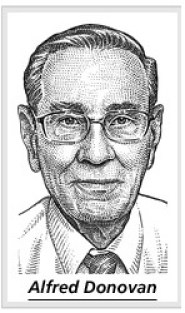 A head-cut image of Alfred Donovan (now deceased) appears courtesy of The Wall Street Journal.