By Jamil Anderlini in Beijing
Published: October 31 2007 15:57 | Last updated: October 31 2007 15:57
Fuel shortages in China spread to the capital for the first time this week as soaring global crude prices and government-set pump prices forced state-owned refiners to cut production to avoid huge losses.
Downtown Beijing was not affected but on the outskirts of the city numerous petrol stations were temporarily closed or rationing petrol and diesel, in scenes repeated across the country, according to local media.
Reports of long queues, rationing and petrol station closures have spread inland from coastal provinces over the past week, increasing pressure on the government and state-owned refiners.
Reuters on Wednesday reported that one man had been killed after a brawl broke out in the queue at a petrol station in Henan province.
In a legacy of China’s centrally planned economy, Beijing still sets pump prices and has not raised them since May 2006. With crude oil surging above the $93 a barrel mark, many small Chinese refiners have stopped production and companies such as Sinopec, the state’s largest refiner, are expected to take up the slack.
They can expect little respite in the months ahead as the government has said it will not begin long-awaited market reforms or allow prices to rise before the end of the year because inflation is already sitting at above 6 per cent, its highest level in a decade.
The government controls mean Sinopec’s break-even oil price is $60 a barrel, Wang Yongjian, chairman and president of Yanshan Petrochemical, Sinopec’s largest subsidiary, told the Financial Times in a recent interview.
Yanshan, which provides 60 per cent of Beijing’s petrol, expects to lose more than Rmb1bn ($130m, £65m, €93m) this year and is likely to receive a government subsidy for the third year in a row. The government gave parent company Sinopec $1.2bn in 2005 and $640m in 2006 in “one-off subsidies” to make up for refining losses.
The current shortages in the capital, which has not been affected in previous fuel crises, could be Sinopec’s way of telling the government it is unwilling to continue carrying the burden of price controls and high global prices.
“It is essential for the government to reform the fuel pricing system and we hope it will happen soon,” Mr Wang said. “But it is very hard to reform pricing with inflation rising so fast.”
Yanshan imports about 50 per cent of crude oil requirements, a similar proportion to the country as a whole.
Soaring global oil prices are mainly the result of speculation by paper traders, according to Rob Routs, executive director of oil products and chemicals at Shell Oil.
“We have tankers waiting to be offloaded at our refineries and there is more than enough capacity,” he said during a visit to Beijing on Monday.
Contrary to expectations, he said demand for petroleum products outside of Europe had not been seriously affected by the record crude prices and in Asia demand continued to grow at the same rate as GDP.
Copyright The Financial Times Limited 2007
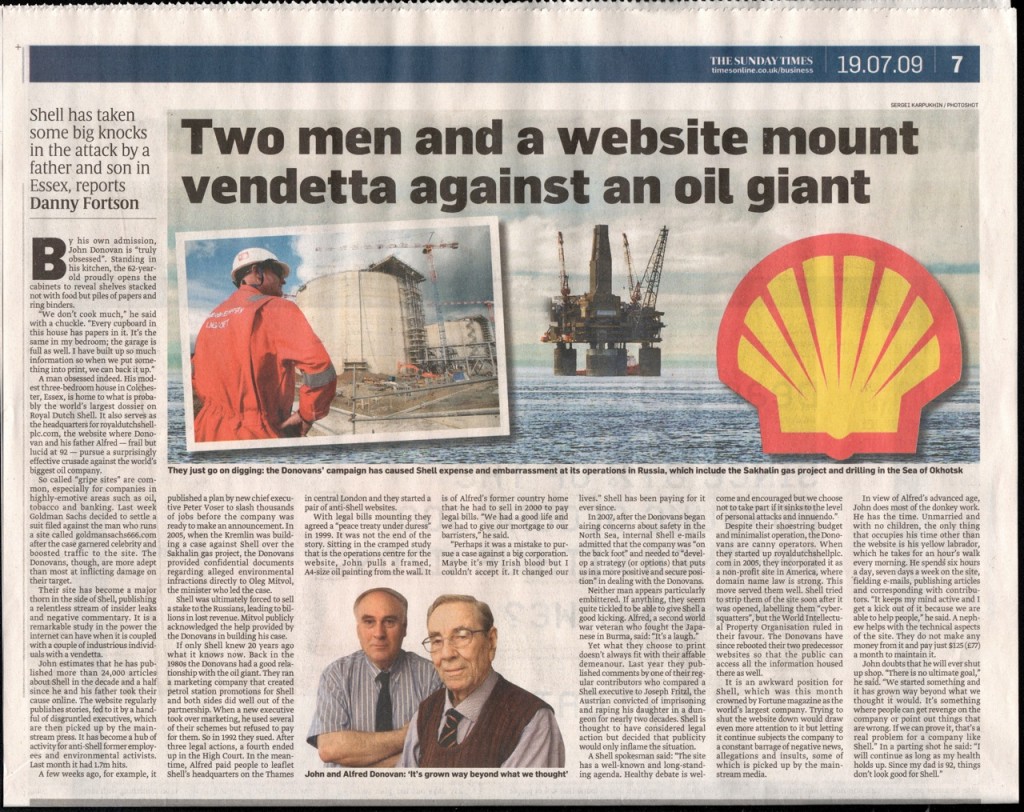
This website and sisters royaldutchshellplc.com, shellnazihistory.com, royaldutchshell.website, johndonovan.website, and shellnews.net, are owned by John Donovan. There is also a Wikipedia segment.


 Royal Dutch Shell conspired directly with Hitler, financed the Nazi Party, was anti-Semitic and sold out its own Dutch Jewish employees to the Nazis. Shell had a close relationship with the Nazis during and after the reign of Sir Henri Deterding, an ardent Nazi, and the founder and decades long leader of the Royal Dutch Shell Group. His burial ceremony, which had all the trappings of a state funeral, was held at his private estate in Mecklenburg, Germany. The spectacle (photographs below) included a funeral procession led by a horse drawn funeral hearse with senior Nazis officials and senior Royal Dutch Shell directors in attendance, Nazi salutes at the graveside, swastika banners on display and wreaths and personal tributes from Adolf Hitler and Reichsmarschall, Hermann Goring. Deterding was an honored associate and supporter of Hitler and a personal friend of Goring.

 Deterding was the guest of Hitler during a four day summit meeting at Berchtesgaden. Sir Henri and Hitler both had ambitions on Russian oil fields. Only an honored personal guest would be rewarded with a private four day meeting at Hitler’s mountain top retreat.


 IN JULY 2007, MR BILL CAMPBELL (ABOVE, A RETIRED GROUP AUDITOR OF SHELL INTERNATIONAL SENT AN EMAIL TO EVERY UK MP AND MEMBER OF THE HOUSE OF LORDS:


 MORE DETAILS:


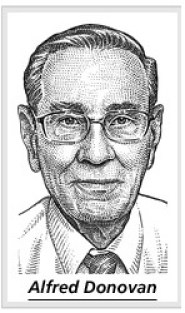 A head-cut image of Alfred Donovan (now deceased) appears courtesy of The Wall Street Journal.