By Victor Epstein
(Bloomberg) — BP Plc, ConocoPhillips and other major oil companies will increasingly dominate energy trading because they have better access to information that affects commodities prices, said Vince Kaminski, former risk-management director at Enron Corp.
Hedge funds and investment banks, which filled the trading void created by Enron’s 2001 collapse, are at a disadvantage to integrated energy companies that have real-time information about such things as oil production and gas shipments, Kaminski said today in an interview in Houston.
“The majors are more active traders than most people realize,” said Kaminski, who retired from a job at Citigroup last year and now teaches at Houston’s Rice University. “Everybody is concentrating on the hedge funds and not paying enough attention to the big energy companies who have the best information flows.”
Companies such as Goldman Sachs Group Inc. brought the financial wherewithal and expertise to become major players in energy trading, Kaminski said. A desire to close the information gap with the likes of BP and Royal Dutch Shell Plc was a motivating factor when some financial firms bought energy assets, becoming producers themselves, he said.
“I would bet that companies that have a strong physical presence and a strong balance sheet will have a competitive advantage over the financial players,” Kaminski said.
Recruited From Salomon
Kaminski said he expects energy prices to continue climbing as demand growth strains supplies. Geopolitical events have the potential to push oil past $100 a barrel, he said.
“This is a great trading market for those who have well oiled trading machines,” Kaminski said. “I’m long on energy in my personal portfolio.”
Kaminski, 58, helped introduce credit-risk management to the energy industry and evaluated deals at Enron, once the world’s largest energy trader. Last March, in the fraud trial of former Enron executives Kenneth Lay and Jeffrey Skilling, he testified that prior to the company’s bankruptcy in 2001, he told his bosses that transactions with Chief Financial Officer Andrew Fastow were “not only improper, but terminally stupid.”
Headhunters portrayed Houston-based Enron as a utility company where a tired Wall Street veteran could throttle back when they recruited Kaminski from Salomon Brothers Inc. in 1992. At that time, Enron traded only natural gas. Within four years, it was trading 1,400 products almost worldwide.
“I think the only thing we weren’t trading was the Ebola virus,” Kaminski said.
Enron’s Downfall
The company reached a turning point around 1996, when aggression and competitiveness overtook a culture previously built on cooperation, Kaminski said. Enron, then billing itself as “Wall Street on the Bayou,” wasn’t able to manage its rapid growth and cultural transformation, he said.
“Enron turned into a company with some pockets of criminal behavior and with some pockets of antisocial behavior,” Kaminski said. “A significant minority” of people at Enron lost their moral compass.
That minority’s wrongdoing, such as manipulation of the California power market, led to Enron’s downfall, Kaminski said. Management failed to heed the advice given by its technical experts, he said.
“What’s really tragic is that those sound concepts, now industry staples, have been obscured by the mistakes Enron committed later,” Kaminski said.
“To me the best analogy is the Space Shuttle Columbia disaster in 1987 because NASA policy makers ignored the warnings of their technical experts just as Enron’s leaders did.
Institutions degenerate when political considerations trump technical considerations in the decision-making process.”
New corporate governance standards that the Enron case helped inspire aren’t enough to prevent such misconduct in the future, Kaminski said. He recommended that institutions adopt a “zero tolerance” policy for improper behavior.
“And for individuals I would say the following: If you’re asked to do something improper, say `No,”’ Kaminski said. “Collecting unemployment beats going to prison.”
To contact the reporter on this story: Victor Epstein in Houston at [email protected] .
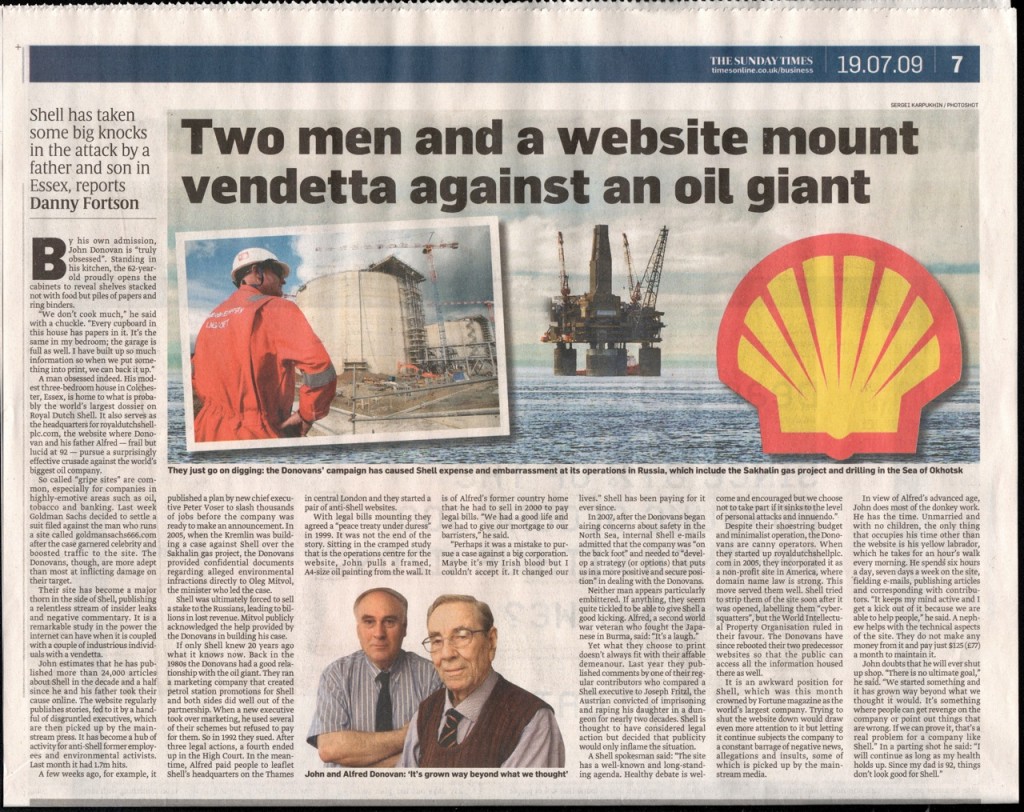
This website and sisters royaldutchshellplc.com, shellnazihistory.com, royaldutchshell.website, johndonovan.website, and shellnews.net, are owned by John Donovan. There is also a Wikipedia segment.


 Royal Dutch Shell conspired directly with Hitler, financed the Nazi Party, was anti-Semitic and sold out its own Dutch Jewish employees to the Nazis. Shell had a close relationship with the Nazis during and after the reign of Sir Henri Deterding, an ardent Nazi, and the founder and decades long leader of the Royal Dutch Shell Group. His burial ceremony, which had all the trappings of a state funeral, was held at his private estate in Mecklenburg, Germany. The spectacle (photographs below) included a funeral procession led by a horse drawn funeral hearse with senior Nazis officials and senior Royal Dutch Shell directors in attendance, Nazi salutes at the graveside, swastika banners on display and wreaths and personal tributes from Adolf Hitler and Reichsmarschall, Hermann Goring. Deterding was an honored associate and supporter of Hitler and a personal friend of Goring.

 Deterding was the guest of Hitler during a four day summit meeting at Berchtesgaden. Sir Henri and Hitler both had ambitions on Russian oil fields. Only an honored personal guest would be rewarded with a private four day meeting at Hitler’s mountain top retreat.


 IN JULY 2007, MR BILL CAMPBELL (ABOVE, A RETIRED GROUP AUDITOR OF SHELL INTERNATIONAL SENT AN EMAIL TO EVERY UK MP AND MEMBER OF THE HOUSE OF LORDS:


 MORE DETAILS:


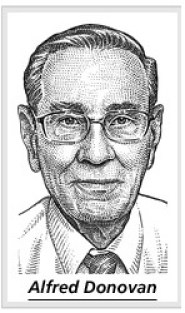 A head-cut image of Alfred Donovan (now deceased) appears courtesy of The Wall Street Journal.