By Sylvia Pfeifer,
Last Updated: 11:54pm GMT 03/02/2007
The cost of building and developing offshore oil and gas projects has risen by more than 50 per cent over the past few years, one of the world’s leading energy consultancies has warned. The huge surge in cost has been overshadowed by the record profits the oil majors have generated in recent years.
Last week, ExxonMobil, the world’s largest publicly traded oil company, reported profits of $39.5bn (£20bn). Royal Dutch Shell, the Anglo-Dutch oil group, saw earnings rise by an underlying 25 per cent to $25.4bn, the largest profit recorded by a UK-listed company. The biggest driver behind these profits has been the high price of crude which has tripled in the past five years.
But along with the high price environment has come a parallel increase in cost. New research by Cambridge Energy Research Associates (Cera) shows that since 2000 costs have risen by more than 50 per cent.
“The surge in cost is a preoccupation throughout the oil industry,” said Daniel Yergin, the chairman of Cera and author of an award-winning history of the sector. “It is central to executives’ minds.”
Three of the key cost pressures have been rising steel costs, drilling rig rates and labour costs. Greater competition for resources among oil majors has been another factor as companies try to boost flagging production by finding new oil and gas reserves. The greater size and complexity of some of the projects makes the costs more difficult to control. Despite the recent drop in oil prices due to the mild seasonal weather, analysts believe the cost pressures are unlikely to ease any time soon.
Shell is battling cost overruns at three of its main projects – the Sakhalin project in Siberia, the Athabasca oilsands in Canada and its Pearl gas-to-liquids project in Qatar. Pearl was intially expected to cost between $5bn and $6bn to develop but that cost has since doubled to an estimated $12bn-$14bn.
Last week Shell revealed that the project had allowed it to boost its reserve replacement ratio – a measure of how much oil a company is finding compared with how much it is producing – to 150 per cent last year, dramatically up from 78 per cent in 2005.
The project, however, relies on high oil prices to be viable. Merrill Lynch said Shell will need an oil price of around $55 a barrel to cover its dividend and fund new investment – well above BP’s $46. US rival Exxon only needs oil prices of $40 a barrel to cover its costs. At the same time Shell warned that its output would grow a mere 1-2 per cent for the rest of the decade.
Alone among the majors, BP, the world’s second-largest oil company, is expected on Tuesday to announce that profits for the fourth quarter have fallen. Analysts are forecasting profits of $3.8bn, down from $5bn last year. In a trading statement last month BP indicated that its production would fall short of its previous target of 3.95bn barrels of oil equivalent per day.
http://www.telegraph.co.uk/money/main.jhtml?xml=/money/2007/02/04/cnoil04.xml
This website and sisters royaldutchshellplc.com, shellnazihistory.com, royaldutchshell.website, johndonovan.website, and shellnews.net, are owned by John Donovan. There is also a Wikipedia segment.


 Royal Dutch Shell conspired directly with Hitler, financed the Nazi Party, was anti-Semitic and sold out its own Dutch Jewish employees to the Nazis. Shell had a close relationship with the Nazis during and after the reign of Sir Henri Deterding, an ardent Nazi, and the founder and decades long leader of the Royal Dutch Shell Group. His burial ceremony, which had all the trappings of a state funeral, was held at his private estate in Mecklenburg, Germany. The spectacle (photographs below) included a funeral procession led by a horse drawn funeral hearse with senior Nazis officials and senior Royal Dutch Shell directors in attendance, Nazi salutes at the graveside, swastika banners on display and wreaths and personal tributes from Adolf Hitler and Reichsmarschall, Hermann Goring. Deterding was an honored associate and supporter of Hitler and a personal friend of Goring.

 Deterding was the guest of Hitler during a four day summit meeting at Berchtesgaden. Sir Henri and Hitler both had ambitions on Russian oil fields. Only an honored personal guest would be rewarded with a private four day meeting at Hitler’s mountain top retreat.


 IN JULY 2007, MR BILL CAMPBELL (ABOVE, A RETIRED GROUP AUDITOR OF SHELL INTERNATIONAL SENT AN EMAIL TO EVERY UK MP AND MEMBER OF THE HOUSE OF LORDS:


 MORE DETAILS:


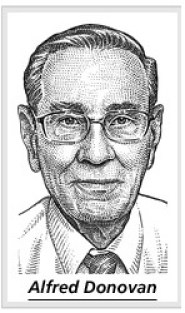 A head-cut image of Alfred Donovan (now deceased) appears courtesy of The Wall Street Journal.