Published: February 1 2007 14:14 | Last updated: February 1 2007 14:14
It used to be said that “you can be sure of Shell”.
That was, of course, before a large chunk of the oil major’s reserves went missing. Since that low point in 2004, the group has struggled to rebuild its image of reliability. Its fourth-quarter results will help – up to a point. Shell beat expectations on profits and upstream production, and has now pleasantly surprised investors for four quarters in a row.
Further evidence of a stronger grip on Shell’s operations is welcome. The other element of Shell’s recovery, however – rebuilding the reserves portfolio – is bittersweet for investors. When you are this big, fixing the upstream business takes time and money. Hence, Shell was forced on Thursday to raise its 2007 capital expenditure budget by 14-19 per cent.
This year, oil prices and refining margins are unlikely to match the elevated levels of 2006, and Shell has cut its upstream production target. Therefore it faces a potential squeeze in terms of lower operating cash flow and higher capex. Merrill Lynch estimates that, discounting the effect of acquisitions and disposals, Shell needs an average oil price of $55 a barrel in 2007 to cover its dividend, compared with $40 at ExxonMobil and $46 at BP. Crude has averaged $54 so far this year.
Shell’s negligible net debt leaves it plenty of room for manoeuvre. The problem is that its strategy is, of necessity, slow-burning. Headline reserves replacement last year of 150 per cent was strong, but heavily dependent on higher cost, non-conventional projects like the Pearl gas-to-liquids plant in Qatar. These assets have long life-spans and mean that, after 2010, Shell’s production growth should pick up after years of stagnation. Over the long term they will provide steady cash flows. That provides a solid, if somewhat utility-like underpinning for Shell’s long-term outlook. In that context, Shell’s increase in the dividend – putting it on a sector-beating yield of 4.2 per cent – can be seen as a sweetener to shareholders who might otherwise look for near-term growth elsewhere. Investors can be more sure of Shell these days, but there is little to get excited about in the immediate future.
Copyright The Financial Times Limited 2007
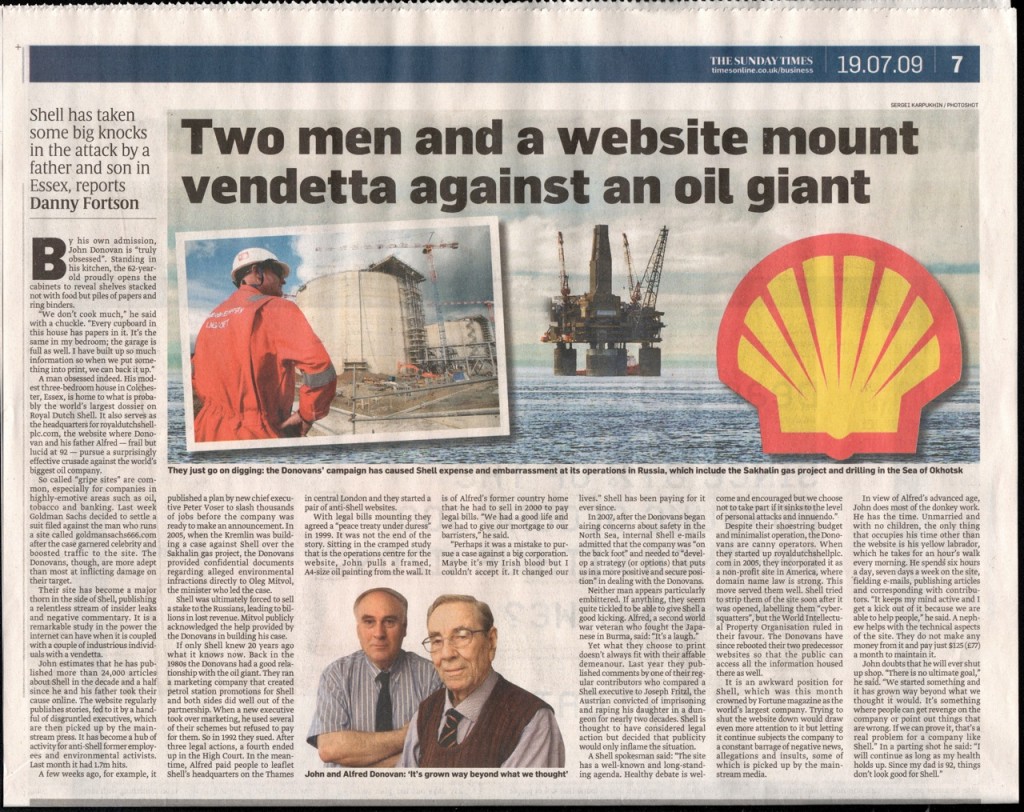
This website and sisters royaldutchshellplc.com, shellnazihistory.com, royaldutchshell.website, johndonovan.website, and shellnews.net, are owned by John Donovan. There is also a Wikipedia segment.


 Royal Dutch Shell conspired directly with Hitler, financed the Nazi Party, was anti-Semitic and sold out its own Dutch Jewish employees to the Nazis. Shell had a close relationship with the Nazis during and after the reign of Sir Henri Deterding, an ardent Nazi, and the founder and decades long leader of the Royal Dutch Shell Group. His burial ceremony, which had all the trappings of a state funeral, was held at his private estate in Mecklenburg, Germany. The spectacle (photographs below) included a funeral procession led by a horse drawn funeral hearse with senior Nazis officials and senior Royal Dutch Shell directors in attendance, Nazi salutes at the graveside, swastika banners on display and wreaths and personal tributes from Adolf Hitler and Reichsmarschall, Hermann Goring. Deterding was an honored associate and supporter of Hitler and a personal friend of Goring.

 Deterding was the guest of Hitler during a four day summit meeting at Berchtesgaden. Sir Henri and Hitler both had ambitions on Russian oil fields. Only an honored personal guest would be rewarded with a private four day meeting at Hitler’s mountain top retreat.


 IN JULY 2007, MR BILL CAMPBELL (ABOVE, A RETIRED GROUP AUDITOR OF SHELL INTERNATIONAL SENT AN EMAIL TO EVERY UK MP AND MEMBER OF THE HOUSE OF LORDS:


 MORE DETAILS:


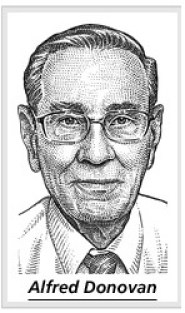 A head-cut image of Alfred Donovan (now deceased) appears courtesy of The Wall Street Journal.