By Carl Mortished, International Business Editor
POLITICAL turmoil surrounding Shell’s Sakhalin-2 gas project has forced the European Bank for Reconstruction and Development (EBRD) to postpone a decision on providing finance for the development.
Further deliberation by the EBRD will worry Shell, which is anxious for the bank’s signature of approval, notably in connection with the EBRD’s extensive social and environmental impact assessment of the project.
The EBRD was expected to provide loans of €400 million (£267 million) to the Sakhalin Energy Investment Company, a consortium including Shell, Mitsui and Mitsubishi. Removal of an environmental permit by the Russian Natural Resources Ministry last week has caused the bank to delay its decision.
Russian authorities, which have alleged damage to forests from pipeline construction on Sakhalin Island, softened their tone on the Sakhalin project yesterday. “We will do everything possible not to stop the project,” Yuri Trutnev, the Natural Resources Minister, said. He said that Shell must “correct the ecological damage”. Unless that happens, he said, the project would not be allowed to continue.
The $20 billion (£10.5 billion) Sakhalin project is being subjected to a new round of inspection. Removal last week of the environmental permit and threats to halt the project provoked indignation around the world, including from the Foreign and Commonwealth Office, the European Commission and Japan.
The regulatory threats are seen as a negotiating tactic. Shell is in talks with Gazprom over an asset swap by which the Russian utility would acquire a quarter of Sakhalin-2 in exchange for a stake in Zapolyarnoye, another Siberian gasfield. A doubling of Sakhalin’s cost has weakened Shell’s position. Also, Kremlin policy towards foreign energy players has hardened and there is pressure to renegotiate agreements made with foreign investors a decade ago that now are seen as too kind to the foreign investor.
The EBRD said there was no new timetable for agreeing a loan. The bank’s role is crucial because it has done extensive analysis of the project’s environmental effect.
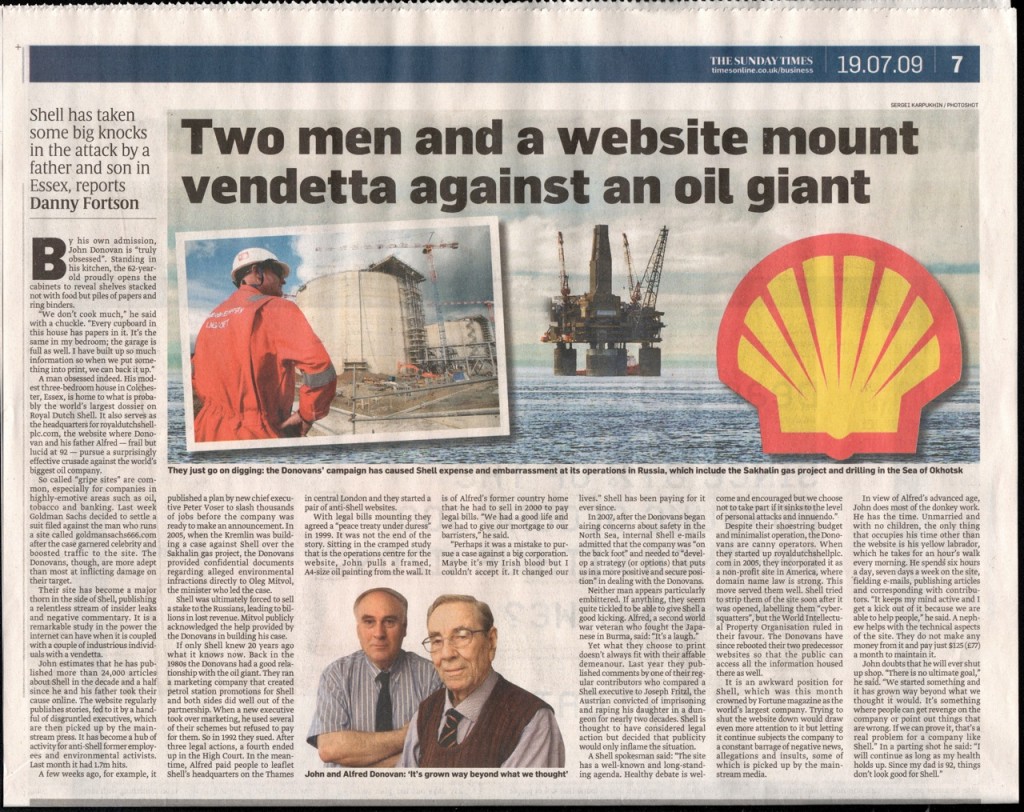
This website and sisters royaldutchshellplc.com, shellnazihistory.com, royaldutchshell.website, johndonovan.website, and shellnews.net, are owned by John Donovan. There is also a Wikipedia segment.


 Royal Dutch Shell conspired directly with Hitler, financed the Nazi Party, was anti-Semitic and sold out its own Dutch Jewish employees to the Nazis. Shell had a close relationship with the Nazis during and after the reign of Sir Henri Deterding, an ardent Nazi, and the founder and decades long leader of the Royal Dutch Shell Group. His burial ceremony, which had all the trappings of a state funeral, was held at his private estate in Mecklenburg, Germany. The spectacle (photographs below) included a funeral procession led by a horse drawn funeral hearse with senior Nazis officials and senior Royal Dutch Shell directors in attendance, Nazi salutes at the graveside, swastika banners on display and wreaths and personal tributes from Adolf Hitler and Reichsmarschall, Hermann Goring. Deterding was an honored associate and supporter of Hitler and a personal friend of Goring.

 Deterding was the guest of Hitler during a four day summit meeting at Berchtesgaden. Sir Henri and Hitler both had ambitions on Russian oil fields. Only an honored personal guest would be rewarded with a private four day meeting at Hitler’s mountain top retreat.


 IN JULY 2007, MR BILL CAMPBELL (ABOVE, A RETIRED GROUP AUDITOR OF SHELL INTERNATIONAL SENT AN EMAIL TO EVERY UK MP AND MEMBER OF THE HOUSE OF LORDS:


 MORE DETAILS:


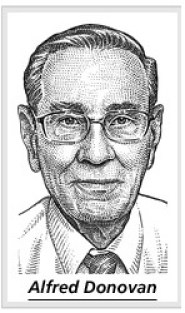 A head-cut image of Alfred Donovan (now deceased) appears courtesy of The Wall Street Journal.