EXTRACT: Shell’s overall capital investment this year is up almost $4bn to $19bn, including the higher capital cost bill. About 55pc of the $10bn-$11bn allocated for upstream oil and gas projects is targeted to ramping up new schemes, including the $20bn Sakhalin programme where Russian intervention is threatening the timetable.
By Roland Gribben
(Filed: 25/09/2006)
Rapidly rising exploration, production and project costs are forcing oil companies to increase investment budgets to avoid a slowdown in new developments.
BP blames capital cost inflation for adding at least $500m (£260m) to this year’s outlay of almost $16bn while Shell cites inflation, exchange rates and increases in service costs for 25pc of the increase in its $10bn-$11bn investment in oil and gas development.
Higher oil prices mean the oil giants are able to accommodate the increases in spending without damaging profits but, with the industry booming and contractors’ order books bulging, the supply chain is over-stretched and the risk of project delays is growing.
The cost of hiring drilling rigs has been one of the major factors behind the jump in exploration budgets. Over the past three years, rate rises have ranged from 120pc to 430pc, according to Shell figures.
BP estimates the maximum daily rate for ultra-deepwater rigs has increased from around $200,000 a day to $500,000 over the past two years but claims that market astuteness has enabled its North American gas business to make long-term contracts at a 20pc discount to current rates.
Despite the increases, BP expects to more than offset the jump in capital costs by higher proceeds from asset sales.
Shell’s list of cost increases includes rises of between 10pc-50pc for fabricated pipe, exchangers and pumps over three years. Corrosion resistant alloy pipe is between 40pc and 65pc dearer.
The pressure on the contracting side of the industry as well as opportunities is reflected in the 80pc plus rise in project management rates and 25pc in construction labour costs.
Shell’s overall capital investment this year is up almost $4bn to $19bn, including the higher capital cost bill. About 55pc of the $10bn-$11bn allocated for upstream oil and gas projects is targeted to ramping up new schemes, including the $20bn Sakhalin programme where Russian intervention is threatening the timetable.
http://www.telegraph.co.uk/money/main.jhtml?xml=/money/2006/09/25/cnoil25.xml


 Royal Dutch Shell conspired directly with Hitler, financed the Nazi Party, was anti-Semitic and sold out its own Dutch Jewish employees to the Nazis. Shell had a close relationship with the Nazis during and after the reign of Sir Henri Deterding, an ardent Nazi, and the founder and decades long leader of the Royal Dutch Shell Group. His burial ceremony, which had all the trappings of a state funeral, was held at his private estate in Mecklenburg, Germany. The spectacle (photographs below) included a funeral procession led by a horse drawn funeral hearse with senior Nazis officials and senior Royal Dutch Shell directors in attendance, Nazi salutes at the graveside, swastika banners on display and wreaths and personal tributes from Adolf Hitler and Reichsmarschall, Hermann Goring. Deterding was an honored associate and supporter of Hitler and a personal friend of Goring.

 Deterding was the guest of Hitler during a four day summit meeting at Berchtesgaden. Sir Henri and Hitler both had ambitions on Russian oil fields. Only an honored personal guest would be rewarded with a private four day meeting at Hitler’s mountain top retreat.


 IN JULY 2007, MR BILL CAMPBELL (ABOVE, A RETIRED GROUP AUDITOR OF SHELL INTERNATIONAL SENT AN EMAIL TO EVERY UK MP AND MEMBER OF THE HOUSE OF LORDS:


 MORE DETAILS:


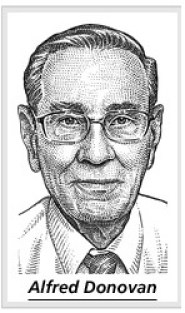 A head-cut image of Alfred Donovan (now deceased) appears courtesy of The Wall Street Journal.