A WALL STREET JOURNAL NEWS ROUNDUP
September 22, 2006; Page A6
Russia appeared to switch the focus of its attack on huge foreign-led projects to the Exxon Mobil Corp.-led Sakhalin I oil project, saying it would likely forbid a $4.2 billion cost overrun since that would cut Moscow’s profit from the venture.
Moscow has already taken aim at Royal Dutch Shell PLC’s massively overbudget Sakhalin II project, which it ordered partly halted for environmental infringements, prompting criticism from Japan and the European Union.
The moves against Shell and Exxon are widely seen as part of a broader campaign by the Kremlin to tighten its grip on the energy sector, a drive expected to speed up before Vladimir Putin’s presidency is due to end in March 2008. Analysts have said Russia is trying to force foreign oil majors to give up part or all of their advantageous production-sharing agreements, negotiated when global oil prices were lower.
“If costs continue to rise without control, Russia will be left with only 6% of royalties, while all profit oil will go to repaying costs,” Sergei Fyodorov, head of geological and subsoil use policies at the Ministry of Natural Resources, said of the Exxon and Shell projects on the Pacific island of Sakhalin. Mr. Fyodorov said the ministry had been informed on a preliminary basis that Exxon’s costs could rise to $17 billion from $12.8 billion but had seen no final documents.
Exxon said the increase is due mainly to inflation and currency moves. Exxon officials couldn’t be reached for comment.
This follows a doubling of costs at Shell’s Sakhalin II project to $20 billion, which Russia has strongly opposed. The ministry this week revoked an ecological permit from Shell, and the company said that would severely damage the project.
“The consequences of this revocation could be suspension of the operation that would lead to significant delay of the project, extra costs and irreparable damage to the reputation of this venture…and the Russian Federation as a whole for failure to deliver gas to buyers,” Sakhalin Energy Ltd., the project operator, said yesterday. Sakhalin Energy is 55% owned by Shell.


 Royal Dutch Shell conspired directly with Hitler, financed the Nazi Party, was anti-Semitic and sold out its own Dutch Jewish employees to the Nazis. Shell had a close relationship with the Nazis during and after the reign of Sir Henri Deterding, an ardent Nazi, and the founder and decades long leader of the Royal Dutch Shell Group. His burial ceremony, which had all the trappings of a state funeral, was held at his private estate in Mecklenburg, Germany. The spectacle (photographs below) included a funeral procession led by a horse drawn funeral hearse with senior Nazis officials and senior Royal Dutch Shell directors in attendance, Nazi salutes at the graveside, swastika banners on display and wreaths and personal tributes from Adolf Hitler and Reichsmarschall, Hermann Goring. Deterding was an honored associate and supporter of Hitler and a personal friend of Goring.

 Deterding was the guest of Hitler during a four day summit meeting at Berchtesgaden. Sir Henri and Hitler both had ambitions on Russian oil fields. Only an honored personal guest would be rewarded with a private four day meeting at Hitler’s mountain top retreat.


 IN JULY 2007, MR BILL CAMPBELL (ABOVE, A RETIRED GROUP AUDITOR OF SHELL INTERNATIONAL SENT AN EMAIL TO EVERY UK MP AND MEMBER OF THE HOUSE OF LORDS:


 MORE DETAILS:


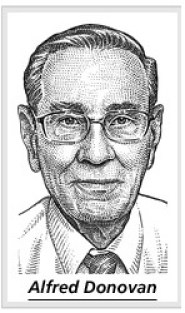 A head-cut image of Alfred Donovan (now deceased) appears courtesy of The Wall Street Journal.