MARK WILLIAMSON September 22 2006
Oil majors’ relations with the authorities in Russia came under renewed strain when a senior official raised the prospect of taking ExxonMobil’s licence for the giant Sakhalin-1 development off the company as a punishment for possible cost overruns.
Sergei Fyodorov, head of geological and subsoil use policies at the Ministry of Natural Resources, said it had been told on a preliminary basis that the US firm’s costs for the project in Siberia could rise to $17bn (£8.9bn) from an initial £6.7bn.
As cost increases on that scale could eat up the lion’s share of the revenues that Russia hoped to earn, Fyodorov indicated the ministry was considering making a dra-matic move to safeguard the country’s interests.
Warning that cost increases or delays in drilling could result in the withdrawal of licences by the government, Fyodorov said lawyers were satisfied such moves would not breach the terms of the relevant production sharing agreements.
The comments raised the prospect that ExxonMobil could soon find itself in the same boat as Shell, which on Monday had a permit for the flagship Sakhalin-2 project in Siberia cancelled by the natural resources ministry.
Officials insisted that decision was taken on environmental grounds. However, natural resources minster Yuri Trutnev has said his department’s environmental agency investigated the project because Shell doubled the budget to £10.5bn, infuriating the Kremlin.
The Sakhalin-2 operating company said the decision to revoke the licences could lead to “significant delay” of the project, extra costs and irreparable damage to the reputation of the venture.
However, ministers may be happy to call Shell’s bluff. Analysts believe talk about environmental concerns may be the pretext for an attempt to rewrite contracts which were granted to oil and gas giants like Shell on favourable terms in the 1990s, since when oil and gas prices have gone through the roof.
As Exxon plans to produce 250,000 barrels daily from Sakhalin-1 alone from November, huge sums could be at stake in Siberia.
The ministry’s actions have alarmed western governments and prompted a flurry of diplomatic activity.
Foreign secretary Margaret Beckett discussed the Sakhalin project with Russian counterpart Sergei Lavrov in New York on Wednesday.
As speculation mounted about possible action against other western firms, BP moved to allay fears it could be forced to suspend work on an exploration programme in eastern Siberia.
The TNK-BP venture, in which the British giant has a 50% stake, dismissed a report that it might lose the licence to the large Kovykta gas field.
The Financial Times reported that prosecutors in Irkutsk, capital of Eastern Siberia, had demanded that a local natural resources agency suspend the venture’s licence on environmental grounds.
However, Robert Dudley, chief executive of TNK-BP, said: “We haven’t received anything on this. We’ve got all the permits in place, we’ve had all the environmental reviews so I’m not sure what to make of this.”
Separately, Sibir, the Russian oil and gas firm run by Aberdonian lawyer Henry Cameron, said it continued to seek resolution of its long-running dispute with Sibneft, formerly controlled by Chelsea football club owner Roman Abramovich.
Sibir alleges that it lost the bulk of its interest in the 1.8-billion-barrel south Priobskoye oilfields in western Siberia after its stake in the Sibneft Yugra joint venture was diluted through a share issue it learned about only 18 months later.
It has been seeking around £1bn from Sibneft and Abramovich, who sold the firm to Gazprom for £7.5bn.
Sibneft has always denied any wrongdoing.
On Wednesday, Sibir, which has an oil-producing joint venture in Siberia with Shell, announced record first-half profits after interest, tax and minority interest of £19.6m, up from £500,000.
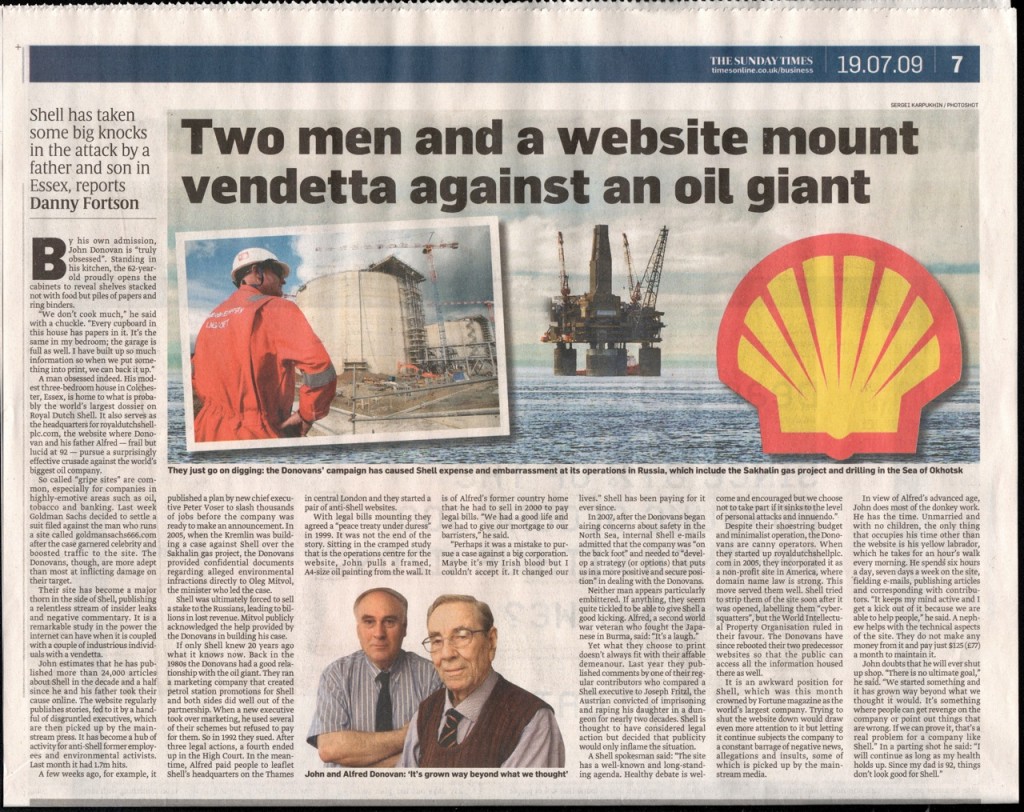
This website and sisters royaldutchshellplc.com, shellnazihistory.com, royaldutchshell.website, johndonovan.website, and shellnews.net, are owned by John Donovan. There is also a Wikipedia segment.


 Royal Dutch Shell conspired directly with Hitler, financed the Nazi Party, was anti-Semitic and sold out its own Dutch Jewish employees to the Nazis. Shell had a close relationship with the Nazis during and after the reign of Sir Henri Deterding, an ardent Nazi, and the founder and decades long leader of the Royal Dutch Shell Group. His burial ceremony, which had all the trappings of a state funeral, was held at his private estate in Mecklenburg, Germany. The spectacle (photographs below) included a funeral procession led by a horse drawn funeral hearse with senior Nazis officials and senior Royal Dutch Shell directors in attendance, Nazi salutes at the graveside, swastika banners on display and wreaths and personal tributes from Adolf Hitler and Reichsmarschall, Hermann Goring. Deterding was an honored associate and supporter of Hitler and a personal friend of Goring.

 Deterding was the guest of Hitler during a four day summit meeting at Berchtesgaden. Sir Henri and Hitler both had ambitions on Russian oil fields. Only an honored personal guest would be rewarded with a private four day meeting at Hitler’s mountain top retreat.


 IN JULY 2007, MR BILL CAMPBELL (ABOVE, A RETIRED GROUP AUDITOR OF SHELL INTERNATIONAL SENT AN EMAIL TO EVERY UK MP AND MEMBER OF THE HOUSE OF LORDS:


 MORE DETAILS:


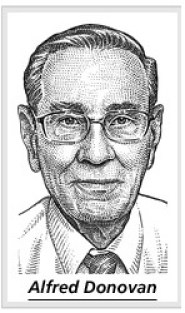 A head-cut image of Alfred Donovan (now deceased) appears courtesy of The Wall Street Journal.