
Margaret Beckett
By Sam Fleming
Friday 22 September 2006
THE crisis over Royal Dutch Shell’s Sakhalin-2 oil and gas project has erupted into a diplomatic row between Britain and Russia.
Foreign Secretary Margaret Beckett challenged her counterpart Sergei Lavrov over the issue at the United Nations in New York, it emerged yesterday.
The UK is said to be making ‘high-level’ representations amid fears that the Western energy industry is under concerted attack by the Kremlin.
Relations between the countries were strained earlier this year after Russia threatened to turn off gas supplies to the Ukraine and expressed interest in buying British Gas owner Centrica.
Western analysts believe Russia is trying to extract a large stake in the Sakhalin-2 project for state monopoly Gazprom.
The firm has halted discussions with Shell over plans to take a 25pc holding via an asset swap.
A Foreign Office source said: ‘We are expressing our concerns to the Russian government at a number of levels.
‘We are yery concerned by this issue, particularly because we have had a very good dialogue over the last 18 months about the importance of two-way trade and invest¬ment between the UK and Russia.’
The withdrawal of the Shell consortium’s environmental permit to operate the £10.5bn Sakhalin-2 development has derailed a crucial international government loan.
The European Bank for Reconstruction and Development shelved a decision over whether to grant hundreds of millions of dollars in support until the legal chaos is resolved.
The Japanese junior partners in the project, Mitsui and Mitsubishi, are believed to be ready to sell some of their stakes to Gazprom in a bid to defuse the row.
Shinzo Abe, who is likely to be Japan’s next prime minister, said earlier this week that he was concerned delays would have a ‘negative influence on overall Japan-Russian relations.’
Sergei Fyodorov of Russia’s ministry of natural resources hit back, claiming his country is losing hundreds of millions of dollars in potential revenue because of unfair deals signed in the 1990s. He attacked agreements struck not only with Shell but with Exxon of the US and Total of France.
BP yesterday denied Russia threatened to withdraw its licence for the huge Kovykta gas field.


 Royal Dutch Shell conspired directly with Hitler, financed the Nazi Party, was anti-Semitic and sold out its own Dutch Jewish employees to the Nazis. Shell had a close relationship with the Nazis during and after the reign of Sir Henri Deterding, an ardent Nazi, and the founder and decades long leader of the Royal Dutch Shell Group. His burial ceremony, which had all the trappings of a state funeral, was held at his private estate in Mecklenburg, Germany. The spectacle (photographs below) included a funeral procession led by a horse drawn funeral hearse with senior Nazis officials and senior Royal Dutch Shell directors in attendance, Nazi salutes at the graveside, swastika banners on display and wreaths and personal tributes from Adolf Hitler and Reichsmarschall, Hermann Goring. Deterding was an honored associate and supporter of Hitler and a personal friend of Goring.

 Deterding was the guest of Hitler during a four day summit meeting at Berchtesgaden. Sir Henri and Hitler both had ambitions on Russian oil fields. Only an honored personal guest would be rewarded with a private four day meeting at Hitler’s mountain top retreat.


 IN JULY 2007, MR BILL CAMPBELL (ABOVE, A RETIRED GROUP AUDITOR OF SHELL INTERNATIONAL SENT AN EMAIL TO EVERY UK MP AND MEMBER OF THE HOUSE OF LORDS:


 MORE DETAILS:


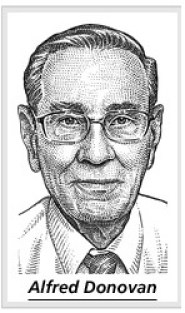 A head-cut image of Alfred Donovan (now deceased) appears courtesy of The Wall Street Journal.